

A new mattress smell is usually temporary: most off-gassing odour fades within 24 to 72 hours, although memory foam and polyfoam smells can last from a few days to a few weeks. If you’re wondering why your new mattress smells, the short answer is that materials such as foam and adhesives can release volatile compounds as the mattress airs out. The smell can be noticeable without meaning the mattress is faulty.
It’s understandable to want a fresher bedroom before your first night on a new bed. Good ventilation can help the odour disperse, while a strong smell may be more bothersome if you’re sensitive to scents. Knowing what’s behind it can help you decide how to air the mattress and when you feel comfortable using it.
This guide explains how off-gassing works, which mattress materials and certifications may be associated with lower odours, and how to air a mattress sensibly in Singapore. You’ll also learn which airing practices to avoid, including choices that could expose the mattress to excessive heat.
Key Takeaways
- Learn why foam, adhesives and other mattress materials can create a noticeable new-bed smell, and what affects how quickly it fades.
- Understand how mattress materials and certifications can help you identify options associated with lower odours.
- Find out how ventilation can help a mattress air out, and which practices may expose it to unsuitable heat or conditions.
- Explore mattress choices from The Mattress Boutique, including King Koil, Slumberland, Dunlopillo and SofzSleep mattresses.
Certifications and materials associated with lower odours
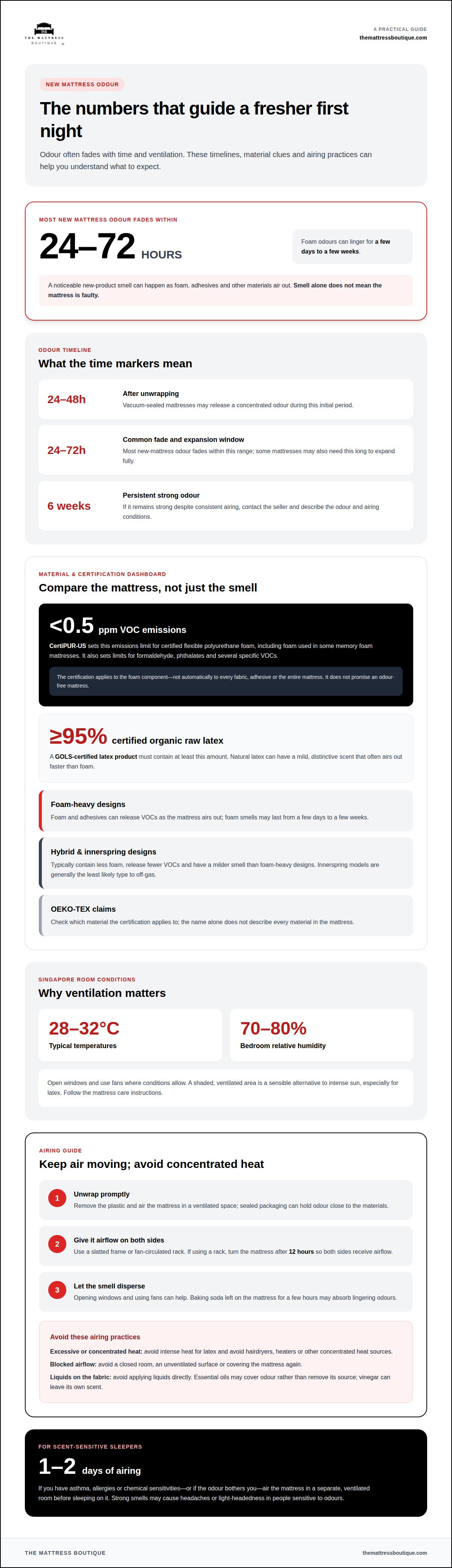
Certifications can help you compare materials, but they don’t promise an odour-free mattress. CertiPUR-US applies to flexible polyurethane foam, including foam used in some memory foam mattresses. Its requirements include VOC emissions below 0.5 parts per million. The certification also sets limits for formaldehyde, phthalates and several specific VOCs. It can therefore help you assess the foam component and potential chemical exposure, rather than the entire mattress or every fabric and adhesive.
For foam mattresses, look for a clear certification claim that applies to the foam itself. This gives you more useful information than a broad phrase such as “low chemical” without a named standard. Certification does not mean every part of the mattress has the same certification or that you won’t notice a new-product smell. Opening windows and airing the mattress can help disperse odour indoors.
Natural latex can have a mild, distinctive scent, but its odour often airs out faster than foam. GOLS is one certification to look for: a GOLS-certified latex product must contain at least 95% certified organic raw latex. OEKO-TEX is another certification identified for natural latex options, though the certification name alone doesn’t describe every material in a mattress. Check which material the claim applies to.
Construction also matters. Hybrid and innerspring mattresses typically contain less foam, release fewer VOCs and have a milder smell than foam-heavy designs. Innerspring models are generally the least likely type to off-gas. These are useful distinctions if you’re choosing between a memory foam feel and a spring-based design. Compare the materials alongside certifications, then consider whether you prefer a slight natural-latex scent or the possibility of a stronger initial foam odour.
Why Does My New Mattress Smell?
A new mattress smell can come from materials releasing emissions after sealed packaging is removed. Its strength, duration and effect on your comfort depend partly on the mattress construction and room conditions.
Materials, Adhesives, and Packaging Odours
Foam, adhesives and some fire retardants can release volatile organic compounds, or VOCs, as a mattress airs out. Sealed packaging can hold odours close to the mattress, making the first smell noticeable when you unwrap it. Adhesives between foam layers are a major contributor during the first 72 hours. This helps explain why a new smell can occur without indicating a defect.
Odour Duration and Persistence
Most new mattress odour fades within 24 to 72 hours, while foam smells may last from a few days to a few weeks. Vacuum-sealed mattresses can release a concentrated odour during the first 24 to 48 hours after unwrapping. In most cases, the smell dissipates within one to two weeks. If it remains strong at six weeks despite consistent airing, contact the seller and describe the odour and airing conditions.
Odour Relief Methods
Remove the plastic wrapping promptly and air the mattress in a ventilated space. Opening windows and using fans can help disperse the smell. Baking soda left on the mattress for a few hours may absorb lingering odours. Essential oils can cover a smell rather than remove its source, while vinegar can leave its own scent. Avoid applying liquids directly to mattress fabric.
In Singapore, typical temperatures of 28 to 32 °C and bedroom humidity of 70 to 80 percent relative humidity can make ventilation important. People sensitive to strong smells may develop a headache or feel light-headed near a freshly unwrapped mattress. Air it in a separate, ventilated room before sleeping on it if the odour bothers you.
For odour complaints in Singapore, return outcomes and warranty coverage depend on the seller’s policy and mattress warranty. Describe how long the smell has lasted and whether it remains strong after airing.
Practices to avoid when airing out a mattress
Don’t leave a new mattress in its plastic wrapping after delivery. Sealed packaging can hold odour close to the materials, so remove the plastic and let fresh air circulate. Unwrap it in a ventilated area outside the bedroom if possible. Avoid placing it in a closed room, where odour has less opportunity to disperse.
Don’t assume a mattress is ready to sleep on as soon as it’s unwrapped. Some mattresses need 24 to 72 hours to expand fully. If you have asthma, allergies or chemical sensitivities, air the mattress for a day or two before sleeping on it. A strong smell can cause headaches or light-headedness for people sensitive to odours.
Avoid uncontrolled heat while airing latex. Avoid exposing latex mattresses to intense heat while airing them, and follow the care instructions. Singapore’s typical ambient temperature is 28 to 32°C, so a shaded, ventilated area can be a sensible alternative to intense sun. Follow the mattress care instructions, especially for latex or memory foam.
Don’t block airflow by laying the mattress flat on an unventilated surface. A slatted frame or fan-circulated rack allows air to move around it. If airing on a rack, turn the mattress after 12 hours so both sides receive airflow. Keep fans circulating air and open windows where conditions allow. Fresh air helps odour disperse; sealing the room or covering the mattress again works against that goal.
Don’t rush the process by using a hairdryer, heater or other concentrated heat source. Airing the mattress overnight in a well-ventilated space gives the initial smell time to dissipate without adding unnecessary heat. For a memory foam mattress, prioritize steady airflow over warming it, and follow the mattress’s care guidance.
What mattress off-gassing is and where the smell comes from
Off-gassing is the release of compounds from mattress materials into indoor air. Adhesives, foam and manufacturing treatments can contribute; a noticeable smell alone doesn’t prove a mattress is defective or contaminated.
Off-Gassing and Volatile Organic Compounds
Volatile organic compounds, or VOCs, are chemicals that can be released into the air from materials such as polyurethane foam. The smell is one sign of emissions, but odour strength doesn’t measure VOC levels or identify a specific compound. Temperature can affect release: at 30°C, polyurethane may release formaldehyde at roughly 2 to 4 times the rate measured in a 20°C laboratory. In Singapore, ventilation helps disperse emissions indoors.
Odour Sources in Mattress Materials
A new mattress smell can come from synthetic foam, adhesives joining its layers, or treatments used during manufacturing. These materials may release compounds as the mattress airs after packaging is removed. The odour can be stronger at first because it has accumulated around the mattress while it was sealed. A chemical-like smell by itself doesn’t establish contamination. If the odour remains strong or you notice visible residue, describe what you’re experiencing to the seller.
Off-Gassing Across Mattress Types
Mattress construction affects the likely amount of off-gassing. Memory foam and polyurethane foam mattresses are more likely to release VOCs, while innerspring mattresses are typically least likely. Hybrid and innerspring designs often contain less foam, which can mean fewer VOC emissions and a milder smell. Natural latex may have its own slight scent, which often fades within a few hours to a day or two. If reducing odour is a priority, compare the materials and any certification claims for the specific component, rather than relying on “organic” or “natural” wording alone.
Explore mattress materials to consider which construction suits your preferences.
The Mattress Boutique
The Mattress Boutique offers mattresses in memory foam, latex and spring constructions from a wide selection of trusted manufacturers. If odour is a concern, compare the materials and construction of the options alongside the comfort you prefer. The team can explain mattress types and materials to help you make an informed choice.
If a new mattress has a persistent strong smell, describe to the seller how long it has lasted and how you’ve aired the mattress. To compare mattress types and materials with The Mattress Boutique, contact the team for personal guidance.
Choose Your Next Mattress With Confidence
If you’re still wondering why your new mattress smells, use the experience to clarify what matters in your next choice. Think about how you sleep, the feel you prefer and how sensitive you are to new-product odours. A material’s name alone can’t tell you everything about its smell, so consider construction and certification details together.
The right decision should support everyday comfort as well as your preference for a fresher sleeping space. Consider which mattress type feels suitable for your needs rather than choosing by a single feature. Comparing materials, construction and firmness can help you focus on options that fit your expectations and routine.
For guidance as you consider your next mattress, contact The Mattress Boutique. A thoughtful choice can help you feel more settled and comfortable in your bedroom.
Frequently Asked Questions
Are Off-Gassing Odors Harmful?
An off-gassing smell alone can’t tell you whether exposure is harmful; odour doesn’t identify compounds or their levels. Foam, adhesives and manufacturing treatments can release VOCs, and people vary in sensitivity. If the smell causes discomfort, leave the room and ventilate it. People with asthma, allergies or chemical sensitivities can air the mattress for a day or two before sleeping on it.
How Long Does Off-Gassing Last?
Off-gassing can continue after the noticeable smell fades. A mattress may emit VOCs at low rates for 2 to 6 months, while its odour usually becomes less noticeable sooner. Foam construction, room ventilation and temperature affect how quickly emissions disperse. This distinction matters: an odour-free room doesn’t prove emissions have stopped, and a smell doesn’t reveal their concentration.
How Long Will the Smell Last?
Most new-mattress smells dissipate within one to two weeks, though memory foam and polyurethane foam odours can last from a few days to a few weeks. Natural latex often has a milder scent that fades within a few hours to a day or two. A closed bedroom can let smells linger, so note whether the odour changes as fresh air circulates.
How long should I let a new mattress air out before sleeping on it?
Allow 24 to 72 hours for a new mattress to air and expand before sleeping on it. If you’re sensitive to strong smells, or have asthma or allergies, air it for a day or two first. Unwrap it in a ventilated area and keep the bedroom aired. If the smell remains uncomfortable, continue airing it before use.
Is it safe to sleep on it while it still smells?
A smell alone doesn’t establish whether sleeping on a particular mattress is safe. If the odour is strong or causes discomfort, sleep elsewhere while it airs in a ventilated space. People sensitive to strong smells may experience a headache or feel light-headed near a freshly unwrapped mattress. Let comfort guide your decision, and contact the seller if the odour remains strong.
Mattress Off Gassing: What to Expect & What to Do?
Expect the strongest odour soon after unwrapping, then observe whether it eases as air circulates. Remove the packaging, open windows and use a fan; avoid adding fragrance that masks rather than removes the source. If the smell is still strong at day 7, it may take 4 to 8 weeks of normal use to fade further. Contact the seller if it persists despite consistent airing.