

Direct sunlight can shorten a latex mattress’s life, so caring for it in Singapore means protecting it from exposure as well as keeping it clean. To learn how to care for a latex mattress, vacuum its surface monthly and blot spills promptly with a damp cloth rather than rubbing the latex.
Regular upkeep doesn’t need to be complicated. A removable, washable cover helps shield the mattress from everyday dust and spills, while baking soda can help manage odours and some stains when used carefully.
This guide explains how often to vacuum and clean your mattress, how to wash and use a cover, and how to apply baking soda without soaking the latex. It also covers practical ways to encourage airflow and dry the mattress after a spill, so your care routine suits Singapore’s climate and the material’s needs.
Key Takeaways
- Vacuum the mattress surface monthly, and blot spills promptly instead of rubbing them into the latex.
- Use a removable, washable cover as a practical barrier against everyday dust and spills.
- Apply baking soda carefully to help manage odours, and avoid soaking the mattress when treating stains.
- Support airflow beneath the mattress and keep it out of direct sunlight to suit Singapore’s warm, humid conditions.
How Often Should You Care for Your Latex Mattress?
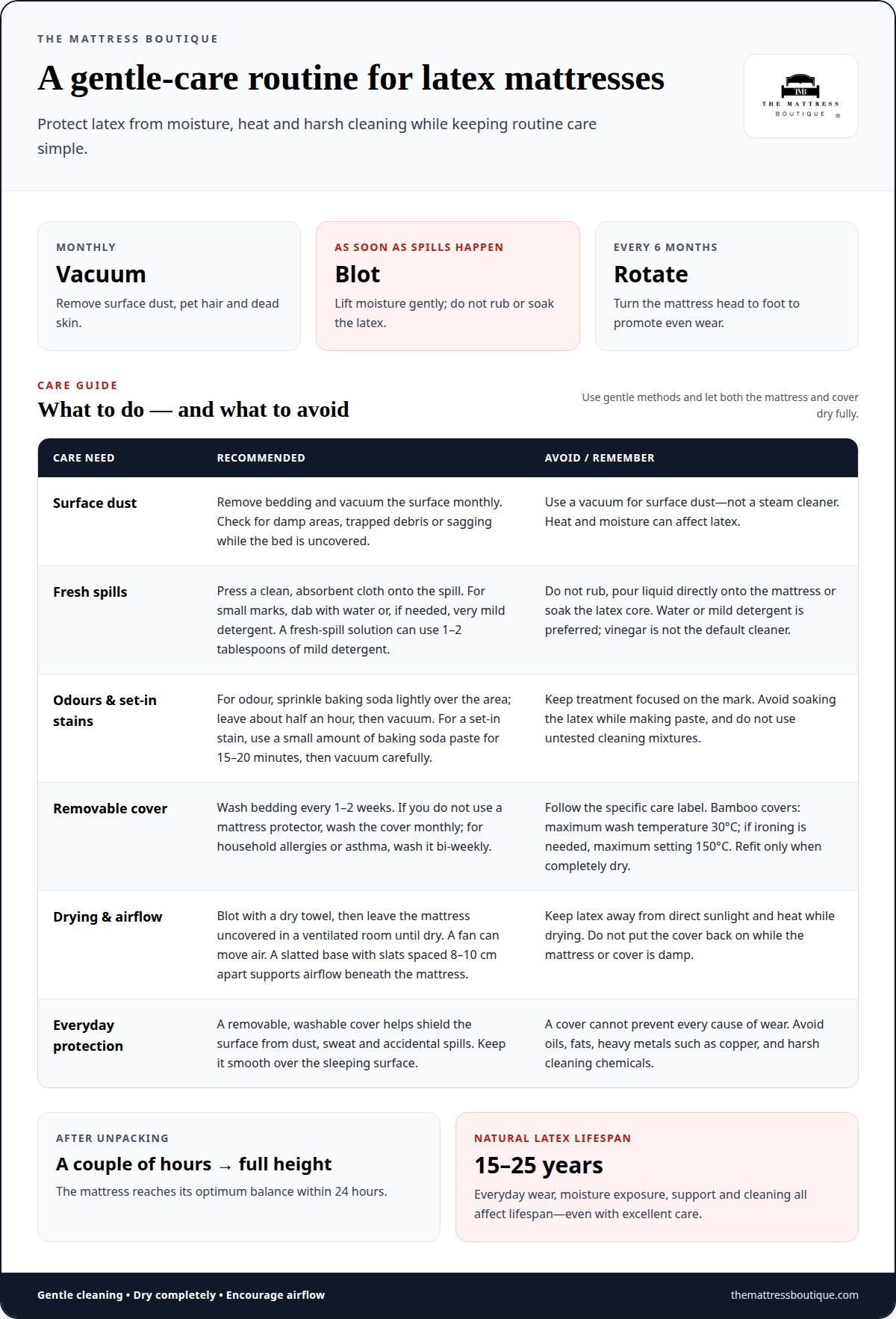
For how to care for a latex mattress, vacuum the surface monthly and spot-clean spills promptly. Use a vacuum for surface dust, not a steam cleaner, since heat and moisture can affect latex. After unpacking, allow a couple of hours for full height; the mattress reaches its optimum balance within 24 hours. Avoid oils, fats, heavy metals such as copper, and harsh cleaning chemicals.
- Make monthly care part of your routine. Remove bedding and vacuum dust, pet hair, and dead skin from the sleeping surface. A removable protector helps reduce contact with spills and dirt. Inspect the mattress and base for damp areas, trapped debris, or sagging while the bed is uncovered.
- Blot spills before cleaning. Use a clean, absorbent cloth to lift moisture. For small marks, dab with water; if needed, use very mild detergent. A fresh-spill solution can use 1-2 tablespoons of mild detergent. Press gently instead of rubbing, and avoid soaking the latex core.
- Choose stain treatments carefully. Water or mild detergent is the preferred spot-cleaning approach, so don’t use vinegar as your default cleaner. Use cleaning products cautiously, and avoid untested mixtures on the mattress. For odour, apply baking soda separately as a dry treatment, then vacuum it away.
- Dry the cleaned area fully. Blot a large spill with an absorbent cloth, then press with a clean, dry towel. Leave the mattress uncovered in a ventilated room until dry. A fan helps move air; keep the latex away from direct sunlight and heat during drying.
- Keep the base and routine practical. A slatted base allows ventilation beneath the mattress, which is useful in Singapore’s humid conditions. A reliable routine for how to care for a latex mattress also includes rotating it head to foot every six months to promote even wear. Return the washable protector only when dry.
Using a removable, washable mattress cover
A natural latex mattress typically lasts 15-25 years, even with excellent care. Its lifespan depends on everyday wear, moisture exposure, support, and how cleaning is handled. A washable cover helps shield the surface, but it cannot prevent every cause of wear.
- Choose a removable cover that fits securely. A washable mattress cover creates a barrier against dust, sweat, and accidental spills. Keep it smooth over the sleeping surface so it doesn’t bunch beneath your sheets or interfere with comfort. A separate mattress protector can add another protective layer, but the cover still needs regular washing.
- Follow the cover’s care label and mattress instructions. Check washing directions before adding detergent or using heat. Bamboo mattress covers should be washed at a maximum temperature of 30°C. If a cover needs ironing, use a maximum setting of 150°C. Avoid assuming that every removable cover can tolerate the same cycle.
- Set a washing schedule. Wash bedding every 1 to 2 weeks. If you don’t use a mattress protector, wash the removable cover monthly for hygiene. If someone in your household has allergies or asthma, wash it bi-weekly. Adjust sooner after a spill, following the cover’s care instructions.
- Dry the cover completely before refitting it. A damp cover can trap moisture against the mattress. Follow its label for drying, then make sure the fabric feels dry throughout, including seams and corners. Put it back only when completely dry, and keep the mattress uncovered while the cover is drying.
- Keep warranty paperwork with care instructions. Warranty terms and cleaning requirements can differ by mattress and cover. Read both before washing, treating a stain, or using heat. Avoid making assumptions about what a warranty covers; record the product details and follow the care directions supplied for that specific mattress.
Baking soda for stain and odour removal
Blot spills promptly to limit staining, using as little moisture as possible. Dry the treated area completely before covering the mattress again.
-
Blot Fresh Spills Promptly
Remove the bedding and blot the spill with a clean, absorbent cloth. Press gently rather than rubbing, which can spread the mark. If needed, dab the area with a cloth lightly moistened with water or very mild detergent, then blot with a dry cloth. Avoid saturating the latex.
-
Apply Baking Soda for Stains and Odours
For a set-in stain, apply a small amount of baking soda paste and leave it for 15-20 minutes, then remove it with careful vacuuming. For odour, sprinkle baking soda lightly over the affected surface and leave it for about half an hour before vacuuming. Keep the treatment focused on the mark, and avoid soaking the latex while making paste.
-
Treat Urine and Blood Stains
For urine or blood, blot immediately with an absorbent cloth to lift the liquid. Gently dab the mark with a small amount of water or very mild detergent on a cloth. Do not scrub, pour liquid onto the mattress or mix cleaners. If odour remains, baking soda can be used after spot-cleaning.
-
Dry the Treated Area Completely
Press a clean, dry towel onto the treated area to absorb moisture. Leave the mattress uncovered in a ventilated room until it is completely dry. A fan can help circulate air, but avoid direct sunlight and heat. Put the removable cover back only after the mattress has dried.
Caring for a latex mattress in Singapore’s climate
Natural, synthetic, and blended latex need gentle cleaning; follow the care instructions for your specific mattress. In Singapore, focus on limiting trapped moisture, encouraging airflow, and keeping latex away from direct sunlight.
-
Adapt Mattress Care to the Climate
Place the mattress on a slatted bed frame so air can circulate beneath it. Slats spaced 8-10 cm apart support airflow, which helps in Singapore’s hot, humid conditions. Keep the room ventilated, and open windows when outdoor conditions allow. If a spill leaves moisture in the latex, use a fan to move air across the area; avoid heat, which may change the foam’s characteristics.
-
Compare Care for Different Latex Types
Check the mattress label and care instructions to identify natural, synthetic, or blended latex before cleaning. The research-backed cleaning approach is gentle spot-cleaning with water or very mild detergent, followed by thorough air-drying. Don’t assume a product is safe for every composition. Latex foam has an open-cell structure and pinholes that support airflow, but excess moisture can still linger.
- Keep sunlight off the latex. Position the bed away from direct sunlight, and don’t leave the uncovered mattress beside a sunny window. Exposure can degrade latex and shorten its lifespan. If drying is necessary, use ventilation and a fan rather than placing the mattress in direct sun.
- Rotate on a regular schedule. Turn the mattress 180 degrees, keeping the sleeping surface facing up, every six months to promote even wear. Follow the mattress’s care instructions if they specify a different routine. This simple step helps distribute pressure across the surface over time.
- Manage bedroom humidity when possible. Aim to keep bedroom humidity below 50% when conditions allow. After cleaning, wait until the mattress is completely dry before replacing bedding. For a new latex mattress, allow a couple of hours for full height after unpacking; it reaches its optimum balance within 24 hours.
For a mattress that suits your sleep setup, explore mattress choices.
The Mattress Boutique: Latex Mattresses
The Mattress Boutique offers latex mattresses for those considering this material and its care requirements. If you are choosing a mattress, compare the feel and construction of the available options with your sleep preferences and how you plan to care for it.
The range includes various designs tailored to different sleep needs. Compare their construction and comfort, and follow the care instructions for the model you choose. A suitable mattress and a consistent care routine help protect your sleep setup over time.
For help exploring mattress options, contact The Mattress Boutique.
Make Your Next Sleep Setup a Considered Choice
A consistent care routine can support the comfort and condition of your mattress, but your next step may be choosing a model that fits your needs and bedroom setup. Understanding how to care for a latex mattress also means considering its care requirements before you bring it home. Think about the sleeping feel you prefer, the support you need, and how you’ll protect the mattress from everyday spills and moisture.
If you are selecting a mattress for a new setup or considering alternatives, The Mattress Boutique offers latex mattresses alongside options from King Koil, Slumberland and Dunlopillo. Compare their construction and comfort to find a fit for your sleep preferences.
Contact The Mattress Boutique for advice as you consider your next mattress. A thoughtful choice can make caring for your sleep space feel like a natural part of everyday life.
Frequently Asked Questions
How often should you rotate or flip a latex mattress?
Rotate it every six months, and flip it only if its design allows. The Mattress Boutique encourages rotating or flipping, depending on mattress design, every 4-6 months to ensure even wear and prolong life. A one-sided mattress should stay sleeping-surface-up; turning it head to foot redistributes pressure without reversing its layers. Check the mattress care instructions before changing its orientation.
How do you clean stains and spills on a latex mattress?
Blot spills promptly with an absorbent cloth, then dab the mark with water or very mild detergent. Use a separate dry towel to draw out moisture and leave the area uncovered until dry. For lingering odour, apply baking soda dry and vacuum it away. Avoid scrubbing, soaking the latex or combining cleaners.
What mattress protector and bed base work best for a latex mattress?
Choose a well-fitting, removable, washable protector, and a supportive base that allows airflow. Slats spaced 8-10 cm apart are one suitable arrangement, but mattress designs can have specific base requirements. For example, the Sofzsleep Starlight requires a platform or slatted base, with slat gaps under 3 inches (7.62 cm). Follow the instructions for your particular mattress.
How do you prevent mould and mildew on a latex mattress in Singapore’s humid climate?
Reduce lingering dampness by ventilating the bedroom and keeping the mattress and bedding dry. When possible, maintain bedroom humidity below 50%. After a spill or cleaning, let the mattress dry fully before replacing bedding. Check beneath the mattress and around the bed frame for signs of trapped moisture; airflow under the mattress helps the area dry more effectively.
Can sunlight damage a latex mattress, and how should you air it?
Yes. Keep the mattress out of direct sunlight, which can damage latex, and air it in a shaded, ventilated room. After cleaning, leave the affected area uncovered and use a fan to move air across it. Avoid heat, and wait until the surface is fully dry before replacing the bedding or protector.