

What if a bed that saves floor space becomes the piece of furniture that’s hardest to use? The pros and cons of storage beds depend not only on how much they can hold, but on whether you can reach what’s inside without disrupting your routine.
If your bedroom has limited room for spare bedding, clothes or suitcases, an under-bed compartment can keep those items out of sight. But drawers need clearance to open, while lift-up designs require you to raise the mattress platform. The frame can also affect how you clean around the bed and rearrange the room.
This guide weighs the benefits against the practical trade-offs, so you can decide whether a storage bed will make your bedroom more useful. Compare drawer and lift-up designs by access and floor layout, then consider how the frame and mattress work together for everyday comfort. A good starting point is to list what you want to store, measure the bed area and choose a setup that suits your room and routine.
Key Takeaways
- The pros and cons of storage beds depend on what you plan to store, how often you need it and how easily you can reach it.
- Compare drawer, lift-up and standard frames by access style and the clearance your room allows.
- Keep frequently used items in the most accessible storage; reserve harder-to-reach space for occasional-use belongings.
- Measure the bed area and surrounding space, including clearance for opening drawers or lifting the platform.
- Match the storage bed frame with a mattress size, material and firmness that suits your everyday sleep needs.
What Is a Storage Bed, and What Problem Does It Solve?
A storage bed is a bed frame with space for household items beneath or within the sleeping platform. It combines two functions in one footprint: a place to sleep and a place to keep belongings. In a bedroom with little room for another cabinet or storage unit, that can be a practical way to make better use of the area around the bed.
The idea sits within a wider range of types of beds, but the defining feature is integrated storage. Instead of leaving the space beneath the mattress open, the frame makes it part of the room’s storage plan. Designs and access methods vary, so the amount of space inside a frame doesn’t automatically tell you how useful it will be.
That distinction matters. A compartment may fit spare linens, but if you need to shift other items or move furniture to reach them, it may not work well for something you use every week. Useful storage is not just space you can fill. It’s space that suits your belongings and how often you need them. The pros and cons of storage beds therefore depend on your room layout, what you plan to store and how you’ll access it.
How Does a Storage Bed Differ from a Standard Bed?
A storage bed frame has a designated storage area beneath or within the sleeping platform. A standard frame may leave the space below open, making it easier to clean underneath or use separate storage boxes. With a storage bed, that area is incorporated into the frame. Designs differ, so check how the storage opens and how much of the compartment you can reach.
This changes how you plan the room. Separate furniture can provide storage, but it takes up its own floor area. A storage frame may combine those functions, while reducing open space around or beneath the bed. Compare the storage it adds with any clearance you’ll lose, especially if the bed sits close to a wall, bedside table or wardrobe.
When Can a Storage Bed Solve a Real Bedroom Problem?
Integrated storage can help when spare bedding, seasonal clothing or less-used household items need a home but there’s little room for another cabinet. Keeping them inside the bed frame may help avoid adding furniture that narrows walkways or takes up useful floor space.
It’s less helpful when you need frequent access but the design makes retrieval awkward. Before choosing, list the items you plan to store and how often you’ll reach for each one. Spare sheets used regularly call for convenient access; occasional-use items can be placed in a less accessible compartment. The right fit supports your routine, rather than simply offering the largest storage space.
Storage Bed Pros: Where the Extra Space and Organisation Help
The main advantage of a storage bed is that it can put otherwise unused space to work. If the frame lets you keep belongings under the sleeping platform, you may be able to do without a separate chest or storage containers around the room. That can make a bedroom feel less crowded, especially when floor space is limited.
The benefit is clearest when the bed replaces something. For example, if a bulky container holds guest bedding or extra blankets, moving those items into the bed frame could free up part of a walkway or another useful area. The room won’t gain space automatically, though. Compare the bed’s full footprint with your existing furniture and include the clearance needed to use the storage comfortably.
Can a Storage Bed Free Up Useful Bedroom Floor Space?
Integrated storage may reduce the need for a separate chest or loose containers, leaving more floor clear for walking and everyday activities. But the bed still takes up space, and some designs need extra room to open. Measure the planned frame and map out how you’ll reach the stored items before assuming it will create more usable floor area.
A storage bed can also gather belongings that otherwise end up in several places. You might keep spare pillowcases together, group occasional-use bedding or store seasonal clothes in one designated area. Assigning a purpose to each section makes items easier to find and helps prevent the compartment becoming a catch-all.
Concealed storage can make a room look tidier because belongings aren’t left in open bins or visible piles. That visual benefit depends on keeping the compartment organised. Store items you genuinely intend to use, and avoid filling the space with things you no longer need. If you can’t remember what’s inside, it’s a good time to sort through it.
How Can Concealed Storage Make Bedroom Organisation Easier?
Plan storage around your routine. Keep items you reach for often somewhere easy to retrieve and put back; less-used belongings can go in a harder-to-reach section. Group similar items, and leave enough room to return them without unpacking the whole compartment. Storage that’s straightforward to manage is more likely to stay organised.
These practical advantages are central to weighing the pros and cons of storage beds. The strongest case is when a frame replaces separate furniture and gives specific belongings a useful home. If it only adds a difficult-to-reach compartment, the extra capacity may not improve how you use the bedroom.
As you compare storage bed frames, consider which belongings you want to keep close and how the frame’s footprint will work in your room. That keeps the focus on practical access, not capacity alone.
Storage Bed Cons: What to Consider Before You Commit
Extra capacity comes with a trade-off: stored items are useful only if you can reach them without making routine tasks inconvenient. The way a frame opens, the space around it and how you organise the compartment all affect everyday use. A storage bed may work well for belongings you rarely need, yet feel frustrating if you reach inside several times a day.
That’s why the pros and cons of storage beds depend on your habits, not just the size of the compartment. Think about what you’ll store, who will access it and whether putting items away will be as easy as retrieving them. If the compartment is awkward to manage, belongings can become difficult to find or end up piled together.
When Can Storage Access Become a Daily Frustration?
Consider how often you’ll open the storage area and what each access requires. A design that involves several steps may suit spare household items but feel inconvenient for clothes or accessories you use each morning. Include everyone who’ll use the bed in the decision. A setup that’s easy for one person may be less comfortable for another.
Keep frequently needed belongings in the most accessible place and reserve less convenient storage for items you rarely use. Leave enough room to lift, slide or reach into the compartment as its design requires. If access means moving a bedside table or shifting other belongings first, even a small task can become an ongoing annoyance. Avoid overfilling the space, too. A packed compartment makes it harder to find an item and put it back neatly.
What Maintenance and Room-Fit Questions Should You Consider?
Measure more than the mattress area. Account for the frame’s full footprint, surrounding furniture and enough space to move comfortably around the bed. Think about how you’ll clean nearby floor space as well. A frame that limits access beneath or around the base could make regular cleaning more difficult.
Construction details vary between storage bed designs. Some bases may allow more airflow than others, so don’t assume every frame handles ventilation in the same way. Consider the mattress and base together, particularly in a humid climate where airflow may be relevant to managing moisture. Weight and durability also depend on the design. A frame’s structure, moving parts and intended use all affect how it performs, so broad claims about every storage bed are not useful.
Before deciding, picture the bed in its intended position and walk through each task: opening the storage, retrieving an item, putting it back and cleaning around the frame. If those steps fit your room and routine, the trade-offs may be manageable. If access would repeatedly interrupt everyday tasks, a simpler frame or another storage arrangement may suit you better.
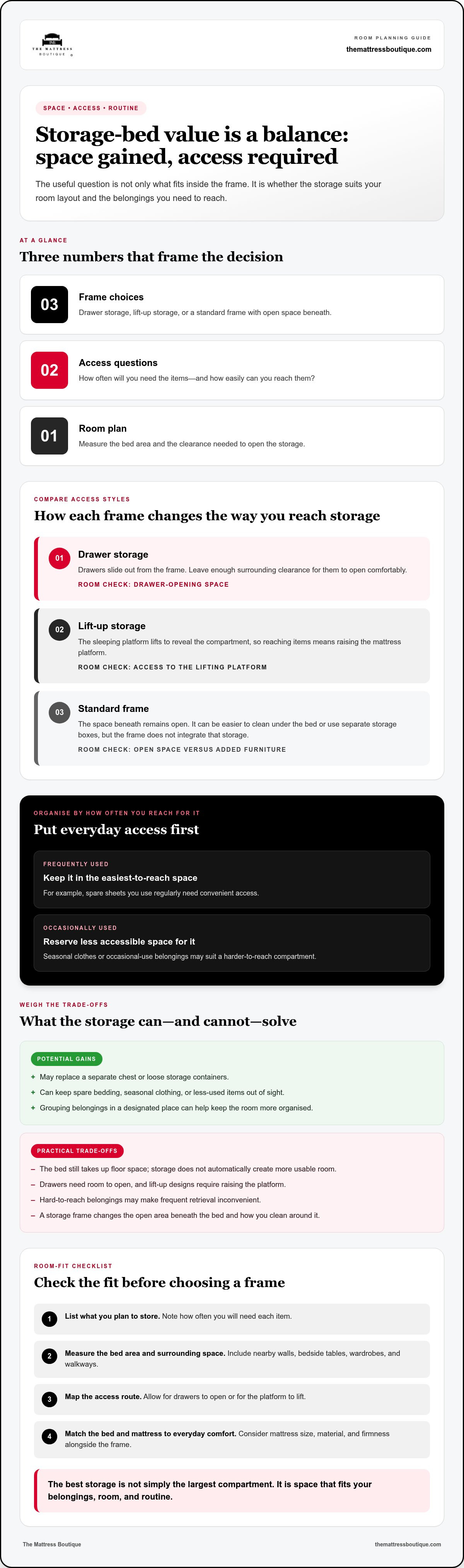
Storage Bed Types Compared: Drawers, Lift-Up Storage, or a Standard Frame?
The right frame depends on how you want to reach stored items and how much open floor space your room allows. A design that works well in one bedroom may be awkward in another, especially if nearby furniture blocks access. Use the comparison below to narrow your options by clearance and storage habits rather than searching for one universally best choice.
| Frame type | Access method | Room clearance to consider | Storage habits it may suit |
|---|---|---|---|
| Drawer storage bed | Pull items out through drawers built into the frame. | Needs enough clear space beside the bed for drawers to open and for you to stand comfortably. | Belongings you expect to retrieve regularly, provided the drawers remain easy to reach. |
| Lift-up storage bed | Access the compartment from above by lifting the sleeping platform. | Consider the space and movement needed to open the platform, along with any nearby furniture. | Items used less often, which can stay stored between occasions. |
| Standard frame | No integrated storage; depending on the frame, the area underneath may remain open. | Doesn’t require drawer-opening clearance, though the bed still needs enough room for comfortable circulation. | People who prefer a simpler frame, open space beneath the bed, or no built-in storage. |
Are Drawer Storage Beds Better for Frequently Used Items?
Drawers provide direct access without requiring you to reach into a compartment from above. That can be convenient for items you use often, but only if you can open the drawers fully. A bedside table, wall or narrow walkway may limit their movement. Before choosing a drawer design, picture the drawers extended in your actual layout and consider whether you can comfortably reach in and put items away.
Match the drawer arrangement to your habits. If you plan to store spare pillowcases or other belongings you retrieve regularly, easy access matters more than simply having room to fit them. If opening a drawer means shifting nearby furniture every time, much of the convenience is lost.
When Might Lift-Up Storage or a Standard Frame Suit Better?
Lift-up storage gives access from above, which can be useful when there isn’t enough room for drawers to extend beside the bed. It may suit belongings that stay put for longer periods, since you need to open the platform to reach them. Consider how that movement fits your routine and who will use the storage before settling on this format.
A standard frame may suit you better if you value uncomplicated access to the floor beneath the bed or don’t need integrated storage. It can also keep the setup simple if you already have another storage solution. The pros and cons of storage beds come down to how well access fits the room: measure the available clearance, then choose the format that makes storing and retrieving belongings manageable.
How to Decide Whether a Storage Bed Fits Your Room and Routine
A storage bed works best when its contents, access method and footprint make sense for your everyday life. Use this checklist to assess the practical fit before focusing on how much a frame can hold. The pros and cons of storage beds become clearer when you picture the specific items you’ll store and the space you’ll need to use the frame comfortably.
- List what you want to store. Group belongings by size and purpose, such as spare linens, seasonal clothing or occasional-use items. This gives you a clearer idea of the storage you need than choosing by capacity alone.
- Separate everyday items from occasional ones. Note how often you’ll retrieve each group. Items you need regularly should be easy to reach, while seasonal or rarely used belongings may suit storage that takes more effort to access.
- Match access to your routine. Consider who will open and organise the storage area, and whether the access style works for them. If you’re comparing frame designs, the storage bed frames in Singapore guide can help you think through the options.
- Measure the bedroom layout. Measure the planned bed area and account for surrounding furniture, walkways and any clearance needed to open or access the storage. Check the bed’s full frame dimensions, not just the mattress size.
- Check mattress and frame compatibility. Match their dimensions so the mattress fits the frame as intended. Then consider whether the complete setup supports your regular bed use, not just your storage needs.
Which Belongings Belong in a Storage Bed?
Choose items with a clear purpose and group them so they’re easy to find. Everyday essentials may be better kept somewhere more accessible, while spare bedding or seasonal belongings can work well if you don’t need them often. Think about the size and shape of each item, too. A frame’s storage capacity matters only if your belongings fit and you can keep the compartment organised.
How Should You Check Fit with Your Mattress and Bedroom?
Mark out the frame’s footprint on the floor, then consider how nearby furniture affects movement and access. Confirm mattress and frame dimensions together rather than assuming a mattress will suit every frame. Material and firmness also contribute to a comfortable setup. If you’re weighing those choices, the mattress selection guide can help you compare options.
A considered setup balances storage with comfort and room to move. The Mattress Boutique offers storage bed frames alongside mattress options, with sleep-specialist guidance on size, material and firmness. Explore storage bed and mattress options to plan a setup that suits your room and routine.
Choosing a Storage Bed with The Mattress Boutique
A storage bed is most useful when the frame supports your routine without compromising your sleep setup. The Mattress Boutique offers storage bed frames alongside mattresses from trusted brands, with personal sleep-specialist guidance to help you consider mattress size, material and firmness together. That pairing matters: the frame needs to suit your storage needs, and the mattress needs to fit it and feel comfortable for everyday rest.
The pros and cons of storage beds are easier to weigh when you look beyond capacity. Consider how you’ll access the space, what you plan to keep inside and whether the frame works with your mattress and room layout. The Mattress Boutique also offers direct-factory pricing, so you can compare bed and mattress options with value in mind while keeping fit and comfort central to the decision.
What Guidance Helps You Pair a Frame with the Right Mattress?
Start with dimensions. The mattress size should match the selected frame, so consider both measurements as parts of one bed setup. Then think about your comfort preferences. Sleep-specialist guidance can help you compare mattress materials and firmness levels, making it easier to narrow down options that suit how you like to sleep.
The Mattress Boutique offers memory foam, latex, pocketed-spring and Bonnell-spring mattresses, as well as established brands including SofzSleep and other top-tier options. Compare categories and brands according to your preferences rather than assuming one material suits everyone. For a closer look at frame considerations, read the storage bed frame guide.
What Is a Practical Next Step Before You Choose?
Summarise your best fit in one sentence. For example: “I need a frame with storage for occasional-use items and enough clearance to access it comfortably.” That simple description keeps your priorities clear as you compare options.
Then consider the whole setup, not just the storage format. Check that the frame suits your room and access habits, and include mattress size and comfort preferences in the decision. If you’re still weighing the pros and cons of storage beds, The Mattress Boutique’s sleep specialists can offer personal guidance on mattress material, firmness and size alongside its storage bed frame options.
Explore The Mattress Boutique’s storage bed and mattress options to take the next step towards a setup that balances practical storage with everyday comfort.
Make Your Next Bed Choice Work for Everyday Life
The most useful way to judge the pros and cons of storage beds is to imagine living with your choice, not just looking at it. Picture an ordinary week: where your belongings go, how you move around the room and whether using the storage will feel natural over time. A bed should support your space and your rest, rather than make you reorganise your routine around it.
Before deciding, compare the frame and mattress as one considered setup. The Mattress Boutique offers storage bed frames and mattresses from established brands, with personal sleep-specialist guidance on mattress size, material and firmness. Direct-factory pricing and delivery across Singapore are also part of the retailer’s offering.
Use that guidance to turn your room measurements and comfort preferences into a practical shortlist. You don’t need to settle for storage that looks useful but doesn’t fit your habits. Explore storage bed frames and get personal mattress guidance, then choose a setup that feels right for your room and routine.
Frequently Asked Questions
Are storage beds worth it for a small bedroom?
Yes, a storage bed can combine sleeping and storage functions without adding another cabinet, but the frame still needs enough room to fit and be accessed. The pros and cons of storage beds depend on the actual layout: account for nearby furniture, clear walkways and how often you’ll retrieve items. Sketching the bed and furniture positions on paper can reveal tight spots. Capacity alone doesn’t determine whether the bed is worthwhile.
Can you use any mattress with a storage bed?
No, don’t assume every mattress suits every storage frame. Compatibility depends on the frame’s required mattress dimensions and construction guidance. Match the mattress size to the frame, then follow the frame’s instructions for the complete setup. For example, if you’re replacing a mattress but keeping the frame, compare the new mattress measurements with the frame requirements before buying. Consider fit and comfort together.
What should you store in a bed with storage?
Choose clean, dry belongings that fit the compartment and don’t need constant access. Spare sheets, pillowcases or seasonal clothing may be practical choices. Group similar items in a way that makes sense for your household, such as keeping each bedding set together. If the compartment is deep, keep a simple inventory on your phone so you can remember what’s inside without searching through everything.
Do storage beds make it harder to clean a bedroom?
They can, depending on the frame design and the space around it. Integrated storage may reduce open access beneath the bed, while drawers or other mechanisms can affect how you reach nearby areas. Before choosing a frame, think through how you’ll clean around its base and access the floor. Follow the frame’s care guidance rather than assuming every storage design is equally easy to maintain.
Can a storage bed work in a rented home?
Yes, it can suit a rented home if the frame fits the bedroom and you’ll use its storage. Measure the room and consider access around nearby furniture, as well as moving needs if you expect to relocate. Check how the bed’s dimensions relate to doorways and the route into the room. Don’t assume a frame will be simple to move or assemble without reviewing its specifications.
How do you keep stored bedding organised in a storage bed?
Sort bedding by purpose, then keep each group together, such as placing spare sheets together and separating them from seasonal items. Store belongings you use less often where access is less immediate, leaving frequently needed items easier to reach. Review the compartment periodically and remove anything that no longer belongs there. Organisation depends on the storage layout and your household routine; the frame alone won’t prevent clutter.