

What if your bedroom felt calmer without a full redesign? If clutter, bright light, noise, or late night screen time make it hard to wind down, small, deliberate changes can help the room feel more comfortable. Creating a relaxing bedroom environment doesn’t have to mean replacing everything or following a complicated routine.
The key is knowing where to start. This guide covers practical ways to adjust lighting, furniture layout, sound, and screen habits, then shows you how to shape a bed setup around your comfort preferences. A comfortable mattress and pillows are one part of a restful room, alongside the atmosphere and habits that help you settle in. Start with the change that would make the biggest difference tonight, then build from there at a pace that suits your space.
Key Takeaways
- Start creating a relaxing bedroom environment by identifying the distraction that bothers you most before changing the room.
- Adjust daylight, evening lighting, and sound to reduce distractions and make the space feel more restful.
- Use a simple room reset to clear surfaces, define the bed area, and keep everyday essentials within reach.
- Compare mattress materials and comfort preferences to shape a sleep setup that suits you, rather than assuming one option works for everyone.
- Keep your plan manageable: make one change at a time, notice how the room feels, and use a brief weekly reset to maintain it.
Creating a Relaxing Bedroom Environment Starts with Removing Everyday Stressors
A bedroom can look attractive and still feel unsettled. A well-made bed, coordinated colours, and carefully chosen furniture may not make it easier to unwind if a bright indicator light catches your eye, laundry has collected on a chair, or work reminders are still in view. Before changing the décor, identify what is interrupting your sense of calm.
Relaxation is personal. One person may find a quiet, uncluttered room soothing; another may prefer familiar objects and softer lighting. A relaxing bedroom is a space arranged to reduce the personal barriers that make it harder to unwind. The aim isn’t to create a perfect room or follow one universal ideal. It’s to understand what matters to you and make a focused change.
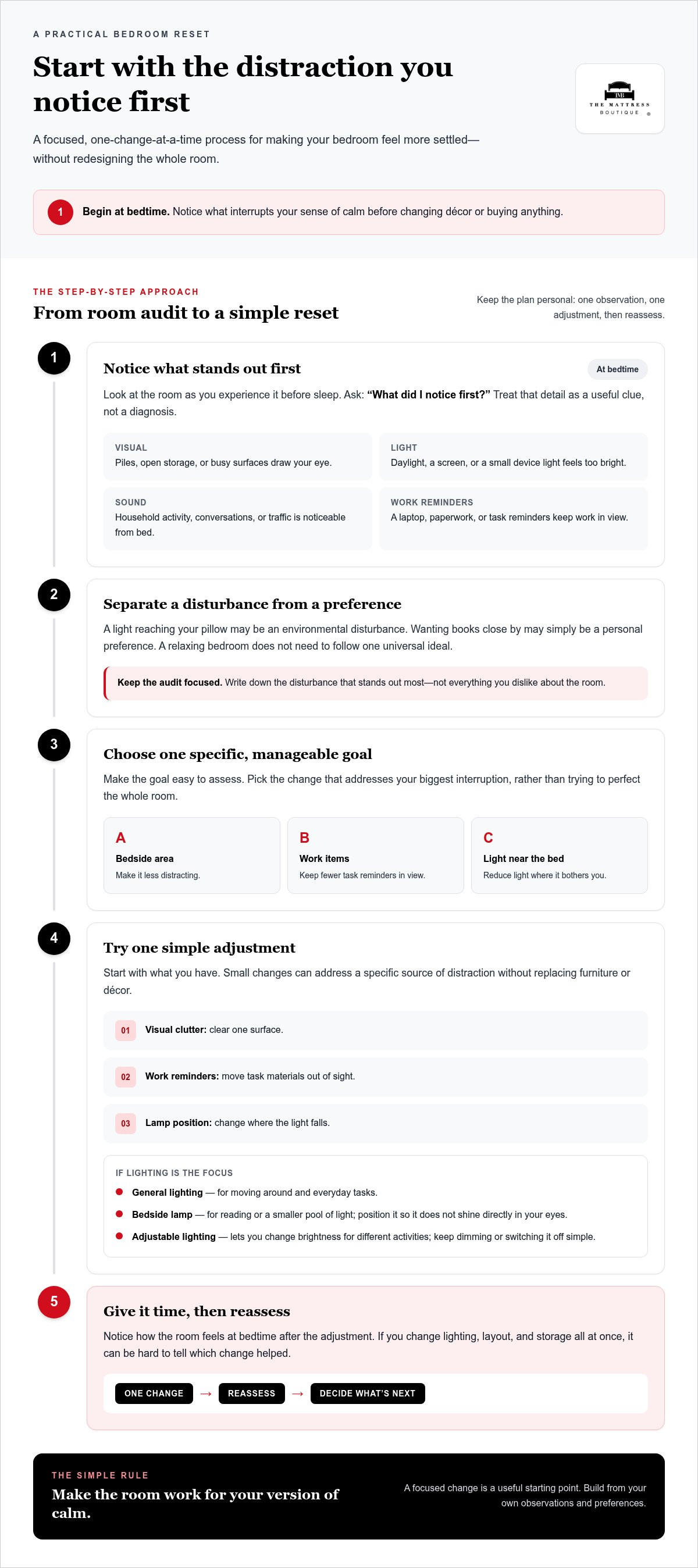
Try a quick room audit at bedtime, when you can see the space as you experience it before sleep. Notice visual clutter, unwanted light, sounds from inside or outside the room, and anything that brings work to mind. These observations connect with broader sleep hygiene principles, which include considering the bedroom environment as part of your routine. Jot down the disturbance that stands out most.
- Visual: Do piles, open storage, or busy surfaces draw your eye?
- Light: Is daylight, a screen, or a small device light brighter than you’d like?
- Sound: Are conversations, household noise, or traffic noticeable from bed?
- Work: Can you see a laptop, paperwork, or reminders that keep your attention on tasks?
How to identify what is keeping your bedroom from feeling calm
When you settle into bed, ask yourself: What did I notice first? That first detail is a useful clue, not a diagnosis. Separate an environmental disturbance, such as light reaching the pillow, from a personal preference, such as wanting books close by. Write down one change that could address the biggest interruption. Avoid turning the audit into a list of everything you dislike.
Set a realistic goal before changing the room
Make the goal specific and easy to assess. For example, aim for a less distracting bedside area, fewer work items in view, or less light near the bed. Try a simple adjustment first: clear one surface, move task materials out of sight, or change the position of a lamp. You don’t need to buy furniture or replace décor to begin.
Give the change a little time and notice how the room feels at bedtime. If you alter the lighting, layout, and storage all at once, it can be hard to tell which adjustment helped. Make one change, reassess, and decide what to try next. This measured approach keeps creating a relaxing bedroom environment manageable and helps you tailor the space to your own preferences rather than someone else’s idea of calm.
Shape Light, Colour, and Sound for a More Restful Bedroom
Light, colour, and sound all contribute to how a bedroom feels, but there’s no single setup that suits everyone. Notice the room at different times: does strong daylight reach your bed in the morning, do overhead lights feel harsh in the evening, or does a small light remain visible after you switch everything off? Treat these as practical design questions, not a promise that changing the room alone will resolve sleep difficulties. The Mayo Clinic sleep tips also consider the bedroom environment alongside other habits that support rest.
Natural light can make a bedroom feel bright and open during the day, while softer, lower lighting can make the space feel less stimulating in the evening. You can support both uses by choosing lighting that’s easy to control instead of relying on one bright source for every task.
Choose bedroom lighting for different moments of the day
Think about what each light needs to do. General lighting helps with cleaning and getting dressed, while a bedside lamp can provide a focused pool of light for reading. Adjustable lighting lets you change brightness for different activities. Where practical, place switches within reach of the bed so you can turn lights off without getting up.
| Lighting type | Useful for | Consider |
|---|---|---|
| General lighting | Moving around and everyday tasks | Use it when you need the whole room clearly lit. |
| Bedside lamp | Reading or a smaller area of light | Position it so it illuminates your activity without shining directly in your eyes. |
| Adjustable lighting | Changing brightness for different moments | Choose a setup that’s simple to dim or switch off. |
If streetlights or early morning daylight disturb you, curtains or blinds that block more light may help make the room darker when you want it to be. Check for gaps around the window before buying anything; a small adjustment to how the coverings sit may be enough. For colour, there’s no need to follow a rigid “calming shades” rule. Test paint or fabric samples in the room, since daylight and evening lamps can make the same colour look quite different.
Reduce sensory distractions without overdesigning the room
Listen for recurring sounds, such as hallway activity, a fan, or traffic outside. Simple steps like closing a door or adding soft furnishings may change how noticeable some sounds feel, though they won’t eliminate every source of noise. Keep the room at a temperature that feels comfortable to you, taking your bedding and personal preferences into account.
Try one adjustment at a time and notice whether it makes the bedroom more comfortable. Creating a relaxing bedroom environment is about finding a balance that fits your habits, not layering on design features for their own sake. Once the room’s atmosphere feels more settled, the comfort of your bed and pillows is another part of the overall sleep setup. Browse mattress and pillow options as you consider what suits your preferences.
Arrange Bedroom Zones and Storage to Make Rest Feel Easier
A room can serve several purposes without every activity competing for attention at once. A clear arrangement helps you move through your usual routine and keeps the bed visually central, even if the bedroom also needs to hold clothes, paperwork, or household items. The CDC sleep hygiene guidelines include keeping the sleep environment comfortable and relaxing. Start by arranging what you already have before considering new furniture.
Create simple zones for sleep, storage, and other activities
Use this room reset in order. Adapt each step to the space you have, rather than trying to copy a particular layout.
- Clear surfaces. Remove items from bedside tables and other visible surfaces, then return only what you use regularly. Put stray objects into a temporary sorting spot so you can decide where they belong instead of shifting clutter from one surface to another.
- Define the bed area. Treat the bed as the main sleep zone. Keep the route to it clear and arrange nearby items around bedtime needs, such as a book, glasses, or a bedside lamp. There’s no required furniture distance; make the setup work with the room’s shape and your usual route through it.
- Place daily-use items. Give frequently used belongings a practical home. Keep bedtime essentials accessible, and group work materials together in a drawer, container, or other designated spot. If the room allows, keep that group out of immediate view when you’re ready to rest.
Visible piles, unused objects, and work reminders can draw your attention, even if you’re accustomed to seeing them. That doesn’t mean every item needs to disappear. The goal is to distinguish what supports your routine from what has been left out without a clear purpose. In a compact or multifunctional bedroom, a defined work area might be as simple as keeping a laptop and papers together on one surface, then putting them away at the end of the day.
Use storage to reduce visual clutter
Before adding storage, identify what needs a home and where you’ll use it. A container is most useful when it solves a specific problem, such as keeping chargers together or storing spare bedding. If floor space is limited, a storage bed frame can use the area beneath the bed for belongings. Consider what you plan to store and how often you need access; a solution should suit your routine, not create another hard-to-manage space. For more detail, explore this storage bed frame guide.
Use this brief checklist after resetting the room:
- Can you walk to the bed without stepping around belongings?
- Are your usual bedtime essentials within easy reach?
- Are work items grouped and put away where practical?
- Does each frequently used item have a clear home?
Creating a relaxing bedroom environment doesn’t require a dedicated room for every activity. A few well-defined zones and purposeful storage can make the space easier to use while keeping the bed area focused on rest. If floor or nightstand space is tight, exploring clever wall display and corner shelf ideas from WoodSnap can help keep surfaces clear while still displaying meaningful accents.
Build a Comfortable Bed Setup Around Your Sleep Preferences
A restful-looking room can still feel uncomfortable if the bed doesn’t suit the person using it. Comfort is individual, so there isn’t one mattress material or firmness that works best for everyone. Your preferred feel, usual sleeping position, whether you share the bed, and the existing bed frame all help shape what may suit you.
Mattress choice should reflect your individual comfort preferences and the bed setup you already have. Treat it as a practical decision, not a décor choice or a guaranteed fix for sleep difficulties. A comfortable sleep surface is one part of creating a relaxing bedroom environment, alongside the room’s light, layout, and your bedtime routine.
Match the sleep surface to personal comfort preferences
Memory foam, latex, pocketed spring, and bonnell spring mattresses are different material or construction categories. The category name alone doesn’t determine which will feel right to you. Memory foam tends to contour around the body, latex has a more buoyant feel, and spring mattresses use coils for support. Within each category, models can still feel different, so consider whether you prefer a softer or firmer surface, how you usually sleep, and whether another person’s comfort needs also matter. The mattress selection guide offers a deeper comparison of materials and comfort considerations.
Think about the bed as a complete setup. Note the size of your current mattress and frame, and decide whether you’re keeping the existing base or changing it. If you share the bed, discuss what each person finds comfortable rather than assuming you’ll have the same preference. The aim is to narrow down the qualities that matter to you, not to choose a category because it is presented as universally suitable.
Keep bedding practical and comfortable
Keep care instructions tied to the exact item they apply to. Covers and materials can have different care requirements, so follow the guidance supplied for your mattress and bedding rather than assuming one method suits every model. This keeps the setup practical without adding unnecessary steps.
If you’re unsure how to compare firmness, material, or size, The Mattress Boutique’s sleep specialists can offer personal guidance based on your preferences. Explore mattress options and get personal sleep guidance as you refine a bed setup that feels right for you.
Make Your Relaxing Bedroom Plan Personal and Easy to Maintain
A bedroom doesn’t need a complete makeover to feel more comfortable. Keep your plan simple: choose the disturbance you notice most, make one practical change, then observe how the room feels over the next few evenings. If the change helps, keep it. If it doesn’t suit your routine, adjust it or try something else. This approach makes creating a relaxing bedroom environment a manageable process rather than another project to finish perfectly.
Use a simple bedroom reset checklist
A short weekly reset can help the room stay ready for your usual bedtime routine. Use the checklist as a prompt, not a strict standard. Skip anything that doesn’t apply to your space, and change the order to fit your household’s needs.
- Surfaces: Clear items that have collected on bedside tables or other visible spots, and return frequently used belongings to their usual homes.
- Bedside essentials: Set out the items you prefer to have close by, such as your glasses, a book, or a glass of water.
- Lighting: Prepare the lighting you find comfortable for the evening and switch off lights you don’t need.
- Room readiness: Put away work materials where practical, clear the route to the bed, and make any small adjustment that helps the space feel ready for rest.
Change one element at a time where you can. If you move several things at once, it may be difficult to tell which change made the room feel better, or which one didn’t fit. Your needs may also shift: a new work routine, a change in household arrangements, or different bedtime habits can call for a fresh adjustment. The goal is a bedroom that works for you now, not a fixed picture of a perfect room.
Keep the bed itself in mind as a separate part of your review. If you regularly find the mattress or pillow uncomfortable, or your preferences have changed, it may be worth reconsidering the sleep setup independently from lighting and storage. Think about the feel you prefer, the mattress material and firmness, and whether the current size suits your needs. This is a comfort check, not a promise that changing a mattress or pillow will resolve sleep concerns.
Choose a sleep setup with trusted guidance
The Mattress Boutique offers mattresses in memory foam, latex, pocketed spring, and bonnell spring categories, along with pillows for different comfort preferences. Its sleep specialists provide personal guidance on firmness, material, and size, helping you compare options against what you find comfortable. The decision remains personal, and a suitable bed setup is one part of a restful room, alongside the habits and surroundings that work for you.
If you’re ready to review the comfort of your bed, explore mattresses and find guidance for your sleep preferences.
Keep Your Bedroom Working for You
Your bedroom doesn’t have to stay exactly the same to feel restful. Routines shift, household needs change, and what feels comfortable now may not suit you forever. Treat creating a relaxing bedroom environment as an ongoing personal process, not a one-time makeover. Every so often, pause to consider whether your space still supports the way you want to unwind.
Your next step might be a small room adjustment, or a closer look at whether your mattress and pillows still match your comfort preferences. If you’re considering a change to your sleep setup, The Mattress Boutique offers mattresses from established brands across a broad selection of materials, with personal guidance on firmness, material, and size. That support can help you compare options without assuming one choice is right for everyone.
Explore mattresses and get personal guidance for your sleep preferences, then make the next change at a pace that feels manageable. A bedroom that suits you is a worthwhile place to begin.
Frequently Asked Questions
Is aromatherapy necessary for a relaxing bedroom?
No, it isn’t necessary, but subtle scents can serve as a calming cue that signals it is time to unwind. If you enjoy incorporating distinctive fragrances into your bedtime routine, exploring niche options from boutiques like Maison Ephyr can add a refined, relaxing touch to your personal space.
Can I make my bedroom relaxing if I rent?
Yes, you can make renter-friendly changes without renovating. Try moving a chair or bedside table, using a portable lamp, or choosing bedding that suits your preferences. Removable window coverings or a small storage organiser may also help, depending on your rental agreement and the property’s rules. Start with the distraction you notice most, then see whether a reversible adjustment helps before buying several new items.
How often should I change my bedroom décor to keep it relaxing?
There’s no required schedule for changing bedroom décor. Review the room when your routine or storage needs shift, such as when you start working different hours or share the space differently. Ask whether the current setup still feels comfortable and useful. If something is distracting you, make one small adjustment and give it time before deciding whether more change is needed.
Is it better to keep a television out of the bedroom?
Not necessarily. Think about how television fits into your evening routine: does a familiar programme help you relax, or do you keep watching after you’d intended to stop? If it feels distracting, try a consistent stopping point or move the television out of view. Test the change for a few evenings and decide based on how well it fits your habits.
Can a bedroom feel relaxing without buying new furniture?
Yes. Creating a relaxing bedroom environment can begin with items you already own. Try swapping the position of a lamp, moving work materials to a drawer, or rearranging movable furniture to make your usual route through the room feel easier. Use your existing bedding before shopping for replacements. If discomfort remains after these adjustments, consider whether a particular sleep item, rather than the room as a whole, needs attention.
What should I do if my partner and I prefer different bedroom settings?
Start by naming the specific difference, such as preferred light levels, noise, or bedding feel, and discuss what each of you considers essential. Separate controls or layers may allow for compromise: for example, each person could use an individual bedside lamp or choose a different blanket. Test one adjustment at a time and compare notes. For mattress comfort, discuss both sleepers’ preferences rather than assuming the same firmness suits you both.