

What if the word “hybrid” tells you less about a mattress than the layers inside it? If you’re wondering what is a hybrid mattress, start with how its spring support core works with its comfort layers, not just the label on the bed. A typical design pairs coils with materials such as memory foam or latex, combining a responsive feel with cushioning.
It’s easy to assume every hybrid feels the same, but the materials, thickness and arrangement of its layers shape how it supports your body, cushions pressure-prone areas and responds when you move. This guide explains what each layer does and what those construction details may mean in everyday use.
You’ll also learn which sleep preferences may suit a hybrid and how to compare it with memory foam, latex and pocketed spring mattresses. With a clearer picture of what’s inside, you can weigh the trade-offs and decide which construction makes sense for your comfort needs.
Key Takeaways
- To understand what is a hybrid mattress, look for a spring support core paired with substantial comfort layers, rather than relying on the label alone.
- Compare the coil and comfort layers to understand how a mattress may feel, including its support, pressure relief and responsiveness.
- Use construction, broad feel tendencies and trade-offs to compare hybrid, memory foam and spring-only mattresses.
- Consider your preferred feel, sleep position, pressure preferences and bedroom setup when narrowing down mattress types.
- The Mattress Boutique offers a range of mattress constructions, including memory foam, latex and pocketed spring, to help you compare different options.
What Is a Hybrid Mattress? The Layers Behind the Name
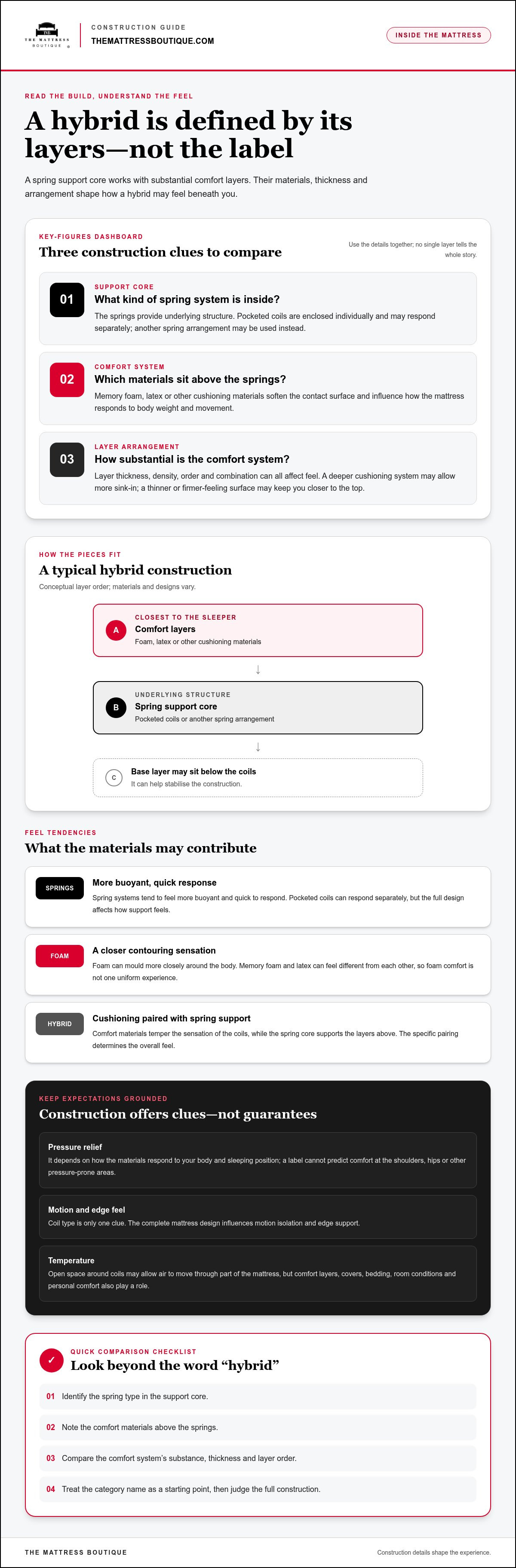
Ask what is a hybrid mattress, and the clearest answer is a bed with a spring support core beneath substantial comfort layers. The springs provide the underlying structure, while the upper materials cushion the body. Foam is common, but the materials and construction can differ from one design to another.
A hybrid mattress combines a spring-based support core with comfort layers made from cushioning materials, arranged to create a particular feel. That describes a construction approach, not a promise of one firmness level or sleeping experience. Two hybrids can feel quite different if their coils, surface materials or layer thicknesses differ.
Mattresses come in several constructions, as the general overview of Mattress types illustrates. For a hybrid, what matters is how a spring system and a substantial comfort system work together, rather than whether the mattress simply contains a spring.
Which layers make a mattress hybrid?
The support core sits beneath the comfort materials and provides the mattress’s underlying structure. It may use pocketed coils, where springs are enclosed individually, or another spring arrangement. Pocketed coils are a familiar component, but they aren’t the only possible spring design. A base layer may sit below the coils to stabilise the construction.
Comfort layers sit closest to the sleeper. They may include memory foam, latex or other cushioning materials. These layers soften the contact surface and influence how the mattress responds to body weight and movement. Some designs use several comfort layers, combining materials with different roles.
Look at the whole arrangement, not just a materials list. Layer thickness, density, order and combination can all affect the feel. A spring core under a thin surface covering may feel quite different from one paired with a deeper, more substantial cushioning system. When comparing descriptions, note both what the layers are made from and where they sit.
Is a hybrid mattress just a marketing term?
The word “hybrid” is useful when it points to identifiable spring and comfort layers. By itself, though, the label doesn’t explain how those layers are built or how they’ll feel. Look for a clear description of the support core and the materials above it. That gives you a better basis for comparison than the category name alone.
A traditional spring mattress can also have a padded surface. The distinction is in the construction: a hybrid pairs its spring core with a substantial comfort system, rather than relying mainly on the springs and a thin surface layer. There isn’t one universal recipe, so don’t assume every hybrid contains the same foam, coil type or layer sequence.
- Identify the spring type used in the support core.
- Look for the comfort materials above the springs.
- Compare how substantial the comfort system is, not just whether a top layer exists.
- Treat the label as a starting point, then use the construction details to understand what you’re considering.
How Hybrid Mattress Layers Shape Support, Pressure Relief, and Feel
A hybrid’s feel comes from the interaction between its support core and the materials above it. Springs respond to weight and movement, while comfort layers cushion the body before it reaches the coils. So what is a hybrid mattress in practical terms? It’s a combination of parts whose arrangement helps determine how the bed feels beneath you.
Hybrid performance depends on the specific pairing of springs and comfort materials, not on the hybrid label alone. A thicker or softer-feeling top layer may let you settle further into the surface. A different coil design can affect how quickly the mattress responds as you shift position. These are tendencies, not guarantees, because the full construction matters.
What do pocketed coils contribute?
Pocketed coils are springs enclosed individually in fabric pockets. Because they can respond separately rather than as one connected unit, their design may influence how support responds beneath different areas of the body. The coils also contribute a springier, more responsive sensation than cushioning materials alone. Their effect depends on factors such as their arrangement and how they work with the upper layers.
Don’t assume that pocketed coils guarantee a particular level of motion isolation or edge support. The complete mattress design influences those qualities. If you share a bed, notice how movement feels across the surface. If you sit or sleep near the edge, pay attention to how that area responds. Coil type is one clue, not the whole verdict.
How do comfort layers change the sleeping feel?
Foam can mould more closely around the body, creating a contouring sensation. Spring systems tend to feel more buoyant and quick to respond. In a hybrid, the comfort materials temper the sensation of the coils, while the spring core supports the layers above. Memory foam and latex can also feel different from each other, so “foam comfort” isn’t one uniform experience.
Layer depth matters. A deeper cushioning system may allow more sink-in, while a thinner or firmer-feeling surface may keep you closer to the top. Pressure relief depends on how those materials respond to your body and sleeping position. A label alone can’t tell you whether your shoulders, hips or other pressure-prone areas will feel comfortable.
Temperature is also linked to construction. Open space around coils may allow air to move through part of the mattress, but comfort layers can affect that airflow. Foam type, covers, bedding, room conditions and personal comfort all play a role, so don’t assume a hybrid will sleep cool in every setup.
To compare options, notice both the initial surface feel and what happens as you settle into the mattress. Does it cushion the areas that need relief? Does it respond easily when you turn? These observations connect construction details to your own comfort, rather than relying on broad claims. You can also explore mattress construction options alongside these features to understand how different materials may suit your preferences.
Hybrid vs Foam vs Spring Mattresses: What Actually Differs?
To compare mattress types, start with the support structure and the materials between you and it. A hybrid combines springs with substantial comfort layers. Memory foam mattresses use foam for cushioning and support, while spring-only designs rely primarily on a spring system, sometimes with a surface layer. These are broad categories, not guarantees of how a particular mattress will feel.
| Type | Typical construction | Broad feel and trade-off |
|---|---|---|
| Hybrid | Spring support core with substantial comfort layers, which may include foam or latex. | May combine cushioning with a responsive spring feel. The added layers can make the construction more complex, and the exact feel depends on their materials and arrangement. |
| Memory foam | Foam comfort and support layers without a spring core. | Often offers a closer-contouring sensation. How readily it cushions or responds depends on the foam and the way its layers are built. |
| Spring-only | A spring support system, which may be pocketed or Bonnell, with surface padding. | Can feel more spring-led and responsive. The amount of cushioning and how the springs respond vary between designs. |
Use the table as a starting point, not a verdict. A hybrid doesn’t automatically mean cooler, firmer or better. Coils may allow airflow through part of a mattress, but comfort materials and the bedroom environment also affect heat. Firmness and pressure relief depend on the full construction and how it feels to you.
How does a hybrid compare with memory foam?
A hybrid has a spring-supported structure beneath its comfort layers; a memory foam mattress uses foam instead of a spring core. Foam can create a contouring feel, while springs tend to add a more buoyant response. But the comparison isn’t absolute: the comfort layers in a hybrid affect its cushioning, and foam designs also vary. Neither construction is universally better for comfort or pressure relief.
How does a hybrid compare with a spring mattress?
The key distinction is the comfort system: a hybrid pairs springs with substantial cushioning, while a spring-led mattress may use a simpler surface layer. Spring designs also differ. Pocketed springs are enclosed individually, while Bonnell springs use a linked arrangement. These categories can help narrow the options, but the specific design still shapes the feel.
For a useful comparison, focus on what you notice when lying down: how readily the surface cushions you, how quickly it responds as you move, and whether the support feels comfortable in your usual sleeping position. Compare the same qualities across mattress types instead of assuming the category name predicts them.
The Mattress Boutique offers memory foam, latex, pocketed spring and Bonnell spring mattress categories, giving you a broader construction context for weighing these differences. If your research began with the question “what is a hybrid mattress,” comparing these distinct structures can help you identify the feel and trade-offs that matter most to you.
How to Decide Whether a Hybrid Mattress Fits Your Sleep Needs
Once you know what is a hybrid mattress, the next question is whether its construction suits your comfort preferences and bedroom. A spring core with cushioning layers may appeal if you want both, but the category alone can’t tell you how supportive, soft or comfortable a specific design will feel. Use this four-step checklist to make the decision more personal.
- Identify your preferred feel. Think about whether you prefer to sink into a cushioned surface or feel more lifted and responsive. Notice how your shoulders, hips and other pressure-prone areas feel in your usual sleeping position. Your position can guide what to pay attention to, but it doesn’t dictate one correct firmness.
- Compare constructions. Consider whether you want springs beneath comfort layers, an all-foam structure or a spring-led design. Compare the actual materials and layer arrangement rather than assuming every mattress in one category feels alike.
- Assess your room and bed. Check the mattress dimensions against the bed frame and available bedroom space. In warm, humid conditions, ventilation may be one factor in your comfort assessment, but it doesn’t guarantee a cooler night. Materials, bedding, room conditions and individual preferences all matter.
- Test for comfort, if possible. Lie in your usual sleeping position and give yourself time to notice pressure, support and ease of movement. If you share a bed, consider how movement feels for both sleepers, since each person may value different traits.
Which sleep preferences may point towards a hybrid?
A hybrid may be worth considering if you like the idea of a spring-based support core paired with cushioning comfort layers. It can offer a middle ground for someone who wants both a spring response and a softer surface, though the balance depends on the design. Couples should pay attention to movement response together rather than assuming the construction will suit both. Personal comfort and individual needs remain central.
What should you assess before choosing?
Look at three things side by side: the construction details, how the surface feels to you, and whether the dimensions suit your intended bed. If you’re comparing foam, latex and different spring designs as well, the complete mattress selection guide offers broader context for material and fit decisions.
Choose by construction and personal comfort, not category claims alone. That rule helps keep broad promises about firmness, support or cooling in perspective. A label can narrow the field, but your preferred feel, sleeping position, pressure preferences and room setup should shape the final choice. For a practical next step, compare mattress options across different constructions and materials.
Your Next Step: Compare Mattress Constructions with Confidence
Now that you know what is a hybrid mattress, you can compare it with other constructions more confidently. Start with the layers, consider how each design feels to you, then weigh that against your comfort preferences and practical bedroom needs. The goal isn’t to choose a category because it sounds more advanced. It’s to find a construction that feels suitable for the way you sleep.
The Mattress Boutique offers a range of mattress categories, including memory foam, latex, pocketed spring and Bonnell spring, alongside trusted options like SofzSleep. This wider selection provides useful context for comparing materials and support structures without assuming that every construction or feel is the same.
How can a mattress specialist help simplify the comparison?
Comparing foam, latex, pocketed spring and Bonnell spring categories can help you focus on the differences that matter: the support structure, the surface feel you prefer and the dimensions that fit your bed and room. For a brand-specific next step, exploring a dedicated mattress buying guide can help you review specific collections in more detail.
What should readers take away about hybrid mattresses?
A hybrid combines a spring core with comfort layers, but the exact materials and the way they’re arranged vary between designs. That means the category name alone can’t promise a particular firmness or feel. Compare the construction and judge comfort against your own priorities, including how you like a mattress to cushion and respond.
As you narrow your options, keep a short list of what matters most: your preferred surface feel, the support structure you’re considering, and the mattress dimensions that suit your intended bed. If you share the bed, include the other sleeper’s comfort preferences in the comparison. This makes it easier to weigh different constructions without treating broad claims about cooling, support or pressure relief as guarantees.
A considered choice comes from matching the layers and feel to your needs, not from choosing a label in isolation. Explore The Mattress Boutique's mattress options with those priorities in mind, and compare the available constructions at your own pace.
Make Your Mattress Comparison Personal
Your next step is to turn what you’ve learned about what is a hybrid mattress into a clear set of comfort priorities. Think about what you want to feel as you settle in, which areas need cushioning, and how easily you want the surface to respond when you move. Those preferences give you a more useful starting point than a category label alone.
As you explore, compare mattress types with your own needs in mind. The Mattress Boutique offers options across several constructions and brands, so you can keep your priorities at the centre of the decision rather than relying on broad claims about any one type. Take your time and focus on what feels right for your sleep and bedroom.
Explore mattress options at The Mattress Boutique and take the next step towards a choice that feels right for you.
Frequently Asked Questions
Is a hybrid mattress good for side sleepers?
Yes, a hybrid may suit side sleepers if its surface cushions the shoulders and hips while still feeling supportive. Try lying on your side in your usual position and notice whether your shoulder feels compressed or your waist feels unsupported. A “soft” label alone can’t predict the result, since body shape and layer design affect comfort. If one surface creates pressure, compare a different feel rather than ruling on the category as a whole.
Can a hybrid mattress help with back pain?
A hybrid may feel comfortable for some people with back discomfort, but a mattress can’t be relied on to treat or prevent back pain. Pay attention to whether your body feels supported in your normal sleeping position and whether you wake feeling more comfortable. Needs differ, so no single mattress type or firmness suits everyone. If pain is persistent or affecting daily life, seek advice from a qualified health professional.
How long does a hybrid mattress last?
A hybrid mattress commonly lasts around 7 to 10 years, although its usable life varies with material quality, use and care. To assess its condition, look for lasting dips, uneven areas or a noticeable change in comfort rather than relying on age alone. Follow the care guidance supplied with the mattress, use a suitable bed base and address signs of wear that affect your sleep.
What makes a hybrid mattress different from a pocket spring mattress?
The terms describe different aspects of construction, so they can overlap. “Pocket spring” refers to springs enclosed individually in fabric pockets. A hybrid describes a mattress that combines a spring support system with substantial comfort layers. A mattress may use pocketed springs as its core and still be hybrid if it has that layered construction. Check the full materials description to understand which structure you’re comparing.
Do hybrid mattresses need to be flipped regularly?
Don’t assume a hybrid should be flipped. Whether it can be turned over depends on how its layers are designed, and using the underside as the sleeping surface may change comfort or support. Check the mattress care instructions for whether it should be rotated, flipped or left in place. Rotation means turning it head-to-foot, not turning it upside down. Follow the maker’s guidance rather than setting a universal schedule.
Can you use a hybrid mattress on an adjustable bed?
Some hybrid mattresses can be used with adjustable beds, but compatibility depends on the mattress construction and the base. The mattress needs to flex with the frame without its structure being placed under unsuitable strain. Before pairing them, check the instructions for both items for compatibility and any limits on positioning. Don’t assume that a mattress will work with every adjustable base simply because it contains springs.
Are hybrid mattresses suitable for Singapore’s humid climate?
A hybrid may be suitable in Singapore, but its construction alone can’t guarantee a cooler, more comfortable night. Consider how the room is ventilated, the bedding you use and whether you tend to feel warm during sleep. If possible, assess the mattress in a setting that reflects your usual sleeping position and comfort preferences. Focus on your overall experience rather than assuming that any one material performs the same in every room.