

What if a generous sleep trial still leaves you with an unexpected return cost or an ineligible mattress? The mattress return policy things to know before you buy go beyond the number of trial nights. Eligibility conditions, fees and product requirements can all affect what happens if the mattress doesn’t suit you.
It’s sensible to look for flexibility when choosing a mattress, but policy terms can be easy to misread. A return, an exchange, a sleep trial and a warranty each serve a different purpose. Understanding those differences before ordering can help you compare options on equal terms and avoid surprises later.
This checklist covers seven details to review: the return window, minimum trial period, condition requirements, exclusions, fees, collection arrangements and the records to keep. It also explains how to weigh the terms alongside your comfort preferences. Whether you’re shopping with The Mattress Boutique or browsing different options, clear policy information can help you make a more considered choice.
Key Takeaways
- Use the mattress return policy things to know checklist to spot conditions that can affect eligibility, not just the length of the return window.
- Compare policies using the same criteria, including how the return period is measured, possible outcomes and return logistics.
- Save the policy and purchase records before ordering so you can refer to the terms and transaction details later.
- Assess mattress comfort alongside the practical return conditions to make a more informed choice.
- Compare mattress constructions such as memory foam, latex, pocketed spring and Bonnell spring against your comfort preferences.
Mattress Return Policy Basics: What the Terms Actually Mean
A mattress return policy is the retailer’s written set of conditions for returning or exchanging a mattress after purchase. It explains which options may be available and the requirements attached to them. Start with the policy that applies to the specific mattress and the way you’re buying it. Terms shown on a product page, for example, may differ from those for another purchase channel.
The headline number can catch your eye, but it doesn’t explain every condition. A stated comfort trial period is not automatically a promise of a refund, and it shouldn’t be confused with warranty coverage. Understanding the vocabulary makes the mattress return policy things to know easier to assess before you order.
Return, exchange, sleep trial and warranty: how they differ
A return means seeking to give back the mattress under the policy’s stated terms. The outcome might be a refund or another form of resolution, depending on what the policy says. An exchange generally means replacing the original mattress with another one; it may not mean getting your money back. Read the outcome wording rather than treating “return” and “exchange” as interchangeable.
A comfort trial is a period in which a retailer or brand may allow you to assess how a mattress feels, subject to the trial’s conditions. It differs from a warranty, which concerns specified product issues and the coverage described in its terms. A warranty shouldn’t be assumed to cover a change in comfort preference, just as a trial shouldn’t be assumed to cover every product problem.
Why policy wording matters before ordering
Two offers can display the same trial length but have different rules for starting a request, eligible products, mattress condition or available outcomes. The number alone doesn’t tell you whether the trial applies to your exact item or purchase channel. It also doesn’t explain what steps you must take or whether separate terms apply to an exchange and a refund.
Look beyond a banner or short promotional summary. Find the full written policy and note its scope: which mattress or order it covers, what the period refers to, and which conditions affect eligibility. Save a copy alongside the product and transaction details. This gives you a reference if the policy or promotion changes later.
For general background, Wikipedia’s overview of consumer protection laws introduces the broader topic, but it doesn’t determine the terms of an individual mattress purchase. The retailer’s written policy is the practical document to compare for that order.
Takeaway: Eligibility depends on the complete policy, not one headline period. Read the full terms before ordering so you know which options apply and under what conditions.
Mattress Return Policy Checklist: Read These Conditions Closely
A trial-period headline can look reassuring, but it may not tell you when the clock starts, which mattress condition is acceptable or what outcome you can request. Read the full terms for your specific product and purchase channel. Focus on the details that determine whether a return or exchange is available and what steps you’d need to take.
Work through the policy with this checklist. Record the exact wording rather than relying on assumptions:
- Timing: Does the period begin on the purchase date or delivery date? Note how the policy defines the final day and when a request must be submitted.
- Condition: Check requirements for cleanliness, stains, damage, wear, labels and original packaging. Don’t assume that a mattress used during a trial is automatically eligible.
- Exclusions: Look for named product categories or sale conditions with separate terms. Clearance items and custom orders, for example, may be addressed differently. Rely on the wording for the specific purchase rather than assuming they are excluded.
- Process and charges: Find out who arranges collection, how to prepare the mattress, and whether return, collection or delivery charges apply.
Eligibility, timing and mattress condition
Record the exact start and end points of the stated period, then check whether you must submit a request by a particular date. Read every condition about hygiene, damage, wear, labels and packaging. Separate general rules from exceptions for particular products or sale terms. A mattress might be within the stated time period but still fail another eligibility condition.
Check what counts as proof of purchase, too. The policy may refer to an order confirmation, receipt or other transaction record, so keep the relevant documents together. If the condition wording is broad, such as requiring the mattress to be “in good condition,” look for a further explanation in the full terms and save it for reference.
Refunds, exchanges and return logistics
Identify the outcome the policy describes. A return could lead to a refund under stated conditions, while an exchange may involve receiving a replacement instead. Some policies describe another form of resolution, so check the exact wording. Then trace the logistics: who arranges collection, how to prepare the mattress, and whether any charges are deducted or paid separately.
Before you buy, summarise the process in a few lines: how to start a request, which records to provide, what condition rules apply and what happens next. Save that summary alongside the policy and transaction details. If you’re still weighing comfort and construction, explore the mattress options available and compare the return terms separately.
How to Compare Mattress Return Policies Without Being Misled
A useful comparison looks beyond the biggest trial-period number. Put each retailer’s written terms into the same framework so you can see whether the period works for your situation, what outcome is offered and what conditions apply. A longer stated period isn’t automatically more suitable if strict eligibility rules or inconvenient return arrangements limit your options.
A side-by-side framework for policy terms
Use one row per retailer and the same criteria in every column. Mark each detail as clear, conditional or not stated in the material you’re comparing. “Not stated” means you need more detail to make a fair comparison, not that the retailer has no rule.
| Retailer example | Window and start date | Condition | Outcome | Exclusions | Logistics |
|---|---|---|---|---|---|
| IKEA, US terms | 90-day exchange period; start date not stated in summary | Conditional; condition and proof-of-purchase requirements are noted | Clear; one-time exchange | Not stated in summary | Not stated in summary |
| Mattress Firm, US terms | 21-night break-in period; return window start date not stated in summary | Not stated in summary | Conditional; return and exchange terms differ | Not stated in summary | Conditional; return delivery and restocking charges apply, with different exchange terms |
These examples show how different details can be clear or missing in a short policy summary. They describe US retailer terms, not local benchmarks or recommendations. For your own comparison, consult the full policy for the exact product and purchase channel. Don’t treat information absent from a summary as a confirmed policy term.
Match the policy to your mattress decision
Compare like with like: a trial’s length is only one part of the offer. Weigh the start date, condition rules, available outcome and return logistics together. A period that looks generous may be less useful if the terms are restrictive or the option is an exchange rather than the outcome you want.
Your comfort preferences matter, too. If you’re unsure about firmness, feel or construction, flexibility may carry more weight in your decision. If you’ve already experienced a similar mattress and feel confident about your preference, other factors may matter more. Consider whether you want to assess a mattress in person, then compare that preference with the written terms. The Mattress Boutique offers different constructions, including memory foam, latex, pocketed spring and Bonnell spring, so compare comfort needs as well as purchase terms.
For help weighing mattress types and comfort preferences, use this complete Singapore mattress selection guide. A consistent framework is among the most useful mattress return policy things to know: judge the full set of conditions, not duration alone.
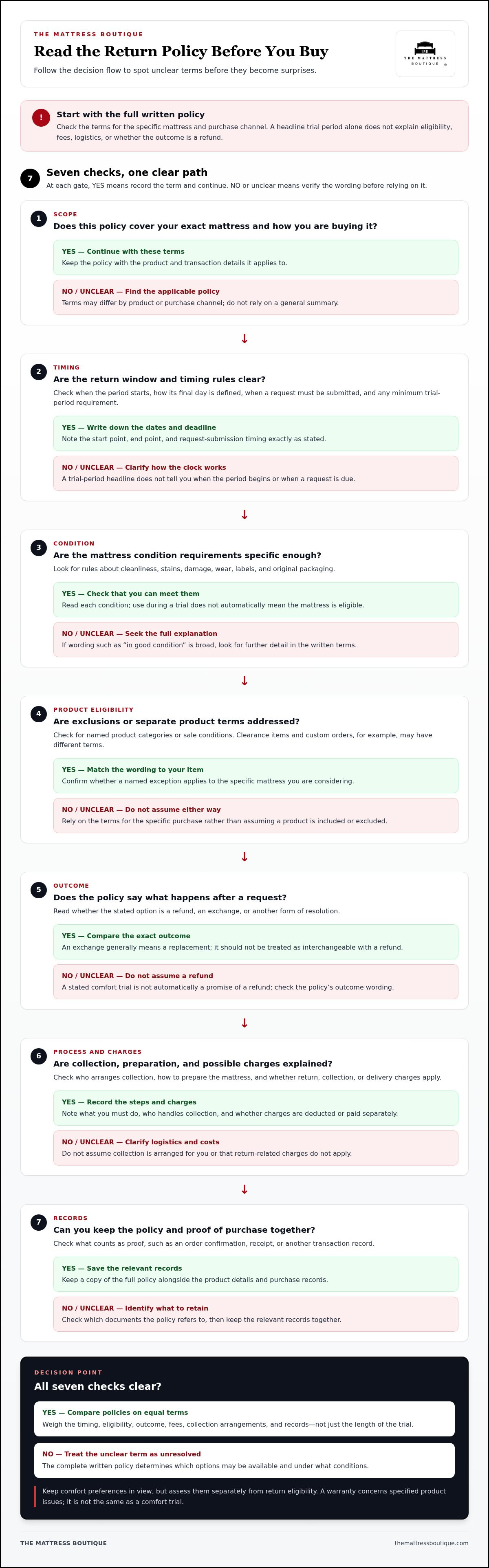
Before and After Delivery: A Practical Mattress Return Checklist
A simple record-keeping routine makes the terms easier to follow if your mattress doesn’t feel right or you notice a product concern. Use this checklist before ordering and after delivery. Policies differ, so follow the written process for your purchase rather than making assumptions about packaging, collection or deadlines.
Before placing the mattress order
Read the complete return and exchange policy alongside any conditions shown for the specific mattress. Save copies somewhere easy to find, such as a dedicated email folder or purchase file. Note how to begin a request and any stated deadlines, so you aren’t trying to locate key details under pressure.
After delivery and during the decision period
Follow the product’s care guidance, keep purchase records accessible and note relevant dates. If you have a concern, describe it specifically and follow the retailer’s stated steps. Don’t assume every retailer requires the original packaging or handles collection in the same way.
- Save the terms before checkout. Keep the full policy version you reviewed, including any product-specific wording. Record the order date, mattress name or description, selected size and sales channel. This helps you identify which terms relate to your purchase.
- Capture the transaction details. Store the order confirmation, receipt and relevant payment or delivery records together. Note the policy’s stated start date and deadline, plus how to initiate a return or exchange request.
- Keep instructions and documents handy. After delivery, retain product information and follow the care guidance supplied with the mattress. Keep labels or packaging only as the policy or product instructions require. Don’t assume they must be kept or discarded.
- Track your experience clearly. Note when the mattress arrived and, if useful, when you began using it. Describe comfort concerns specifically, such as the feel being firmer or softer than expected. If you notice a product issue, record what you observed and when.
- Review the terms before acting. If you’re considering a return or exchange, check the eligibility conditions, time limits and required steps again. Don’t rely on a general trial headline or assume the process is identical across retailers.
- Keep the conversation in writing. Follow the stated contact or request process and retain messages, acknowledgements and instructions. A clear record helps you track what was reported and which next steps were communicated.
These practical habits are among the mattress return policy things to know before buying: the policy, your records and the product’s care guidance work together. For a considered purchase, explore mattress options across different brands and constructions, then keep the terms for your chosen order with your records.
Choose a Mattress with Clear Terms and Confidence
A considered mattress choice comes down to two questions: does the mattress suit your comfort preferences, and do the purchase terms make sense for you? A return policy can help you understand your options if the mattress doesn’t meet expectations, but it doesn’t replace comparing feel, construction and product details before you buy. Treat policy clarity as one part of the decision, alongside the qualities that matter for everyday rest.
Balance comfort priorities with policy clarity
Start by identifying what you want from a mattress. Think about your preferred firmness and feel, the kind of support you find comfortable, and whether you have a construction in mind. Compare suitable options against those preferences. Read the written purchase terms at the same time, so you understand the conditions that would apply if you later considered a return or exchange.
- Comfort: Note whether you prefer a firmer or softer feel, and use that preference to guide your shortlist.
- Construction: Compare types such as latex, memory foam, pocketed spring and Bonnell spring without assuming one construction suits everyone.
- Product details: Check that the mattress you’re considering matches your needs and the description for that specific item.
- Purchase terms: Read the full policy for the product and purchase channel, rather than relying on a headline or general assumption.
Policy flexibility may matter more if you’re uncertain about feel or construction. If you already know what you prefer, you may place greater weight on finding a mattress that aligns with those preferences. Either way, assess the actual terms alongside the mattress itself. The key mattress return policy things to know are most useful when they help you make a considered choice, not when they encourage you to rely on a return as a fallback.
Explore mattress options at The Mattress Boutique
The Mattress Boutique offers mattresses from King Koil, Slumberland, Dunlopillo, SofzSleep and MaxCoil. Its range includes latex, memory foam, pocketed spring and Bonnell spring mattresses, giving you different constructions to consider as you narrow down your comfort preferences. Compare options by the details that matter to you, then read the purchase terms relevant to your selection.
If you’re considering King Koil, this King Koil mattress buying guide can help you explore what to consider for that brand. Use it alongside your comfort priorities and a careful review of the terms for your purchase.
Take your time comparing. Explore the mattress range, identify the construction and feel that best match your preferences, and review the applicable purchase terms before ordering. Clear information supports a more confident decision.
Make Your Next Mattress Choice with Confidence
Turn what you’ve learned into a decision that suits your home and comfort priorities. Before ordering, consider what feel you prefer and which purchase terms matter most to you. The mattress return policy things to know aren’t just fine print; they can help you set realistic expectations and choose with greater confidence.
A thoughtful purchase doesn’t depend on expecting to return a mattress. It starts with comparing suitable options, understanding the terms attached to your order and keeping the relevant details easy to find. That preparation gives you a clearer basis for choosing a mattress that feels right for your needs.
Explore the mattress range at The Mattress Boutique and take the time you need to find an option that fits your preferences. Explore mattresses at The Mattress Boutique, then review the applicable purchase terms as you consider your choice.
Frequently Asked Questions
Can I return a mattress after opening it?
Possibly, but opening a mattress doesn’t automatically determine whether it can be returned. The specific retailer’s terms may distinguish between removing packaging and using the mattress, and may set conditions for cleanliness, labels or damage. Before unwrapping it, check the policy for the exact mattress and purchase channel. If you’ve already opened it, compare its current condition with the written requirements and keep your order details ready.
How long is a mattress return or sleep-trial period?
There’s no single period that applies to every retailer. Check the stated number of days or nights, whether the clock starts at purchase or delivery, and whether the offer is a return, exchange or comfort trial. These are key mattress return policy things to know when comparing options. Don’t compare a trial length at one retailer with a return window at another as if they promise the same outcome.
Do I need the original packaging to return a mattress?
That depends on the written terms for your mattress and purchase. Some policies address packaging, while others focus on labels, cleanliness, damage or proof of purchase. Before disposing of packaging, look for any requirement in the applicable policy or product instructions. If you’re unsure how a condition applies, keep the packaging temporarily and save the policy and order documents so you can refer to the exact wording.
What is the difference between a mattress return policy and a warranty?
A return policy sets out whether a retailer may accept a mattress back after purchase and what conditions apply. A warranty covers specified product issues under its own terms. A concern about comfort, for example, may be treated differently from a reported product fault. Read the documents separately and identify which one applies to your situation. Keep both with your order information so you can follow the relevant process.
What happens if my mattress feels uncomfortable after delivery?
Check the policy for any comfort trial or exchange option, including its deadline and eligibility requirements. Follow the product instructions for care, and note what feels uncomfortable, such as the firmness or overall feel. If you decide to make a request, follow the stated steps and include clear purchase details. Discomfort doesn’t automatically qualify a mattress for a return, so don’t rely on assumptions.
Are mattress return policies the same across Singapore retailers?
No. Retailers can set different time limits, eligibility conditions, exclusions, outcomes and collection arrangements. A policy on an overseas retailer’s website or in a community discussion may not apply to a mattress purchased in Singapore. For a useful comparison, check the terms attached to the exact product and purchase channel you’re considering, and save a copy with your order information.
Can I exchange a mattress instead of getting a refund?
That depends on the retailer’s policy. Some terms provide an exchange option, while others describe a refund or another outcome. Before choosing, check how a replacement is selected, whether any price difference is addressed, and whether the same condition and timing rules apply. An exchange means a different outcome from a refund, so make sure the written terms match what you’d want if the mattress doesn’t suit you.