

The bed that gives you more room to sleep can also leave you with less room to move. Understanding the difference between super single and single bed sizes helps you weigh comfort against usable floor space before choosing. The extra width may feel worthwhile for a solo sleeper, but only if it fits your room and bed frame.
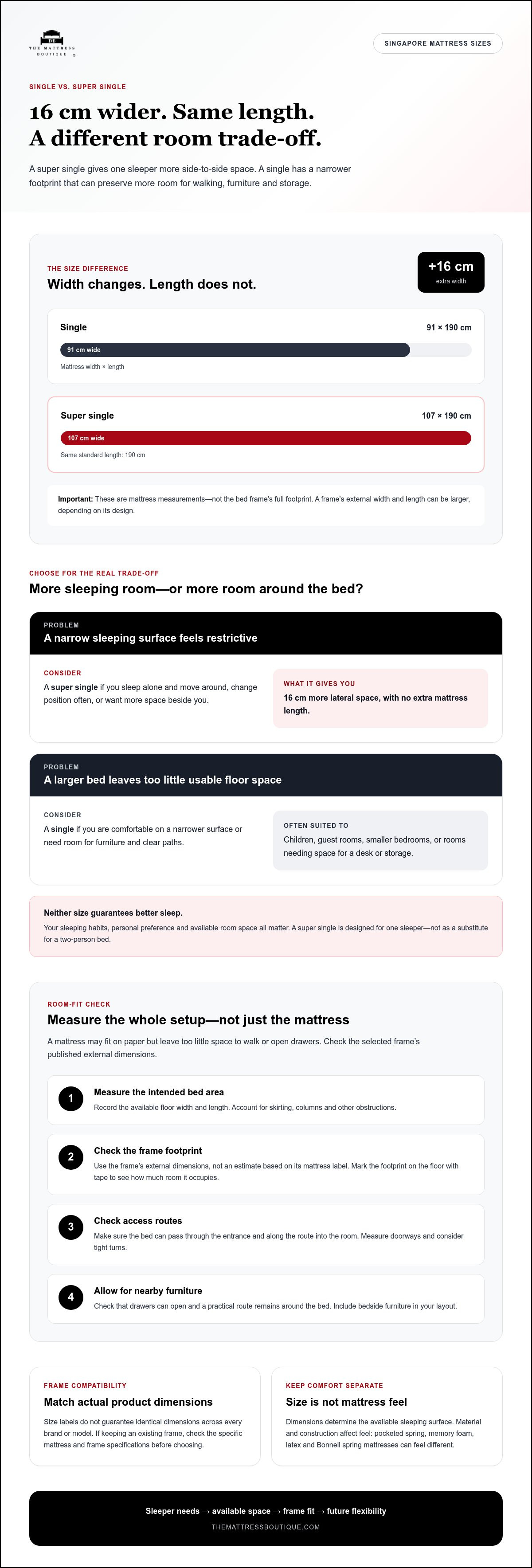
In Singapore, a standard single mattress measures 91 cm by 190 cm, while a super single measures 107 cm by 190 cm. That is 16 cm of extra width, with no added length. It gives you more space to stretch out, but also takes up more of the bedroom.
This guide compares the dimensions, everyday comfort and room fit of both sizes, then explains how to match a mattress to the right frame. Use the measurements and checks below to narrow down the best fit for your needs and avoid a mismatch with an existing bed frame.
Key Takeaways
- The difference between super single and single bed sizes is mainly sleeping width, which affects both comfort and the floor space left in your room.
- Consider your sleeping position and how much you move at night when deciding whether the extra width would be useful.
- Measure the room, frame footprint, access routes and nearby furniture before choosing. A frame’s external dimensions can be larger than its mattress.
- Use a simple decision sequence: consider the sleeper’s needs, measure the available space, confirm frame compatibility, then think about future flexibility.
- After choosing a size, compare mattress materials and storage or divan frame options to find a setup that suits your bedroom.
Single vs Super Single Bed: What Is the Size Difference?
The main difference is width, not length. In Singapore, a super single mattress gives you more room from side to side, while its standard length matches that of a single mattress.
| Mattress size | Width | Length |
|---|---|---|
| Single | 91 cm | 190 cm |
| Super single | 107 cm | 190 cm |
These measurements describe the mattress, not the full footprint of the bed frame. A frame’s external width and length can be larger, and the difference depends on its design. Use the frame’s external dimensions when planning where it will sit in your room.
What are the standard single and super single dimensions in Singapore?
A standard Singapore single mattress measures 91 cm wide by 190 cm long. A standard super single mattress measures 107 cm wide by 190 cm long. These local measurements are a useful starting point, but size labels do not guarantee that every brand or model has identical dimensions. Bed sizes also vary between regions, as this guide to bed size dimensions illustrates. When buying a mattress or matching it to a frame, rely on the specific product dimensions rather than the general size label.
How much extra sleeping space does a super single provide?
In Singapore, a super single mattress is 16 cm wider than a single mattress, while both standard sizes are 190 cm long. That added width gives one sleeper more lateral space without increasing the mattress length.
The extra room may help if you move around during sleep, change positions often or find a single mattress restrictive. A single has a narrower footprint, which can help preserve floor space in a compact bedroom. Neither size is automatically more comfortable. Your sleeping habits and the room available both matter.
The difference between super single and single bed sizes is easy to measure, but the better fit depends on how you sleep and how much space your room can spare. Check the exact specifications before choosing, especially if you plan to keep an existing frame.
How Do Single and Super Single Beds Feel for Everyday Use?
Bed size affects how much room you have to turn, stretch and settle into your usual sleeping position. A wider surface may feel more open, especially if you shift often at night. A narrower bed can feel comfortable if you tend to stay in one position, while leaving more space for walking or furniture.
Comfort also depends on the sleeper. Consider how you move and the positions you tend to sleep in when deciding how much width feels comfortable. Size labels can differ by region, so use local product specifications rather than assuming overseas terms mean the same thing. For context, this guide to standard US mattress sizes explains US sizing conventions.
Keep bed size separate from mattress feel. Dimensions determine the available sleeping surface, while material and construction affect the feel of the mattress. Pocketed spring, memory foam, latex and Bonnell spring mattresses can feel different, so compare those qualities separately from the choice between single and super single.
Who is a single bed best suited to?
A single can suit children, guest rooms, smaller bedrooms or anyone comfortable sleeping on a narrower surface. It can also leave more floor space for a desk, storage or a clear path around the room. Rather than deciding based on age or body type alone, consider how the person sleeps and how else the room needs to be used.
When is a super single bed more comfortable?
The extra width may suit a solo sleeper who moves around, changes position or prefers more space beside them. It can make the bed feel less restrictive, but it does not guarantee better sleep. The right choice depends on personal preference, sleeping habits and whether the larger frame still leaves enough room to move around the bedroom.
A super single is designed for one sleeper, not as a substitute for a two-person bed. If you share a bed, consider whether its width can comfortably accommodate both people rather than assuming a larger single size will be enough.
A single may suit sleepers who prioritise a compact footprint, while a super single may suit solo sleepers who value more room to move. To compare mattress materials and bed-frame options alongside your size choice, explore mattress and bed-frame options.
Will a Super Single Bed Fit Your Room and Existing Frame?
A mattress can fit in a room on paper but still leave too little space to open drawers or walk comfortably. Check the complete frame footprint, not just the mattress size. The frame’s external width and length can exceed the mattress measurements, with the difference depending on the design. For more room-planning advice, see the Singapore Bed Sizes Guide: HDB and Condo Room Planning.
Use this measuring sequence before choosing a size:
- Measure the intended bed area. Record the available floor width and length. Account for skirting, columns and other obstructions that affect where the frame can sit.
- Check the frame footprint. Use the selected frame’s published external dimensions rather than estimating from the mattress label. Mark the footprint on the floor with tape to see how much room it occupies.
- Check access routes. Make sure the bed can pass through the entrance and along the route into the room. Measure doorways and consider tight turns, not just the final position.
- Allow for nearby furniture. Check whether drawers can open and whether you will retain a practical route around the bed. Include bedside furniture in your layout.
This process makes the difference between super single and single bed sizes easier to assess in your own room. It also helps prevent a common mistake: choosing based on mattress dimensions alone, which do not show how much floor space the frame will use.
How do you measure a room before choosing a bed?
Start with the exact area where the bed will go and note anything that reduces usable space. Compare it with the frame’s published external width and length. A paper sketch or taped outline can help you judge clearance around the bed and nearby furniture before settling on a layout.
Can you use a single mattress on a super single bed frame?
Mattresses and frames are designed to match particular sizes. A smaller mattress on a larger frame may leave gaps around the edges or shift, depending on the frame design. If the mattress does not sit as intended, it may feel less secure in everyday use.
For a reliable fit, compare the exact mattress dimensions with the frame specifications before purchase. If you are keeping an existing frame, identify its intended mattress size and use its measurements rather than relying on a general label.
How to Choose Between a Single and Super Single Bed
There is no universally better size. The right choice depends on the sleeper’s comfort, the room’s usable space and mattress-frame compatibility. Use this sequence to decide:
- Start with the sleeper. Consider their preferred sleeping position and how much they move during the night.
- Check the room. Decide whether gaining sleeping width would leave enough space for furniture and everyday movement.
- Confirm the frame fit. Match the mattress size to the frame’s stated compatibility, then compare the frame’s external measurements with your room plan.
- Think ahead. Consider whether the bed may need to suit changing needs or another room in the future. Do not assume one size will always be the best fit.
In a compact room, preserving floor space may matter more than gaining extra width. If a larger frame crowds a walkway or makes furniture awkward to use, a single may make better use of the room. If the layout accommodates it and the sleeper values more space, a super single may be more suitable. The difference between super single and single bed sizes is only one part of the decision.
Which size should you choose for a child, teenager, or guest room?
Base the choice on current comfort, available space and how the room is used. A super single can give a growing child more room to stretch out, but it may not suit every future need or room layout. In a guest room, a single may leave more space for other uses, while a super single gives guests a wider sleeping surface if the room can accommodate it.
What should you check before buying a mattress and bed frame?
Match the mattress to the frame’s stated compatibility, then compare the frame’s external dimensions with your room plan. Do not assume frames with the same size label have identical footprints. If you are also weighing firmness or support, compare mattress materials separately from bed size. The Mattress Boutique offers pocketed spring, memory foam, latex and Bonnell spring mattresses, alongside storage and divan bed frames.
For a size choice that works as a complete setup, explore mattresses and bed frames suited to your room and sleeper.
Where to Find a Mattress and Frame That Match Your Chosen Size
A single bed can be practical when a compact footprint matters. A super single offers more width for one sleeper, provided the room and frame can accommodate it. Once you have settled on a size, assess mattress comfort and frame compatibility as separate parts of the decision.
The difference between super single and single bed sizes is about the sleeping surface, not mattress construction. Pocketed spring, memory foam, latex and Bonnell spring describe mattress types, not dimensions. Consider the feel you prefer, then choose a mattress size that matches the frame’s stated compatibility.
How do mattress type and bed size work together?
Start with the size that suits the sleeper and room. Then compare mattress materials based on comfort preferences. The Mattress Boutique offers a wide selection featuring pocketed spring, memory foam, latex and Bonnell spring options. Brand and material describe different aspects of a mattress, so check each product’s specifications when comparing options.
What is the next step after deciding on a bed size?
Compare the mattress dimensions with the frame’s stated compatibility, then check the frame’s external measurements against your room plan. This helps ensure the mattress fits the frame and the full setup works in the space. Storage and divan bed frames are two frame categories to consider alongside your chosen mattress size.
For a closer look at materials and comfort factors, read a mattress-selection guide before narrowing down your options. Then explore The Mattress Boutique’s mattress and bed-frame range to compare suitable categories.
Choose the Bed Size That Works for You
The difference between super single and single bed sizes comes down to the sleeping surface and the room each size leaves around it. A single suits a more compact footprint, while a super single offers more width for one sleeper. Let your sleeping habits, room layout and frame compatibility guide the final choice.
Once you have chosen a size, consider mattress comfort separately. The Mattress Boutique offers mattresses from King Koil, Slumberland, Dunlopillo, SofzSleep and MaxCoil, alongside storage and divan bed frames. Compare product specifications to make sure your mattress and frame are suited to one another.
Explore mattresses and bed frames at The Mattress Boutique and compare options for your bedroom. With accurate measurements and a clear sense of your priorities, choosing a comfortable, well-fitting bed can feel much simpler.
Frequently Asked Questions
What is the difference between a single and super single bed?
In Singapore, the main difference is mattress width: a single measures 91 cm by 190 cm, while a super single measures 107 cm by 190 cm. Both have the same standard length, but the super single gives one sleeper more room from side to side. These are mattress measurements, not frame footprints. Bed frames may be larger, so check their external dimensions and the mattress compatibility stated in the product specifications.
How much wider is a super single bed than a single bed?
A Singapore super single mattress is 16 cm wider than a standard single mattress. Both sizes are 190 cm long, so the extra space is across the width, not the length. That added room may help if you move often during sleep or prefer more space to change positions. Whether it is worth the larger footprint depends on your comfort preferences and how much room your bedroom can spare.
Is a super single bed suitable for adults?
Yes, a super single can suit an adult sleeping alone, especially if they prefer more room to move than a single provides. Comfort also depends on the person’s sleeping habits and the mattress’s feel and support. Check the mattress length and your room layout before deciding. A super single is intended for one sleeper, so it should not be treated as a two-person bed.
Can a single mattress fit on a super single bed frame?
A single mattress generally will not match a frame intended for a super single. The smaller mattress may leave gaps around the edges or move within the frame, depending on its design. For a proper fit, match the mattress size to the frame’s stated compatibility. Compare the exact product specifications rather than relying on size labels alone, as measurements can vary between brands and models.
Is a super single bed large enough for two people?
A super single is generally a single-sleeper size, not a comfortable substitute for a bed designed for two adults. Its extra width may give one person more room to stretch or change position, but sharing it can leave both sleepers with limited space. If two people will use the bed regularly, consider a larger size designed for shared sleeping and confirm that it fits the room.
How do I measure my room for a super single bed?
Measure the floor area where the bed will sit, noting obstructions such as skirting or columns. Then compare it with the frame’s published external width and length, which can exceed the mattress dimensions. Mark the footprint on the floor and check doorways, access routes, nearby furniture, drawer openings and walking space. This helps you judge whether the frame will work in everyday use, not just on paper.
Does a super single mattress have the same length as a single mattress?
In Singapore, the standard dimensions for both a single and a super single mattress include a length of 190 cm. The super single is wider, at 107 cm compared with the single’s 91 cm. Treat these as general size references, then use the exact product specifications when choosing a mattress or matching it to a frame, since size labels alone do not guarantee identical measurements across brands.