

What if the bed frame that looks best on its own makes your bedroom feel crowded or mismatched? Choosing how to match bed frame with bedroom decor takes more than picking a finish you like. The frame’s colour, material, shape and size all affect how it works with your furniture, lighting and bedding.
It’s easy to hesitate when a bold headboard or bulky frame might compete with patterns or take up valuable floor space. A more reliable approach is to start with the room you have, then weigh style against everyday needs.
This guide offers a practical way to compare frame finishes with your room’s palette, choose shapes and proportions that feel balanced, and plan around the space available. It also covers mattress fit and support, plus whether a storage or divan bed frame could suit your bedroom. The aim is to choose a frame that feels at home in the room and works with your sleep setup.
Key Takeaways
- Learn how to match bed frame with bedroom decor by considering the room’s existing colours, furniture, mood and practical priorities.
- Coordinate finishes through complementary undertones and textures. A cohesive look doesn’t require every piece to match exactly.
- Compare frame height, headboard size and leg visibility to see whether a style will feel balanced or visually bulky.
- Use a checklist to assess room and mattress dimensions, style and function before choosing a frame.
- Use bedding, lighting and bedside furniture to complement the frame without competing with it.
How to Match a Bed Frame with Your Bedroom Decor: Start with the Room
A bed frame is often the largest piece of furniture in a bedroom, so the wrong colour, shape or scale can throw the room off balance. Start with what’s already there instead of choosing a frame in isolation. To work out how to match bed frame with bedroom decor, identify what must stay, how you want the room to feel and what practical needs the frame must meet.
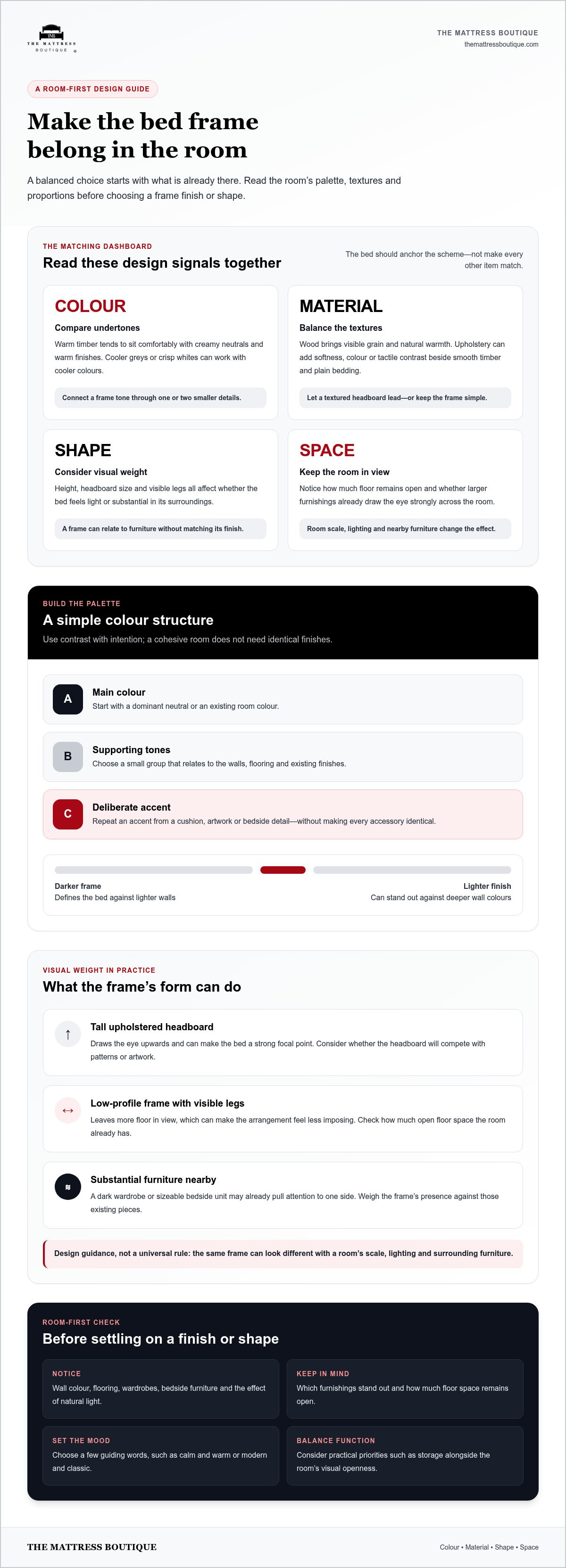
The bed should anchor the scheme, not force every other item to match. A frame can relate to a bedside table through a shared undertone or texture without having the same finish. Before comparing options, note fixed features, existing furniture, your preferred mood and practical priorities such as storage or keeping the room visually open. A quick overview of different types of bed frames can help you understand the broad forms available before considering what might suit your space.
What should you assess before choosing a bed frame?
Take stock of the room’s permanent and prominent features. Note the wall colour, flooring, wardrobes and bedside furniture, then consider how natural light affects the appearance of colours and finishes. Look at the visual weight of larger furnishings, too. A dark wardrobe or substantial bedside unit may already draw the eye strongly to one side of the room.
- List the colours and materials that are difficult to change.
- Note which furnishings stand out and how much floor space remains open.
- Choose a short list of mood words, such as calm and warm or modern and classic.
Use these notes as a filter, not a strict formula. They can narrow the options while leaving room for the frame to add character.
How do you build a bedroom colour palette around the bed?
Start with a dominant neutral or an existing room colour, then choose a few supporting tones. If the walls and flooring are warm, a frame with a compatible warm undertone can help the scheme feel connected. You can also repeat an accent from a cushion, artwork or bedside detail without making every accessory the same colour.
A cohesive bedroom palette uses a main colour, a small group of supporting tones and a deliberate accent. Contrast can add definition. For example, a darker frame against lighter walls makes the bed a clear focal point. Keep the remaining colours controlled so the contrast feels intentional rather than busy. This gives you a practical way to assess the finish before comparing frame shapes and proportions.
Match Bed-Frame Colours, Materials, and Styles for a Cohesive Look
Once you’ve considered the room’s palette, compare how different frame finishes will affect its overall feel. Wood shows grain and can bring natural warmth; upholstery can add softness, colour or texture. Depending on its colour and shape, a painted or metal finish may look cleaner and more defined. The goal isn’t to match every piece exactly, but to choose a frame that relates to the room in a considered way.
Colour sets the mood, material adds texture, and style connects the bed frame to the character of the room. Thinking about these elements together makes it easier to decide how to match bed frame with bedroom decor.
Which bed-frame colours work with existing bedroom furniture?
Compare undertones rather than relying only on broad colour labels such as “brown” or “white.” Warm-toned timber tends to sit comfortably with creamy neutrals and other warm finishes, while cooler greys or crisp whites can work well with cooler colours. The tones don’t need to be identical; they just need to look intentional together.
A neutral frame can help a room with varied furniture or patterned bedding feel calmer. For a stronger focal point, use contrast: a dark frame against pale walls can define the bed, while a light finish can stand out against deeper wall colours. To connect the frame to the rest of the room, repeat its tone in one or two smaller details, such as a cushion, lamp base or picture frame. That creates a visual link without making the room look overly coordinated.
How should bed-frame materials complement bedroom style?
Look at the textures already in the room. A wooden frame can complement natural-grain furniture, woven fabrics or other organic finishes. It may suit a Scandinavian-inspired scheme with simple forms, or a mid-century modern look with warmer wood tones and clean lines. Treat these styles as references, not rules. The right choice is the one that works with your existing pieces.
An upholstered frame creates a different effect. Its fabric can soften a room with hard surfaces, introduce a muted accent colour or add tactile contrast beside smooth timber and plain bedding. Consider the whole composition: a textured upholstered headboard can become the main feature, while a simpler finish leaves more room for patterned linens or artwork.
If you’re comparing practical frame categories as well as appearance, explore storage and divan bed frames. For another perspective on bedroom finishes, consult a professional bedroom design guide, then weigh any inspiration against your room’s colours, materials and everyday needs.
Compare Bed-Frame Shapes and Visual Weight Before You Choose
A frame’s visual weight depends on more than its colour. Its height, headboard size, visible legs and the amount of open floor around the bed all affect whether it feels light or substantial. A tall upholstered headboard can draw the eye upwards and make the bed a strong focal point. A low-profile frame with visible legs leaves more floor in view, which can make the arrangement feel less imposing.
Use the comparison below as design guidance, not as a set of universal rules or product specifications. The same frame can look different depending on the room’s scale, lighting and surrounding furniture. When deciding how to match bed frame with bedroom decor, picture each option in your actual layout rather than judging by style alone.
| Frame type or feature | Typical visual effect | Room and practical considerations |
|---|---|---|
| Low-profile frame | Creates a lower, visually lighter arrangement | Can suit a room where you want more open space above the bed; consider how its height works with the mattress and nearby furniture. |
| Tall or upholstered headboard | Makes the bed a stronger focal point; fabric can add softness | Check the wall space and ceiling height, especially if other large pieces already draw the eye. |
| Wooden frame | Shows the structure clearly and brings grain or colour into the scheme | Consider how its finish relates to existing furniture and whether visible legs keep the base feeling open. |
| Storage bed frame | Can appear more substantial because of its fuller base | Useful for combining the bed with a storage need; allow for the frame’s footprint and how it will sit among other furnishings. |
| Divan bed frame | Often gives the bed a simple, streamlined base | Its visual simplicity can help keep attention on bedding or a headboard; assess the overall height once paired with the mattress. |
Will a tall or low bed frame suit your bedroom better?
Choose a tall headboard if you want the bed to anchor the room or balance a high ceiling. In a room that feels compact or already has prominent furniture, a lower frame may create a calmer profile. Consider the whole composition: ceiling height, bedside pieces and bed width all affect the result. A low frame isn’t automatically best for a small room, and a tall headboard can work in a modest space if the rest of the scheme stays simple.
How do storage and divan frames affect the room’s look?
Storage frames can make the bed feel visually solid, so consider whether that presence will balance the room or make it feel crowded. A divan frame can provide a cleaner-looking base if you prefer fewer visible structural details. In either case, weigh appearance against everyday function and available floor space. Choose a frame that suits the mattress and the way you use the room, not just the style you’re aiming for.
How to Choose a Bed Frame: A Practical Room-by-Room Checklist
A few measurements and a consistent review process can prevent a frame from looking right in a photo but feeling awkward in your bedroom. Use this checklist to weigh appearance, fit and everyday use together. It turns how to match bed frame with bedroom decor into a series of clear decisions instead of guesswork.
- 1. Measure the intended bed area. Note the available floor space and account for walking routes, nearby furniture and door swings. As a general planning guide, allow around 60 to 90 cm of clear space beside the bed and at its foot where the layout permits. Check whether drawers, cupboard doors or storage compartments can open without obstruction.
- 2. Check mattress size and frame footprint separately. Confirm the frame is designed for your mattress size, then compare its full external dimensions with the available space. Include any headboard projection, which can extend the bed further into the room.
- 3. Review your palette and materials. Use a room photo or a short list of wall, floor and furniture colours to judge whether the frame will blend in, complement existing tones or create deliberate contrast.
- 4. Choose a style that fits the room. Compare the headboard height, frame profile and visible legs with the scale of nearby furnishings. A bold headboard may suit a room where the bed is the focal point, while a simpler base can work with more visually prominent furniture.
- 5. Check function, then review the whole setup. Consider your mattress and daily routine alongside practical needs such as storage access. Look at the frame in a room photo or sketch, and make sure the final choice supports both the layout and the look you want.
The mattress dimensions describe the sleeping surface; the complete frame footprint determines how much floor space the bed occupies. Keep both measurements in view. A frame may suit the mattress but still feel too large once you account for its base and headboard.
To coordinate the mattress and frame, compare the frame’s intended mattress size with the mattress you plan to use. Then review how their combined height and proportions fit your layout. Storage can be useful, but access matters: leave enough room to use it comfortably. Aim for a frame that works with your sleep setup without restricting movement or disrupting the room’s overall style.
Ready to compare options for your room? Explore bed frames and mattresses as you narrow down your shortlist.
Finish the Bedroom Scheme Around Your Bed Frame
Once the frame is in place, use bedding and accessories to connect it to the rest of the room. Let the frame remain visible enough to contribute to the scheme. Bedding that covers every edge may hide the finish or shape you chose. Instead, use sheets and a duvet to support the palette, then add a cushion or throw as a small accent.
What bedding and accessories make a bed frame feel intentional?
Choose bedding that complements the frame without competing with it. Plain or softly textured linens give a distinctive headboard room to stand out, while a simpler frame can provide a calm backdrop for patterned bedding. If the frame has a noticeable colour or material, repeat that detail selectively in a cushion, throw or bedside accessory. A little repetition connects the elements without making everything look like a matching set.
Lighting and bedside furniture should balance the bed’s presence. If the frame has a strong silhouette, choose bedside pieces with clean lines and lighting that doesn’t crowd the headboard. If the frame is visually simple, a lamp or textured bedside detail can add interest. Pillows can contribute comfort and colour, so consider how their covers work with both the bedding and the frame.
How can you review the finished bedroom before deciding?
Step back and look at the room from the doorway and from the usual approach to the bed. These views can show whether the frame feels proportionate beside wardrobes, windows and bedside furniture, or whether one feature dominates unexpectedly. Check the composition in daylight and with the room lights on, as colours and textures can look different in each.
Make a final practical check as well. Can you move comfortably around the bed? Are doors, drawers and storage still accessible? Does the bedding stay in place without hiding a detail you wanted to show? If the room feels cluttered, remove or simplify an accessory before changing the frame. If it feels unbalanced, repeat one frame colour or texture in a smaller detail, or adjust the bedside lighting.
A finished bedroom should look coordinated and still feel easy to use. That’s the final test of how to match bed frame with bedroom decor: the frame belongs in the scheme, and the layout still supports everyday comfort. If you’re considering a different setup, explore bed-frame and mattress options from The Mattress Boutique to find a combination that suits your room and sleep needs.
Choose a Frame That Feels at Home
A well-chosen bed frame brings the bedroom’s colours, materials and proportions together without requiring every furnishing to match. Start with the room’s fixed features, then compare finishes and shapes with the space you have. The frame should also suit your mattress and daily routine, so check the mattress size and the frame’s full footprint before settling on a style.
The practical approach to how to match bed frame with bedroom decor is to balance appearance with comfort and usable space. Once the frame is in place, bedding, lighting and a few repeated accents can make the scheme feel considered while leaving the bed as the focal point, if that’s the look you want.
The Mattress Boutique offers storage and divan bed frames, along with mattresses and pillows to help complete your bedroom setup. Explore bed frames and mattresses at The Mattress Boutique to find options for a coordinated, comfortable bedroom.
Frequently Asked Questions
How do I choose a bed frame colour to match my bedroom?
Start with the room’s fixed colours, such as the walls and flooring, then compare warm or cool undertones with the frame finish. A neutral frame can blend with a varied palette, while a contrasting shade can make the bed a focal point. To learn how to match bed frame with bedroom decor, repeat one detail of the frame’s colour in a cushion, throw or other small accessory. The rest of the room doesn’t need to match exactly.
Should my bed frame match my bedroom furniture?
No, your bed frame doesn’t need to match every piece of furniture. Aim for a visual connection instead, such as similar undertones, a repeated material or a complementary shape. For example, a wooden frame can work beside bedside furniture in a different wood finish if their tones feel compatible. If the finishes vary widely, use bedding or a small accessory to create a link and keep the overall palette controlled.
What bed frame style makes a small bedroom look bigger?
A low-profile frame with visible legs can help a room feel more open because it leaves more of the floor visible. A simpler headboard can also reduce visual bulk, especially if nearby furniture already draws attention. Measure the room before choosing, and consider how the frame’s full footprint affects access around the bed. A storage frame may still suit a small room, but make sure its size and access needs work with the layout.
Can a wooden bed frame work with upholstered bedroom furniture?
Yes, wood and upholstery can make a balanced combination. The contrast between visible wood grain and soft fabric adds texture, while similar undertones can help the materials feel connected. For instance, a warm wood frame can complement upholstered furniture in a warm neutral shade. If the room already has several textures or strong colours, choose a simpler frame finish or bedding so the different materials don’t compete for attention.
How do I match a bed frame with patterned bedding?
Let either the frame or the bedding take the lead. With bold or busy bedding, a frame in a restrained colour can provide a calmer backdrop. If the frame has a strong colour or distinctive finish, choose bedding that includes a related tone without repeating the pattern. Keep other accessories simple, or pick one colour from the bedding for a cushion or throw to tie the elements together.
Does a bed frame have to match the mattress size exactly?
The frame needs to be designed for the mattress size you’re using, so check that both are compatible before deciding. Also compare the frame’s external dimensions with your available floor space: the complete frame may extend beyond the mattress, particularly around the headboard or base. Measure the mattress and frame separately, then allow for nearby furniture and comfortable access around the bed. This helps ensure the setup fits both the mattress and the room.
How do I make a storage bed frame look less bulky?
Balance its substantial base with lighter visual choices around it. Bedding in a calm, relatively simple palette can reduce competition, while a clear floor area and streamlined bedside furniture help the room feel less crowded. Avoid repeating the storage frame’s visual weight with several large accessories. Before settling on the arrangement, check that storage can be accessed easily and that there’s still enough space to move comfortably around the bed.