

The plushest-looking bed isn’t always the most comfortable one. Achieving hotel luxury bed feel at home is less about buying one expensive upgrade and more about building layers that work together. If your freshly made bed still looks flat or feels too warm, identify what is bothering you before adding more bedding.
A polished hotel-style bed comes from a considered order of layers, balanced proportions and comfort suited to your sleep preferences. In Singapore’s warm, humid climate, adding more bedding isn’t always the answer. Lighter layers may feel more comfortable than a thick, elaborate stack. Build the bed step by step, from the fitted sheet to the finishing touches, and choose fabrics and layers for your room and routine. If the mattress, bed frame or pillow needs attention, consider how pocketed spring, memory foam and latex options fit into a coordinated sleep setup. The aim is a bed that looks neat, feels comfortable and works for you, without replacing everything.
Key Takeaways
- Achieving hotel luxury bed feel at home starts with balancing support, cushioning and a tidy appearance around your own comfort preferences.
- Assess your mattress before adding cushioning or replacing it. A topper may change the surface feel, but it won’t change the mattress’s underlying support.
- Choose sheet texture, duvet warmth and pillow comfort for how you sleep, rather than following a single hotel-style formula.
- Use a repeatable layering order and smooth and align each layer for a more composed finish.
- Identify whether support, surface comfort, bedding or presentation is your main concern before deciding if a mattress, bed frame or pillow change makes sense.
What Creates a Hotel-Luxury Bed Feel at Home?
A hotel-style bed feels inviting because its parts work together: the mattress offers a suitable base, the surface has the right amount of cushioning, the bedding feels fresh, and the layers sit neatly in place. The polished look matters, but it isn’t the whole experience. A bed can look plush and still feel uncomfortable if its support or pillows don’t suit the person sleeping in it.
Achieving hotel luxury bed feel at home is about recreating that considered balance, not copying a hotel’s exact specifications or housekeeping routine. Your home setup can be simpler and still feel restful and composed. Start by identifying what each layer contributes, then make choices around your own preferences.
Which parts of a hotel bed shape its feel?
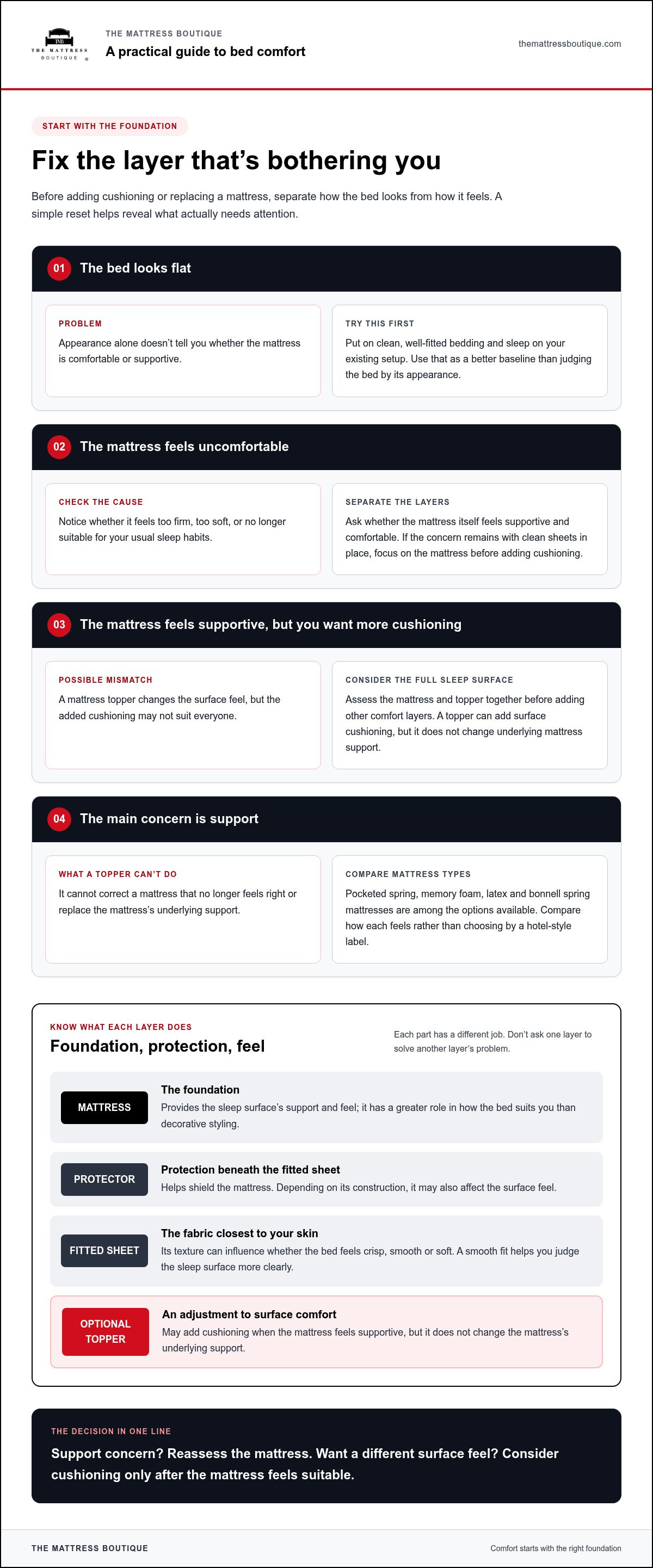
The mattress is the foundation of the sleep surface. Its support and feel have a greater role in how the bed suits you than decorative styling does. A protector sits between the mattress and sheets to help shield the mattress. Depending on its construction, it may also affect the surface feel. Sheets are the layer closest to your skin, so their texture can influence whether the bed feels crisp, smooth or soft.
Optional cushioning, such as a mattress topper, can change the surface feel, but it doesn’t replace the mattress or correct its underlying support. Pillows add comfort around the head and neck, while the duvet contributes warmth, weight and visual fullness. Bedding comes in different materials and forms, as this overview of types of bedding materials explains. Together, these practical layers shape how the bed feels. Decorative cushions mainly add a finishing touch.
Why the same setup does not suit every sleeper
Comfort depends on what feels supportive to you, how much cushioning you prefer and your sleeping habits. One person may enjoy a firmer-feeling mattress with a softer surface layer; another may prefer a different balance. Pillow height and duvet weight are personal choices too. There’s no single combination that makes every sleeper feel as though they’re in a hotel.
Hotel-style comfort is a layered, personal sleep setup that balances support, surface feel and bedding to suit the sleeper. That distinction matters when styling a bed: a plush appearance doesn’t require a soft mattress. A neatly arranged duvet and full pillows can create a luxurious look over a mattress chosen for its support. Decorative cushions are optional, and removing them at bedtime keeps the focus on the layers that affect sleep.
Think of the goal as a clean, inviting bed that works for your home, not a promise of hotel laundry or daily bed-making. Before choosing an upgrade, assess the mattress and surface you already have to work out which layer, if any, needs attention.
Build the Foundation: Mattress, Protection, and Optional Cushioning
Before buying a topper or replacing your mattress, work out what is actually bothering you. A bed can look flat because the bedding needs attention, while discomfort may come from the mattress itself. Adding layers without identifying the issue can change the surface feel without addressing the cause.
Start with a simple reset: put on clean, well-fitted bedding and sleep on your existing setup. Notice whether the mattress feels supportive and comfortable for your usual sleep habits, or whether it feels too firm, too soft or no longer suits you. This gives you a more useful baseline than judging the bed by its appearance alone.
How to decide whether your mattress needs a change
Separate the mattress’s support from the feel of the layers above it. Ask yourself: do you feel comfortable lying in your usual position, and does the mattress still feel suitable to you? If the concern remains with clean sheets in place, focus on the mattress before adding more cushioning. If you’re considering a change, the complete mattress selection guide can help you compare options without repeating every material detail here.
A mattress protector has a different job from a sheet. It sits beneath the fitted sheet to help protect the mattress surface, while the sheet provides the fabric you sleep against. Choose bedding that fits smoothly, without loose folds or bunching, so you can judge the bed’s feel more clearly. This is a practical first step, not a guarantee that a mattress will feel new.
When a mattress topper may help, and when it may not
A topper is an optional layer for changing surface comfort. If your mattress feels supportive but you’d prefer more cushioning on top, it may be worth considering. The added layer changes the combined feel, though, and that softer surface won’t suit everyone. A topper also doesn’t change the mattress’s underlying support, so it isn’t a substitute for a mattress that no longer feels right to you.
Assess the mattress and topper as one sleep surface before adding other comfort layers. If the combination feels too soft or too cushioned, adding more may take it further from your preference. If the main issue is support, consider whether a different mattress is a more suitable next step. Pocketed spring, memory foam, latex and bonnell spring mattresses are among the types available. Compare how each feels rather than choosing based on a hotel-style label.
Once the foundation feels right, protect it and build the bedding around it. Styling techniques such as making a bed with hospital corners can help create a neat finish, but comfort comes first. For a considered mattress change, you can explore mattress options as part of planning a coordinated sleep setup.
Choose Sheets, Duvet, and Pillows for Comfort, not Just Appearance
Once the mattress feels suitable, bedding is where you can fine-tune the bed to your preferences. A crisp sheet, a smooth duvet cover and well-chosen sleeping pillows can make the setup feel considered without adding unnecessary layers. For Singapore’s warm, humid conditions, think about whether each layer feels comfortable at bedtime, rather than choosing a heavy or lofty look simply because it appears luxurious.
Judge bedding by how it feels against your skin and how comfortable you are under it. A neat, inviting bed doesn’t depend on one ideal fabric or a fixed number of layers. Thread count alone can’t tell you how comfortable sheets will feel; fibre quality, weave and finishing also shape the hand-feel.
How to choose sheets that feel comfortable in Singapore
Weave affects the character of a sheet. Percale is commonly associated with a crisper feel, while sateen tends to feel smoother. Neither is automatically better: one sleeper may like the fresh, crisp touch, while another prefers a softer, silkier surface. Fabric also matters, but the label alone won’t tell you whether you’ll enjoy the feel.
Choose sheets that feel comfortable in your room and suit how warm you tend to feel at night. If possible, handle the fabric before deciding, and consider whether you’d be happy sleeping against it regularly. Breathability can be a useful preference to look for in Singapore, but fabrics vary, so don’t assume every sheet made from a particular fibre will feel the same. A well-fitted sheet that stays smooth can also make the bed feel more composed.
Match duvet and pillow choices to your sleep preferences
A duvet contributes warmth, weight and loft, so think beyond how full it looks across the bed. Do you like a light cover or prefer more weight? Do you want a lofty, enveloping look, or a flatter layer that feels less substantial? In a warm bedroom, your own comfort under the duvet matters more than matching a hotel photograph. Choose a level of warmth and fullness you’ll want to use, not just display.
Sleeping pillows should come first. Consider how their height and feel work for your usual sleeping position and comfort. A row of decorative cushions can’t compensate for a pillow that doesn’t suit you. You can add cushions for presentation, but keep them optional and easy to remove at bedtime.
- For a crisp finish: Try a percale-style weave if you enjoy a fresher, more structured sheet feel.
- For a smoother touch: Consider sateen if you prefer bedding that feels silkier against the skin.
- For an inviting top layer: Select a duvet whose warmth and weight feel comfortable for your room and routine.
Achieving hotel luxury bed feel at home doesn’t mean choosing the most elaborate bedding. Start with the sheet texture you enjoy, then match the duvet and sleeping pillows to your comfort. Add decorative pillows only if they complete the look without getting in the way of rest.
Make the Bed Like a Hotel: A Repeatable Layering and Styling Routine
A neat bed doesn’t need a complicated routine. Follow the same order each time, smooth each layer as you go, and keep decorative extras optional. That makes achieving hotel luxury bed feel at home more practical: the result looks composed, but you can still strip it back easily at night.
What order should you use when layering the bed?
Start with the mattress and work upwards. Each layer has a job, so add only what you use and enjoy.
- Prepare the mattress: Clear the surface and check that the mattress is sitting evenly on the bed frame.
- Add the protector: Lay it flat to help protect the mattress beneath the sheets.
- Fit the fitted sheet: Pull the corners securely over the mattress, then smooth out creases across the surface.
- Place a top sheet, if you use one: Centre it with an even overhang on both sides and smooth the fabric flat.
- Add the duvet: Spread it evenly from side to side, aligning its top edge near the head of the bed.
- Arrange sleeping pillows: Place the pillows you use for sleep at the head of the bed, with their edges aligned.
If you use a top sheet, fold its upper edge back over the duvet for a tidy, layered finish. You can tuck the sides for a more tailored look, or leave them loose if that feels easier to manage. If you don’t use a top sheet, simply position the duvet evenly and fold its top edge back slightly. The aim is a smooth finish, not a rulebook.
How to make the polished look practical every day
Keep the morning reset brief. Straighten the fitted sheet, smooth the duvet with your hands, and return sleeping pillows to the head of the bed. If you prefer decorative cushions, arrange them in front of the sleeping pillows for the day, then move them aside at bedtime. A throw is another optional styling layer, not a requirement.
Give bedding a chance to air out as part of your routine, and launder sheets, pillowcases and duvet covers according to their care labels. Follow the same instructions for other washable bedding rather than assuming every fabric can be cared for alike. A simple rotation of clean bedding can help you keep the bed feeling fresh without adding extra styling steps.
Consistency matters more than elaborate folds. Choose a version of the routine you can repeat, whether that means a top sheet and tucked sides or just a fitted sheet, duvet and sleeping pillows. To coordinate the foundation and comfort pieces behind your finished bed, explore mattresses, bed frames, and pillows available from The Mattress Boutique.
Tailor the Hotel-Style Bed to Your Home and Choose Your Next Step
A hotel-inspired bed doesn’t require you to replace everything at once. The most useful first change depends on what’s currently missing: comfortable support, a more pleasant surface feel, bedding that suits your room, or a neater finish. Identify that concern before shopping, so your next step addresses how you actually sleep rather than adding items just to make the bed look fuller.
Match the mattress, comfort layers and bedding to the sleeper and the room, then add styling details only if they make the setup more inviting. That’s a practical way to approach achieving hotel luxury bed feel at home without relying on a single upgrade or copying a formula that may not suit you.
Which upgrade should you make first?
Use the issue you notice most to guide your decision. If the mattress itself feels unsuitable, assess its comfort before buying decorative accessories. If you’re comfortable but the bed looks flat, check that your sheets fit smoothly and arrange the duvet evenly before considering new items. If your sleeping pillows feel uncomfortable, focus on pillow comfort first. Styling cushions won’t improve the support you rest your head on.
It can help to change one thing at a time. Keep the rest of your setup consistent while you notice how the adjustment feels. That way, you’re less likely to confuse the effect of a new pillow or sheet with a change in the mattress or other bedding. A new mattress, bed frame or pillow may be worth considering if it addresses a specific need, but none is a prerequisite for making the bed look more polished.
Bring the setup together with a considered product choice
If you decide the mattress is the part to reassess, compare options according to the feel and support you prefer. The Mattress Boutique carries mattresses from SofzSleep, along with pocketed spring, memory foam, latex and bonnell spring mattress types to suit different preferences and sleeping styles.
Think about the rest of the setup, too. A bed frame and mattress form the foundation of the bedroom arrangement, while pillows contribute to your personal sleep comfort. Storage and divan bed frames are options to consider as part of a coordinated setup. Choose based on what suits your room and needs rather than assuming a particular frame creates a specific mattress feel.
Start with the change that solves your main concern, then build around it only if needed. For a practical next step, browse mattresses, bed frames and pillows and compare the categories that fit your comfort priorities.
Make Your Next Bed Upgrade a Thoughtful One
Let your own experience guide what comes next. Rather than trying to recreate a room from a hotel photograph, notice what would make your bedroom more comfortable and inviting for the way you sleep. A small, considered adjustment can be a sensible place to begin, and you can decide later whether anything else needs attention.
That personal approach is the heart of achieving hotel luxury bed feel at home. Your setup should feel good at bedtime, work with your room and be simple enough to maintain. There’s no need to make every decision at once or add details that don’t serve your comfort.
If you’re ready to consider a change, explore mattresses, bed frames and pillows together as parts of a coordinated sleep setup. The Mattress Boutique brings these categories together, with mattress options from King Koil, Slumberland, Dunlopillo, SofzSleep and MaxCoil to explore alongside bed frames and pillows.
Explore mattresses, bed frames, and pillows at The Mattress Boutique and take the next step towards a bed that feels considered, comfortable and truly yours.
Frequently Asked Questions
Can I create a hotel-style bed without buying a new mattress?
Yes, if your current mattress still feels comfortable and supportive to you. Try refreshing the bed with clean bedding, then check whether the fitted sheet sits smoothly and the duvet looks evenly arranged. If the bed feels inviting once it’s made, styling may be all you need to adjust. If discomfort remains during sleep, focus on the mattress rather than relying on appearance to solve it.
Is a mattress topper necessary for a hotel-luxury bed feel?
No, a topper is optional. It may suit you if you like the mattress’s support but want a different surface feel. Before adding one, consider how the combined mattress and topper feel when you lie down, since extra cushioning can be less comfortable for some sleepers. If you’re already happy with the sleep surface, skip the topper and focus on fresh bedding and a tidy finish instead.
How can I make my bed feel luxurious in Singapore's humid climate?
Choose bedding according to how warm you feel in your room, rather than copying a thick, layered hotel display. For example, you might use a lighter-feeling duvet and leave off an extra throw if you find yourself too warm. Keep decorative layers easy to remove, and follow care labels when laundering bedding. Comfort is personal, so adjust one layer at a time and notice what feels best overnight.
What is the best order for making a hotel-style bed?
Begin with the mattress, then add a protector, fitted sheet, optional top sheet, duvet and sleeping pillows. Smooth each layer before adding the next, and align the duvet with the mattress edges for a balanced finish. If you don’t use a top sheet, leave it out rather than adding one just for appearance. Arrange decorative cushions last, and remove them before sleep if they take up useful space.
Does a high thread count guarantee hotel-quality sheets?
No. Thread count is only one detail and doesn’t tell you on its own whether a sheet will feel comfortable or suit your preferences. Fibre quality, weave and finishing also influence the feel. For instance, if you like a crisp surface, the weave may matter more to your experience than choosing the highest thread count. Consider how the fabric feels against your skin, not just the number on its label.
What happens if decorative pillows make the bed uncomfortable?
Take them off the bed at night. Decorative pillows are for styling, not a replacement for the pillows you sleep on, and they shouldn’t crowd your resting space. Keep the sleeping pillows that feel comfortable and store decorative ones nearby or arrange them elsewhere during bedtime. If your usual pillow is the source of discomfort, focus on finding a pillow that better suits your needs before adding more cushions.
Can a bed frame affect the overall hotel-style look?
Yes. A bed frame forms part of the room’s visual foundation, so its proportions and overall appearance can influence how the finished bed looks. A frame that suits the mattress size and room layout helps the bedding appear more balanced. It doesn’t have to be replaced to style the bed, though. Neatly aligned sheets and a well-arranged duvet can make an existing frame feel more intentional in the room.