

The softest mattress isn’t automatically the most comfortable choice after childbirth. A post-natal recovery mattress should balance pressure relief with steady support, and a medium to medium-firm feel is a practical starting point for many people. If you sleep on your side or nurse in bed, a contouring surface may ease pressure, while breathable materials and motion isolation can add comfort.
It’s understandable to prioritise softness when your body is recovering and nights may be interrupted by feeding and settling your baby. Comfort also depends on how easily you can change position, whether the mattress feels supportive, and how well it suits your usual sleeping style.
This guide compares mattress features for side sleeping, nursing and comfort after vaginal delivery, then considers motion isolation and temperature regulation. You’ll also find practical ways to compare foam, latex and spring constructions, focusing on features that matter for postnatal rest rather than relying on a firmness label alone.
Key Takeaways
- For side sleeping and nursing, compare how well a mattress cushions pressure points while still supporting comfortable position changes.
- A medium to medium-firm feel can be a practical starting point for comfort after vaginal delivery, but your preferred sleeping position matters too.
- Look at breathable construction for airflow and pocketed coils for reducing movement across a shared bed.
- Choose features that support rest during frequent wake-ups, and weigh foam, latex and spring options by how they feel in everyday use.
1. Pressure relief for side sleeping and nursing
A postpartum mattress is a regular sleep mattress chosen for comfort after birth. A maternity mattress is intended to support sleep during pregnancy, while a hospital bed is adjustable clinical equipment. Their purposes differ, so consider whether you need comfort for resting at home or clinical positioning.
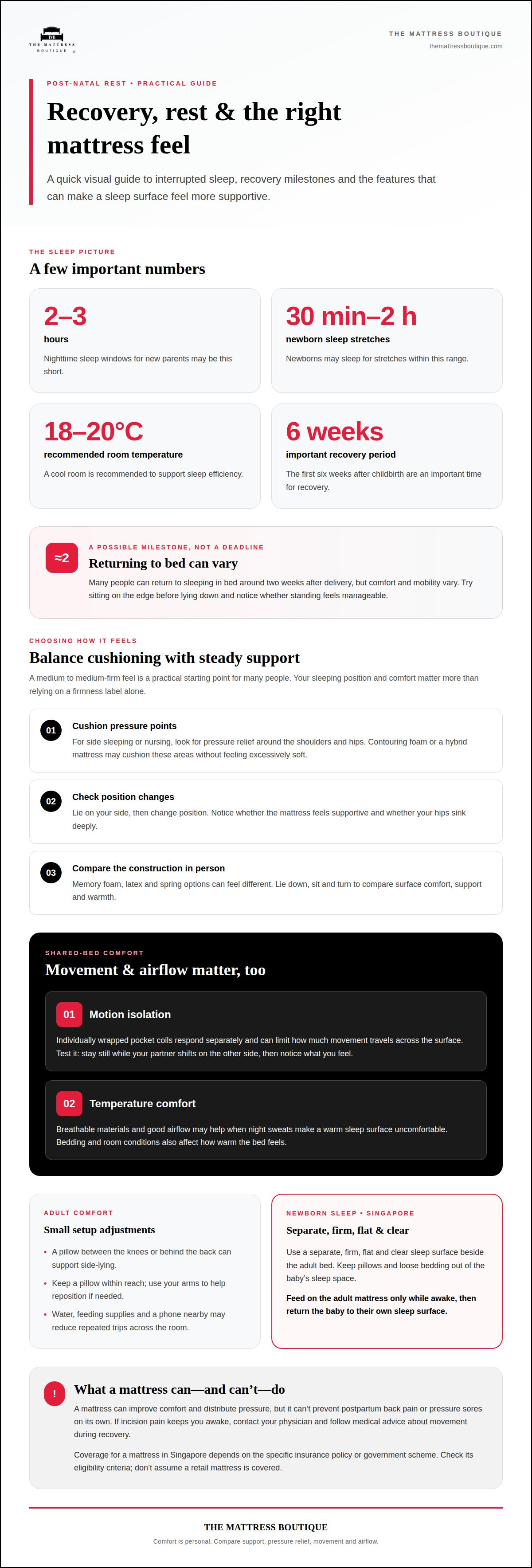
For side sleeping and nursing, look for pressure relief around the shoulders and hips alongside steady support. A medium to medium-firm feel is a practical starting point for many people recovering after childbirth. Contouring foam or a hybrid mattress can cushion pressure points without feeling excessively soft. Try lying on your side and changing position to see whether the surface feels comfortable and supportive.
Frequent feeding can mean short stretches of sleeping between newborn wake-ups. Nighttime sleep windows for new parents may be only 2-3 hours, while newborns may sleep for stretches from 30 minutes to 2 hours. A pillow between the knees or behind the back can support a side-lying position. Keep pillows for the adult’s comfort away from the baby’s sleep space.
Make the bedroom dark and avoid letting it become too hot. A room temperature of 18-20 degrees Celsius is recommended to support sleep efficiency. Individually wrapped pocket coils can reduce movement across a shared bed, which may help when one person gets up during broken sleep. These features support rest, but they can’t control feeding interruptions.
A mattress can improve comfort and distribute pressure, but it can’t prevent postpartum back pain or pressure sores on its own. If incision pain keeps you awake, contact your physician. For incision-related concerns, prioritise comfortable positioning and follow medical advice about movement during recovery.
For safer newborn sleep in Singapore, use a separate, firm, flat and clear sleep surface beside the adult bed. Keep pillows and loose bedding out of the baby’s sleep space. Feed on the adult mattress only while awake, then return the baby to their own sleep surface.
Singapore insurance or government scheme coverage depends on whether the specific policy or scheme treats a mattress as an eligible medical expense. Don’t assume a retail mattress is covered simply because it supports postpartum comfort. Review the relevant eligibility criteria before budgeting for it.
2. Comfort and recovery after vaginal delivery
The first six weeks after childbirth are an important recovery period. In the first few days, prioritise rest after labour and delivery. Pregnancy and birth can leave the pelvic floor and surrounding muscle groups tender. After vaginal delivery, perineal soreness may also make pressure on the lower body uncomfortable. Look for a stable surface that cushions contact points without letting your hips sink deeply.
After a vaginal birth or C-section, a medium to medium-firm mattress is a practical starting point for many people. Look for a surface that supports your body while easing pressure around the hips and shoulders. The best feel depends on your sleeping position and comfort, not the type of delivery alone. If turning or sitting up feels difficult, use your arms to help reposition and keep a pillow within reach. A doctor can guide you on positioning if recovery concerns are affecting your sleep.
Recovery involves gradual changes, not a single overnight transition. Many people can return to sleeping in bed around two weeks after delivery, but comfort and mobility vary. For example, try sitting on the edge of the bed before lying down, then notice whether standing feels manageable. A partner can keep water, feeding supplies and a phone nearby to reduce repeated trips across the room. These small adjustments can make nighttime rest more practical, without expecting the mattress to treat pain.
In Singapore, there’s no single standard price for every postpartum recovery mattress. Cost depends on the mattress’s materials, construction, size and brand, so compare those features against your comfort priorities. Memory foam, latex and spring options offer different surface feels; consider how each responds when you lie down and change positions. You can compare mattress types and construction as a next step, then focus on a feel that supports your recovery and everyday sleep.
3. Motion isolation and temperature regulation
During the postpartum period, breastfeeding and frequent movement at night can interrupt rest. A mattress with individually wrapped pocket coils can isolate movement between people sharing a bed. Each coil responds separately, limiting how much movement travels across the surface. For example, when a partner shifts position, the other side may feel less disturbance than on a surface that transfers movement readily.
Motion isolation can matter when childbirth has left you physically tired or changing position feels like extra effort. Compare how a mattress responds when you sit, lie down and turn. Ask your partner to move on the other side while you remain still, then notice whether you feel the movement. This simple test gives you a practical sense of motion isolation without relying on a label alone.
Temperature is another part of comfort. Postpartum night sweats can make a warm sleep surface uncomfortable, so consider breathable materials and good airflow. Mattress construction affects how the surface feels, but bedding and the bedroom environment matter too. Light sleepwear and less bulky bedding, for example, can help avoid adding unnecessary warmth around the mattress.
Choose a post-natal recovery mattress by weighing motion control and airflow alongside support. A pocketed spring design may suit a shared bed if movement transfer is a concern. Compare it with foam or latex options by lying down and noticing how warm the surface feels. No single construction suits everyone: your sleeping position, sensitivity to heat and partner’s movement all influence your choice. If frequent wake-ups make it harder to rest, keep the room calm and nighttime essentials within reach to reduce extra movement.
4. Postnatal recovery and rest
A postnatal recovery mattress is a home mattress selected for comfort after childbirth. It can cushion contact points and provide support while a mother rests. It cannot speed healing or replace medical assessment for pain, bleeding or other concerns. Treat it as one part of postpartum recovery, alongside adequate rest and care. For families setting up home care aids or recuperative equipment, you can buy medical supplies online to conveniently support daily recovery needs.
In Singapore, traditional postnatal confinement commonly lasts around 30 to 44 days, depending on cultural practices. That period often overlaps the early postpartum stage, which covers the first six weeks after birth. Rest needs can change, so choose comfort that remains practical beyond confinement. A meta-analytic review reports poor sleep quality for 68% of new mothers during the first six months postpartum. This makes everyday comfort worth considering, even when sleep comes in short stretches.
Assess a mattress by lying down in your usual sleeping position, then changing position as you would at night. Notice whether your hips feel supported and pressure at your shoulders eases. A medium to medium-firm feel suits many people after childbirth, but comfort depends on your body and preferences. Keep a pillow close for support and essentials within reach. These steps can reduce unnecessary effort during nighttime waking, but they do not treat pain or bleeding.
For a purchase in Singapore, compare mattresses at a retailer and consider the materials, support and feel that suit your rest needs. Renting requires a provider that offers rental, with terms set by that provider. A mattress supports comfort, but it does not replace medical care or advice about recovery. To compare construction and feel, explore mattress options and focus on the features that make rest more comfortable.
The immediate postpartum stage lasts from hours to days after childbirth, and recovery can continue to affect rest beyond that brief period. A meta-analytic review found that 20% of new mothers met criteria for clinical insomnia during the first six months postpartum; 41% of mothers still experienced insomnia symptoms two years after childbirth. Wake after sleep onset increases most notably during the first four weeks after birth, so interrupted rest may remain a practical concern.
Postpartum back pain affects up to 50% of women. For C-section recovery, choose a mattress that feels comfortable and supportive, while following clinical advice.
The Mattress Boutique: King Koil Mattresses
The Mattress Boutique offers specialized support options for shoppers comparing comfort and care after childbirth. To assess mattress feel, construction and ease of movement, lie down and notice the support around your hips and shoulders.
These supportive sleep surfaces give you several design choices to consider. Focus on features that match your sleeping position and comfort preferences rather than choosing by label alone. A suitable mattress can support comfortable rest, but it doesn’t replace medical care or recovery advice.
For a practical next step, explore the mattress options at The Mattress Boutique and compare what feels comfortable for your needs. You’re welcome to contact The Mattress Boutique or visit themattressboutique.com.
Choose comfort that fits your next chapter
Your sleep needs may change as feeding routines settle and your body continues recovering. Treat mattress selection as a personal comfort decision, not a promise of faster healing. Before choosing, note what matters most in your daily routine: ease of changing position, a supportive feel, or less disturbance from movement in a shared bed. This short list can help you compare options without getting distracted by features you may not need.
If you’re ready to explore a post-natal recovery mattress, The Mattress Boutique offers King Koil, Slumberland and Dunlopillo mattresses to consider. Compare their feel and construction against your preferences, and use your comfort priorities to guide your choice. A thoughtful selection can make your bedroom feel better suited to rest during this new stage of life.
Contact The Mattress Boutique to discuss your mattress options and take the next step towards a more comfortable sleep space.
Frequently Asked Questions
Which mattress brands in Singapore offer postpartum-friendly options?
In Singapore, The Mattress Boutique offers King Koil, Slumberland, Dunlopillo and SofzSleep mattresses to compare for postpartum comfort. These are mattress brands, not a separate medical category; suitability depends on the feel and construction that work for you. For example, narrow your shortlist by whether you prefer a spring, latex or foam surface, then compare how each feels in your usual sleeping position.
How do I choose the right mattress for postpartum recovery and breastfeeding?
Choose a post-natal recovery mattress by testing how it feels during the movements your routine involves. Lie on your side, sit up as if preparing to feed, and change positions to see whether the surface feels supportive and comfortable. Consider whether your partner’s movement disturbs you and whether you tend to feel warm at night. These personal checks can turn broad features into a useful shortlist.