

The pillow that feels softest in the shop may not be the one that suits your sleep. The right choice depends on more than a quick touch test: your usual sleeping position, body shape and mattress all affect which height and firmness feel comfortable. If you’re unsure whether to compare a different filling, shape or loft, start with the way you sleep.
A pillow should work with your sleep habits and mattress, not be treated as a separate decision. This guide explains how to compare pillow features, narrow down options by sleeping position and check fit before buying. The Mattress Boutique offers pillows alongside mattresses and bed frames, so you can consider your sleep setup as a whole.
Key Takeaways
- Start with your usual sleeping position, then consider shoulder width and preferred feel when assessing pillow height.
- Compare filling and shape by how they feel and hold their form, rather than choosing by material name alone.
- Test a pillow in your natural sleeping posture; a quick touch test may not reveal whether the fit works.
- Consider your mattress, since the full sleep setup can affect how a pillow feels.
- Check the current product details and care instructions before choosing.
What Does a Pillow Do, and Why Does the Right Fit Matter?
A pillow supports your head and neck while you rest. The right fit depends on how you sleep, your preferences and the rest of your sleep setup. A shape or feel that suits one person may not suit another, so there is no universally best choice.
Consider fit as a combination of factors. Sleeping position is a useful starting point, but body shape and mattress feel matter too. If you sink more deeply into your mattress, the space between your head and the sleeping surface may feel different than it does on a firmer-feeling bed.
Four fit factors to keep in mind
- Your usual sleeping position
- Your shoulder width and body shape
- The pillow’s height and firmness
- How your mattress feels beneath you
How pillow height and firmness affect the feel
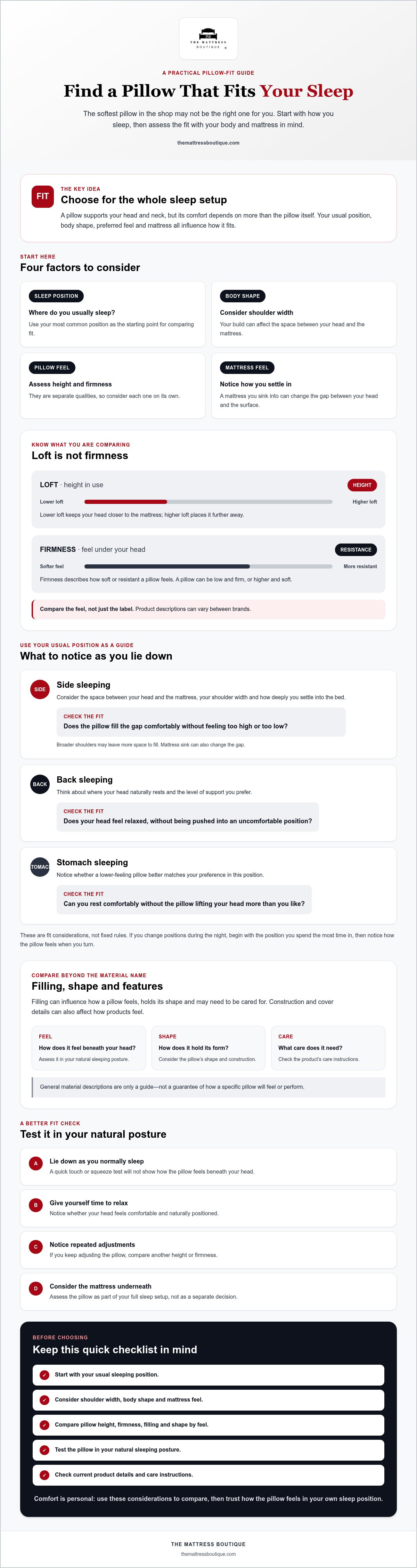
Loft is a pillow’s height when it is in use. A higher-loft pillow places your head further from the mattress, while a lower-loft option keeps it closer. Firmness describes how soft or resistant the pillow feels under your head. These are separate qualities: a pillow can be low and firm or higher and soft. Since product labels vary between brands, judge the feel rather than relying on a description alone.
Why comfort is personal
Your build affects the space between your head and the mattress. For example, a side sleeper with broader shoulders may find that the same pillow feels lower than it does to someone with narrower shoulders. Back and stomach sleepers may prefer a different head position and feel. Treat these as fit considerations, not fixed rules, and use your usual position as a guide.
Mattress feel matters as well. If your body settles more deeply into a mattress, the gap between your head and the surface may feel different than it does on a less yielding bed. For a general introduction to pillow types and materials, Wikipedia provides background; check product details with the retailer before making a choice.
Pillow fit depends on both the sleeper and the surface beneath them. Keep both in mind as you compare options, and assess each pillow as part of your full sleep setup.
How Sleeping Position Can Guide Your Pillow Choice
Your usual sleeping position is a practical starting point because it affects the space between your head and the mattress. It does not determine one correct pillow height or firmness. Shoulder width, how much you settle into your mattress and your preferred feel also matter. Use the table to guide your comparison, then decide what feels comfortable to you.
| Sleeping position | Fit considerations | What to notice |
|---|---|---|
| Side | Consider the space between your head and mattress, including your shoulder width and how deeply your body settles into the bed. | Does the pillow feel as though it fills the gap comfortably, without seeming too high or too low? |
| Back | Think about the position your head naturally rests in and the level of support you prefer. | Does your head feel relaxed, without the pillow pushing it into an uncomfortable position? |
| Stomach | Notice whether a lower-feeling pillow better matches your preference in this position. | Can you rest comfortably without feeling that the pillow lifts your head more than you like? |
What side sleepers may want to assess
If you sleep on your side, assess the space between your head and the mattress rather than choosing by pillow height alone. Broader shoulders may leave more space to fill, while sinking into the mattress can change the gap. Lie in your usual side-sleeping position and notice whether the pillow feels balanced or too high or low. If you find yourself adjusting it repeatedly, compare another height or firmness.
How back and stomach sleepers can compare fit
On your back, notice whether the pillow feels comfortable without pushing your head into a position that feels unnatural. If you sleep on your stomach, a lower-feeling option may suit your preference, but there is no fixed rule. Lie down in your usual position and give yourself time to relax. Squeezing a pillow in your hand will not show how it feels beneath your head.
If you change positions during the night, start with the position you spend the most time in, then consider whether the fit remains comfortable when you turn. You can explore pillows for your sleep setup alongside mattress options, and check current product details before deciding.
Pillow Fillings, Shapes, and Features: What Should You Compare?
Filling influences how a pillow feels, holds its shape and may need to be cared for. The same material category can feel different across products because construction and cover details vary. Use the comparisons below as general guidance, not as a prediction of how a specific product will perform or confirmation of current stock.
| Filling category | Possible feel | Care considerations | Questions to check |
|---|---|---|---|
| Fibre | May feel soft and relatively easy to arrange, depending on the fill and construction. | Care requirements differ by product. Check the label before washing or drying. | Does the filling shift or settle? Is the cover removable, and how should it be cared for? |
| Memory foam | May feel more contouring or mouldable than loose fibre, though the response varies. | Follow the product’s instructions; care for the cover and inner fill may differ. | Does it feel comfortable in your usual position? What are the instructions for each component? |
| Latex | May feel more resilient or responsive, depending on the product’s design. | Check the care label and product information rather than assuming it can be washed in the same way as other fills. | What is the overall feel, and how should the fill and cover be maintained? |
How common fillings differ
Fibre fillings vary in softness, weight and how easily they can be reshaped. Memory foam may mould around the head differently from loose fill, while latex may feel more springy. These are broad tendencies, not consistent outcomes across every product. Compare the stated materials and construction, and check product-specific care instructions. The cover and inner fill may have different requirements, so do not assume they can be handled in the same way.
When shape and construction matter
A conventional shape may feel familiar, while a contoured or otherwise shaped design may position support differently. Neither is automatically a better fit. Check the listed dimensions, cover details and care instructions, then consider whether the shape suits your usual sleeping position. If you are also assessing how your bed feels, consult this mattress selection guide as part of reviewing your sleep setup.
Compare filling, shape and care together. A material you like may still be a poor match if the shape feels awkward or the care instructions do not suit your routine. Check current product listings for confirmed materials, dimensions and maintenance details.
How to Test Pillow Fit Before You Commit
A pillow can feel comfortable when pressed by hand but different once you lie down. Assess it in your natural sleeping posture, ideally on the mattress you normally use if testing at home. Pay attention to how it feels beneath your head instead of choosing by touch or product description alone.
- Identify your usual position. Start with the position you spend the most time in, and note whether you tend to move during sleep.
- Compare the fit. Lie down as you normally would. Check whether your head feels comfortably supported and whether the height and firmness match your preference.
- Check the materials. Read the filling and cover descriptions, and confirm that they match what you want to feel and use.
- Review care details. Check the care label or product instructions to understand how the pillow and its cover should be maintained.
- Reassess. If you take it home, notice how it feels over several ordinary nights, including when you change position. Comfort may become clearer with regular use, but there is no adjustment period that suits everyone.
A simple at-home fit check
Settle into your usual position and ask whether your head feels comfortably supported or whether you keep shifting the pillow. If you move between positions, notice how it feels after you turn. Your mattress and natural posture both affect the experience. Reassess over several regular nights rather than relying on one brief test.
What to check on a product listing
Before buying, look for confirmed dimensions, filling details, cover information and care instructions. A listing may also state applicable trial, return or exchange terms, but these vary. Read the current terms directly rather than assuming an option is available. When comparing sleep accessories, looking at a comprehensive bedding guide offers related context about choosing the right support.
Before purchase, confirm the dimensions, filling, cover details, care instructions and applicable purchase terms. The Mattress Boutique offers pillows as part of its bedding range. You can explore available pillows and check current listing details before deciding.
Find a Pillow That Fits Your Sleep Setup
Start with your sleep habits, not a broad claim that one type works for everyone. Consider your usual position, body shape and preferred feel, then account for how your mattress responds beneath you. A pillow may feel different when paired with a mattress that lets you settle more deeply than it does on a firmer-feeling surface.
Make your shortlist using personal fit
Before browsing, note your usual sleeping position and whether you prefer a softer, firmer, higher or lower feel. Use those preferences to narrow the options, then compare confirmed product details rather than relying on a general category name.
- Filling: Check the stated materials and construction.
- Shape and dimensions: Confirm the form and measurements suit your needs.
- Care: Read the product-specific instructions and consider whether they fit your routine.
- Mattress feel: Keep your current mattress in mind, since it affects how the overall setup feels.
This shortlist gives you practical points to compare and helps you spot details you still need to verify before buying.
What to do if you are still unsure
Look for specific information about materials, dimensions and care instead of treating words such as “premium” or “supportive” as a complete description. For a particular pillow, check its current product listing for the features that matter to you. Materials, shapes and availability can change, so confirm the latest details rather than assuming a general example describes the current range.
The Mattress Boutique offers pillows alongside mattresses and bed frames, making it possible to consider these products as part of one sleep setup. Compare the available information and use your own comfort preferences to guide the decision instead of relying on a label alone.
Ready to review the current range? Explore pillows and bedding.
Choose a Pillow That Suits Your Sleep Setup
Your usual sleeping position and body shape are useful guides, but they do not point to one choice for everyone. Consider the feel you prefer and how your mattress responds beneath you. These details can help you narrow the options without assuming that a particular filling or shape suits every sleeper.
Before deciding, compare confirmed product information, including materials, dimensions, shape and care instructions. If you are still weighing options, focus on the details that matter to your routine rather than broad labels. Current listings can also help you confirm which features and options are available.
The Mattress Boutique offers pillows as part of its bedding range, alongside mattresses and bed frames, so you can consider your sleep setup as a whole. Explore pillows and bedding and review the current product details at your own pace.
Compare the practical details against your comfort preferences before making your choice.
Frequently Asked Questions
How do I choose the right pillow for my sleeping position?
Start with the position you spend the most time in, then assess how your head feels on your usual mattress. Side sleepers can consider the space between their head and the bed, including shoulder width and how much they sink into the mattress. Back and stomach sleepers can compare different heights in their normal posture. Treat these as starting points, not fixed rules.
Is a firm or soft pillow better?
Neither firmness is best for everyone. Your preferred feel, sleeping position and the way the filling responds beneath your head all affect comfort. Firmness and height are separate qualities: a pillow can feel firm but sit low, or feel soft while sitting higher. Since product labels differ between brands, assess it in your usual sleeping position rather than relying on the description alone.
What pillow filling is best for everyday use?
There is no single best filling for everyday use. Choose based on the feel and care requirements that suit you. Fibre may feel soft and easy to arrange, memory foam may feel more contouring, and latex may feel more responsive. These are general tendencies, not guarantees; construction varies by product. Check the filling description and care instructions, including whether the cover and inner material need different handling.
Can the wrong pillow affect how comfortable my mattress feels?
Yes. A pillow can affect your overall impression of the sleep setup, although it does not change the mattress itself. If its height or feel does not suit you, the bed may seem less comfortable when you lie down. Mattress response matters too: settling more deeply into the surface can change the space between your head and the bed. Assess both together in your usual sleeping position.
How often should you replace a pillow?
There is no replacement schedule that applies to every product. Check the care and maintenance guidance, and reassess the pillow if it no longer feels comfortable, has lost its shape or does not return to its usual form after use. Visible wear can also be a reason to review it. How long it remains suitable depends on its construction, care and frequency of use.
What pillow height should a side sleeper choose?
There is no universal height for side sleeping. Consider the space between your head and mattress, your shoulder width and how much your body settles into the bed. Try options in your usual side-sleeping posture and notice whether the height feels comfortable rather than forcing your head into position. Product dimensions and how the filling settles can help you compare, but personal fit should guide the choice.
How can I tell if a pillow is the right fit?
Test it in your natural sleeping position and check whether your head feels comfortably supported without frequent adjustments. If you change positions during the night, notice how it feels after you move. A quick squeeze or touch test will not show the full experience, so reassess during your ordinary routine. Check the product’s care instructions and applicable purchase terms before buying.