

What if your mattress isn’t the only reason your bed feels too soft? A worn or unsuitable foundation can affect how a mattress feels, so adding a firm layer straight away may not solve the problem. If you’re wondering how to make a soft mattress firmer, first work out whether the issue is the sleep surface, the bed frame or both.
A mattress can feel plush while still providing support, but persistent sagging or discomfort may signal that your setup needs attention. Quick DIY fixes can affect how a mattress sits or breathes, so check its care guidance before changing anything. This guide shows you how to inspect the foundation, try reversible adjustments and decide when replacement may make more sense than another temporary fix. You’ll also learn how mattress construction and the bed frame work together, so you can choose your next step with more confidence.
Key Takeaways
- Before changing the mattress, check whether the bed frame or base is contributing to the soft feel.
- Learn how to make a soft mattress firmer with low-risk adjustments, while understanding what a topper can and can’t fix.
- Compare practical options, from inspecting the base to rotating the mattress when its design allows.
- Change one thing at a time and track how your comfort responds over several nights.
- Recognise when persistent sagging or a damaged foundation means it’s time to consider a better-fitting mattress.
Why Does Your Mattress Feel Too Soft? Find the Cause First
A soft feel doesn’t automatically mean your mattress needs replacing. Some mattresses have a plush top by design; others may feel softer because the bed base flexes or the mattress has developed uneven areas. Before deciding how to make a soft mattress firmer, identify where the softness is coming from. A surface adjustment won’t correct a weak foundation, and changing the base won’t restore worn materials.
Firmness describes how the mattress feels at its surface; support describes how well it holds your body in a comfortable, aligned position. The two are related, but they aren’t the same. A mattress can feel soft and still provide suitable support. Construction and materials also influence the feel, as you can see in this overview of different types of mattresses.
Is the mattress soft, or is the bed base affecting its feel?
Check that the mattress sits evenly on a stable foundation. Look beneath it for loose or damaged slats, gaps that appear wider than the mattress maker allows, movement when you press the frame, or visible dips. If the base flexes, the mattress may feel softer than it would on an even, suitable surface. Support requirements vary by mattress model, so review the maker’s guidance before changing the frame or adding anything underneath.
What signs suggest wear rather than a naturally plush feel?
Consider whether the feel is new. Persistent impressions, uneven patches or a noticeable change from how the mattress felt when it was in good condition may point to wear, though no single sign proves the cause. Compare the centre with the edges and notice whether one area feels different when you lie down. Note what you find, then review the care guidance and warranty terms before trying modifications.
Make the assessment specific: note where the bed feels soft, whether the sensation is consistent across the surface and whether it began gradually or after a change to the setup. If the mattress feels evenly plush and the base is stable, its intended comfort level may simply be softer than you prefer. If the softness is concentrated in one place or comes with a visible dip, assess the mattress and foundation separately before choosing a fix.
How to Make a Soft Mattress Firmer with Low-Risk Adjustments
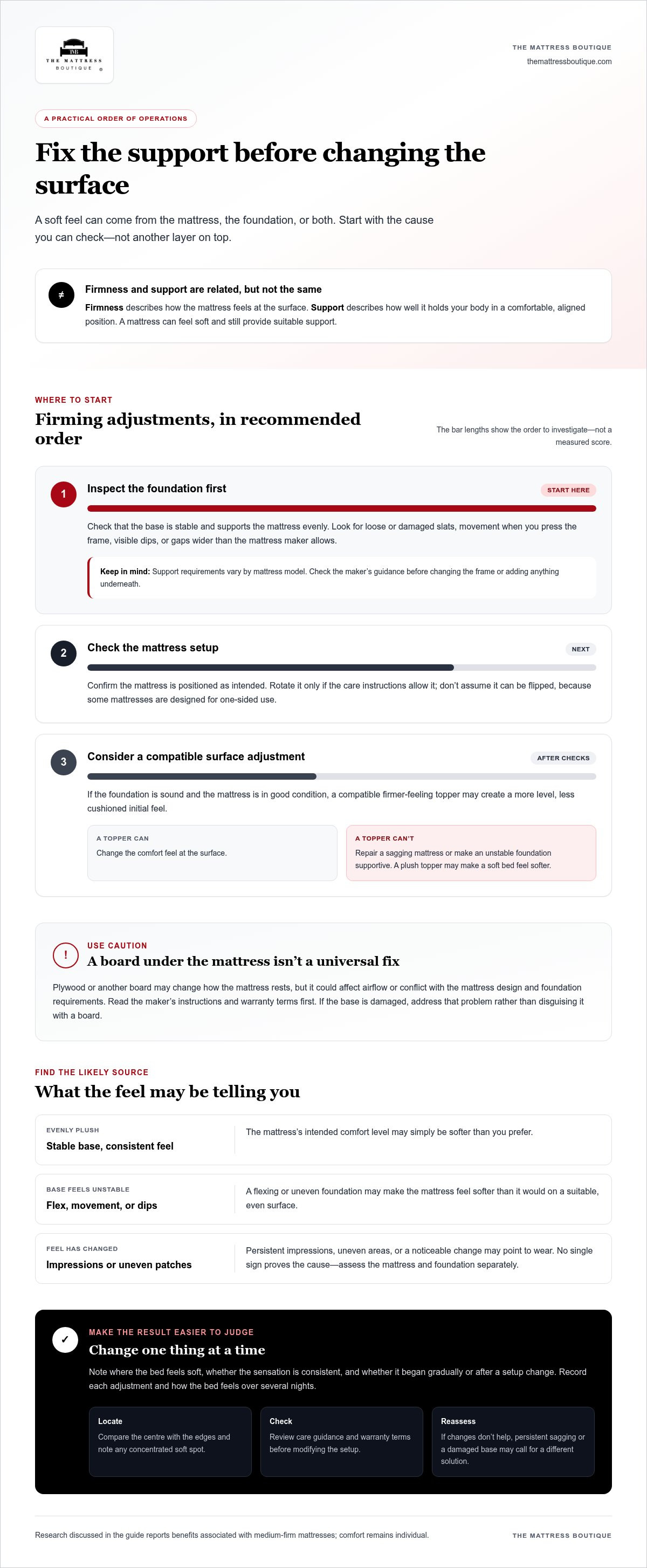
Once you’ve considered whether the mattress or foundation is behind the soft feel, work through changes in order. This makes it easier to judge what helps and avoids placing a new layer over a problem that needs a different fix. If you’re deciding how to make a soft mattress firmer, start with the support underneath, not a quick DIY addition.
- 1. Inspect the base. Check that the foundation is stable and supports the mattress evenly. Look for loose or damaged slats, movement and visible dips. Follow the mattress maker’s guidance on suitable bed frames and support.
- 2. Check the setup. Confirm the mattress is positioned as intended and that its care instructions allow rotation. Rotate it only if permitted, and don’t assume it can be flipped. Some mattresses are designed for one-sided use.
- 3. Consider a compatible surface adjustment. If the foundation is sound and the mattress is in good condition, a firmer-feeling topper may change the initial sensation. Assess the result before making further changes.
A topper changes the comfort feel at the surface, not the mattress core. It may help if the mattress is intact but feels too plush. It won’t repair a sagging mattress or make an unstable foundation supportive.
Can a mattress topper make a soft bed feel firmer?
A topper described as firmer may create a more level, less cushioned surface, but the result depends on its material and how it interacts with your mattress. A plush topper is designed to add cushioning, so it may make a soft bed feel softer rather than firmer. Consider a surface adjustment only after checking the mattress and base; a topper can’t correct a failing mattress.
Should you put plywood or another board under a mattress?
A board beneath a mattress isn’t a universal fix. It may change how the mattress rests, but could also affect airflow or conflict with the mattress design and foundation requirements. Before adding plywood or another support layer, read the maker’s instructions and warranty terms. If the base is damaged, address that problem rather than using a board to disguise it.
Change one thing at a time and note what you changed and how the bed feels over several nights. Research discussed in research on mattress firmness and sleep quality reports benefits associated with medium-firm mattresses, but comfort remains individual. If adjustments don’t help, compare mattress constructions and bed-frame options to find a setup that better suits your needs.
For a useful next step, explore mattress types and comfort options before deciding whether to keep adjusting or replace the mattress.
Which Firming Fix Should You Try? Compare the Options and Trade-Offs
The best way to make a soft mattress firmer depends on what’s causing the feel. Start with the least disruptive adjustment that addresses the likely cause. Avoid layering fixes before you know whether the base, mattress surface or mattress condition is the issue.
When is a topper a reasonable temporary adjustment?
A topper is worth considering if the mattress is structurally sound and its surface simply feels too plush. Its material and construction influence the sensation, so a firmer-feeling option may feel different from a soft, cushioning one. Treat it as a comfort adjustment, not a repair: it changes the sleep surface but can’t restore the mattress support underneath.
When is the bed base the more likely problem?
Prioritise the base if you find broken slats, visible unevenness or movement under the mattress. Correcting a faulty foundation may matter more than adding a topper, which could mask the symptom without resolving its cause. Base requirements vary by mattress model, so follow the maker’s guidance rather than relying on a universal slat-spacing rule.
Base inspection and permitted rotation are usually easier to reverse than adding an improvised board or other layer, which may affect airflow or conflict with product guidance. Before making changes, check the care instructions and warranty terms. If the mattress remains uncomfortable or shows persistent sagging, repeated temporary fixes may be less useful than choosing a mattress and frame that work well together.
For a broader look at firmness and materials, read the complete mattress choosing guide.
How to Test Firmness Changes Without Guesswork
A simple before-and-after check can help you tell whether a change actually improves the feel of your bed. Make only one adjustment at a time, such as correcting the base or adding a compatible topper. If you change several things together, it becomes harder to tell what made a difference.
How can you tell whether an adjustment is helping?
Compare the same mattress area and sleep position before and after the change. For several nights, keep a brief record of your setup and how the bed feels. Consistent notes are more useful than relying on a single night’s impression.
- Setup: Note the mattress, bed base and any adjustment, such as rotation or a topper.
- Feel: Record perceived firmness and comfort in simple terms, such as “too soft”, “more even” or “comfortable”.
- Change over time: Note whether the same area continues to feel different or the adjustment makes no noticeable difference.
Keep other factors as consistent as practical, including your usual sleep position. If the change creates an unstable fit, causes new discomfort or makes the mattress sit unevenly, reverse it rather than persisting. The aim is to find a setup that feels suitable, not to force a particular firmness.
What should you avoid while testing a mattress fix?
Don’t stack toppers or support layers without checking whether they fit securely and suit the mattress. Avoid cutting, bending or altering mattress components, and don’t overlook care instructions or warranty terms. Visible damage to the foundation is a reason to address the base, not cover it with another layer.
Set a clear stop point. If sagging persists, the base remains unstable or discomfort gets worse, stop experimenting and reassess the mattress and foundation together. Repeated adjustments may not resolve a structural problem. If you’re still weighing how to make a soft mattress firmer, your notes can help you see whether the surface feel or the underlying setup needs a different solution.
Once you know what you need from your next sleep setup, explore mattress options across different constructions and comfort feels.
When to Replace a Soft Mattress and Choose a Better-Fitting Feel
Some comfort issues can be addressed by adjusting the bed setup. Replacement becomes a more practical option if the mattress remains uneven or unsupportive after suitable adjustments, or if the foundation is visibly damaged and the mattress has developed persistent sagging. A topper may alter the surface sensation, but it can’t restore worn mattress materials or make a faulty base stable.
Before deciding, review what felt wrong, which adjustments you tried and whether the mattress or base has changed visibly. If the problem remains in the same area or temporary fixes haven’t made the bed comfortable, repeated tweaking may not be worthwhile. Check the mattress care instructions and warranty terms as part of your decision.
How do you choose a mattress that feels firmer?
Test the actual surface feel and how the mattress supports you, rather than relying on a firmness label alone. Your preferred feel can depend on personal comfort, body type and sleeping position. If you can, lie in your usual position and notice whether the surface feels too yielding, too firm or comfortable, and whether you feel evenly supported.
Construction is another factor, but no material is automatically right for everyone. Latex and memory foam mattresses use different materials and can have different surface feels; pocketed spring and Bonnell spring mattresses use distinct spring constructions. Firmness varies between models, so compare individual mattresses rather than assuming a whole category will feel the same. The comprehensive mattress buying guides available through retailers like The Mattress Boutique offer helpful resources as you consider your options.
What should you do after temporary fixes have not worked?
Use your notes to separate a mattress issue from a bed-frame issue. For example, a visibly uneven base points to a different problem than a mattress that still feels too soft on a stable, suitable foundation. If the mattress remains uneven or doesn’t feel comfortable after you’ve addressed the setup, replacing it may be more sensible than adding more layers.
There’s no need to replace a mattress solely because it feels soft if you’re comfortable and the setup is sound. But if you’ve been researching how to make a soft mattress firmer and the bed continues to feel wrong, consider a mattress and frame that suit your preferences together. Explore expert buying guides and resources from providers like The Mattress Boutique as a starting point for comparing mattress choices.
Choose a Sleep Setup That Feels Right for You
The first step in learning how to make a soft mattress firmer is finding the cause. Check the foundation before changing the sleep surface, and try one suitable adjustment at a time so you can judge its effect. A topper may alter the feel, but persistent sagging or an unstable base calls for a closer look rather than another temporary layer.
If the mattress still feels too soft, your preferred firmness depends on personal comfort, body type and sleeping position. Compare the feel and construction of memory foam, latex, pocketed spring and Bonnell spring mattresses rather than relying on a label alone. The Mattress Boutique offers mattresses from brands such as King Koil, Dunlopillo, Slumberland, SofzSleep and MaxCoil, alongside storage and divan bed frames and pillows.
Repeated fixes aren’t always the best value if the mattress remains uneven or uncomfortable. Take what you’ve learned about your setup and explore a mattress that better suits your preferences. Explore mattresses and find a feel that suits you.
Frequently Asked Questions
Is there a safe way to make a soft mattress firmer?
Yes, but start by checking the foundation and reading the mattress maker’s care instructions. A stable, compatible base may resolve a support issue without changing the mattress. If the mattress is in good condition but feels too plush, a compatible firmer-feeling topper may alter its surface feel. This is a sensible first approach to how to make a soft mattress firmer. Avoid improvised alterations, and remember that a topper won’t correct persistent sagging.
Can a mattress topper make a soft mattress firmer?
A firmer-feeling topper can change the sensation of the sleep surface, but it won’t change the mattress core or repair sagging. The result depends on the topper’s material and construction, so treat it as a comfort adjustment rather than a structural fix. If the bed feels uneven or the foundation is unstable, investigate those issues first. A topper is most suitable when the mattress and base are otherwise in good condition.
Does putting plywood under a mattress make it firmer?
A rigid layer such as plywood may change how a mattress feels, but it isn’t a universal fix. It could affect ventilation, the fit of the mattress or whether the foundation meets the mattress maker’s requirements. Read the mattress and bed-frame guidance before adding anything underneath. If the mattress is damaged or sagging, a board may only mask the problem rather than resolve it. Don’t treat this as a permanent solution without checking suitability.
Should you flip or rotate a mattress to make it firmer?
Rotate a mattress only if the maker’s care instructions recommend it. Rotation may help distribute use, but it won’t restore worn materials or necessarily make the mattress feel firmer. Some mattresses are designed for one-sided use and shouldn’t be flipped. Check the care label or product guidance, then follow the specified direction and schedule. Don’t assume every mattress can be turned or rotated in the same way.
How can you tell if a mattress is too soft or the bed frame is the problem?
Check whether the mattress sits evenly and look for broken, unstable or visibly uneven parts of the frame or foundation. Compare how different areas of the mattress feel, and note any persistent impressions. An evenly plush surface on a stable base may point to a comfort preference, while a dip or flexing frame suggests another issue. These observations are useful clues, not a diagnosis, so assess the mattress and base separately.
When should you replace a mattress that feels too soft?
Consider replacement if the mattress remains uneven or uncomfortable after you’ve checked the foundation and tried adjustments permitted by its care instructions. Persistent sagging, visible damage or a lasting change in feel may mean a surface fix won’t solve the problem. Before choosing a new mattress, compare its actual firmness and support rather than relying on a label alone. Your comfort and how the mattress feels in your usual sleeping position matter too.
Can room temperature make a mattress feel softer?
Temperature may affect how a mattress feels, depending on its materials and construction, but changing the room temperature isn’t a reliable firming method. Follow the maker’s care guidance, and don’t expose the mattress to extreme heat or cold to alter its feel. If it remains too soft under ordinary conditions, inspect the foundation and mattress for unevenness or wear. Focus on the bed setup rather than relying on temperature adjustments alone.