

Could an orthopedic mattress make sleep apnoea easier to manage, or is that asking a bed to do too much? A search for “orthopedic mattress singapore” can bring up plenty of claims, but a mattress doesn’t cure or medically treat sleep apnoea. It can support a more comfortable night’s rest, which is a separate goal.
When sleep feels disrupted, it’s understandable to focus on firmness, pillows and sleeping position. But the most supportive setup is one that feels comfortable for your body, not necessarily the firmest mattress or a product labelled “orthopedic.” Discuss any changes to prescribed sleep-apnoea treatment with your clinician.
This guide explains what a mattress can and can’t do, how memory foam, latex and spring options differ in feel, and how to compare pillows and bed frames. You’ll also learn what comfort details to note before discussing side-sleeping or raising the head of the bed with a clinician. That way, you can make practical bedding choices without relying on cure claims.
Key Takeaways
- An orthopedic mattress singapore shoppers consider may support bedtime comfort, but a mattress cannot treat sleep apnoea or replace clinical care.
- Compare firmness by how a mattress feels for your body and usual sleeping position, rather than assuming that firmer always means more supportive.
- Memory foam, latex, pocketed spring and Bonnell spring mattresses differ in construction and feel. Compare the actual comfort of each option.
- Use a simple sequence to assess your bed setup: keep prescribed care in place, identify discomfort, then consider bedding changes.
- Note your sleep position and comfort concerns so you can discuss questions about positioning or bed elevation with a clinician.
Orthopedic Mattress Singapore: What a Bed Setup Can, and Cannot, Do for Sleep Apnoea
If you’re searching for an orthopedic mattress singapore option because sleep apnoea is affecting your rest, separate two questions: what supports your comfort, and what addresses the condition. Sleep apnoea involves repeated interruptions or reductions in breathing during sleep. A qualified clinician should assess symptoms, make a diagnosis and guide treatment. Bedding choices can help make your sleep environment comfortable, but they don’t replace clinical care.
What does orthopedic mattress mean in a Singapore mattress search?
“Orthopedic” commonly signals that a mattress is marketed as supportive, but the label alone doesn’t establish a universal clinical standard or demonstrate a medical effect. The Orthopedic mattress entry discusses how the term has been used and marketed. For a useful comparison, look at the mattress’s materials, feel and support instead of assuming the label certifies a benefit for sleep apnoea.
Support is personal. A mattress that feels comfortable to one sleeper may feel too firm or too soft to another. When comparing options, notice how your shoulders, hips and other contact points feel when you lie down, and whether you can change positions comfortably. Memory foam, latex, pocketed spring and Bonnell spring mattresses have different constructions and feels. No type can be identified as suitable for sleep apnoea based on its name alone.
Can changing your bed treat sleep apnoea?
No. A mattress is not a sleep-apnoea treatment, and a product marketed as orthopedic should not be understood as addressing airway obstruction. Treatment decisions depend on an individual’s diagnosis and clinical advice. If you’re following a prescribed care plan, don’t stop or change it because you’ve bought a new mattress or pillow. Discuss treatment questions and possible changes to sleep position with your clinician.
A supportive bed can improve comfort; it cannot diagnose or medically treat sleep apnoea. Keeping that distinction clear helps set realistic expectations. A bed setup may help you feel more at ease while resting, but comfort is different from managing the underlying condition. If your mattress feels uncomfortable or makes it harder to settle, identify what feels wrong before comparing alternatives. Bring medical concerns to a qualified clinician, and assess mattresses according to how they feel and support you in everyday use.
How Mattress Support, Pillows and Sleep Position Affect Bedtime Comfort
Once medical care is in place, assess your bed for everyday comfort. Notice whether you feel pressure at your shoulders or hips, whether you can turn without effort, and whether your pillow keeps your head and neck comfortable in your usual position. These observations give you practical criteria for comparing bedding, without expecting a mattress to affect sleep apnoea.
Does mattress firmness matter for sleep comfort?
Firmness is a personal impression, not a proven sleep-apnoea intervention. Body shape, sleeping position and mattress materials can all affect how a surface feels. For example, someone who sleeps on their side may notice pressure at the shoulder and hip, while another sleeper may prefer a firmer feel. Neither preference makes a mattress a treatment for apnoea.
There isn’t one firmness level that suits everyone with sleep apnoea. When comparing options, consider whether the mattress feels supportive without creating uncomfortable pressure, and whether changing position feels easy. “Firm” can feel different across mattress constructions, so focus on your own experience rather than the description alone. If possible, lie in your usual sleeping position and give yourself time to notice how the surface feels beyond the first impression.
Can pillows or a raised bed help?
Choose a pillow based on comfortable head and neck positioning in your usual sleep posture. A pillow that feels too high or too low may be uncomfortable, but don’t assume that a particular pillow or wedge will open the airway or reduce apnoea. Comfort is a useful bedding criterion, not a clinical outcome.
Side-sleeping or raising the head of the bed may be worth discussing with your clinician, but these aren’t universal instructions. Suitability can depend on your diagnosis and care plan. The National Heart, Lung, and Blood Institute outlines healthy lifestyle changes among possible aspects of sleep-apnoea care. Use that information as a prompt for a clinical conversation, not as a reason to change prescribed treatment or equipment on your own.
To make that conversation specific, note which positions feel comfortable, when you tend to wake or shift, and whether your pillow or mattress seems to cause pressure or strain. Keep prescribed care unchanged unless your clinician advises otherwise. For bedding comparisons, you can also explore mattress and pillow options with comfort and support in mind.
How to Compare an Orthopedic Mattress with Other Mattress Types
The orthopedic label doesn’t tell you exactly how a mattress will feel or whether it suits your sleep habits. For an orthopedic mattress singapore search, compare the construction and your comfort preferences instead. Mattress type alone can’t show whether a bed is suitable for someone with sleep apnoea. The medical condition and its care are separate from the comfort features you assess when shopping.
Which mattress materials should shoppers compare?
Each construction offers a different feel. Memory foam tends to contour around the body, while latex has a distinct responsive feel. Pocketed spring mattresses use springs held in separate fabric pockets; Bonnell spring mattresses use an interconnected spring structure. The feel can vary between individual mattresses, so use these categories as a starting point rather than a guarantee of how a particular bed will suit you.
Compare options against your usual sleeping habits. If you tend to sleep on your side, notice pressure around your shoulders and hips. If you change positions often, pay attention to how easy it feels to turn. Check how the mattress feels across the areas that rest on it, rather than judging it only by sitting on the edge or pressing the surface with your hand.
What should you look for beyond the orthopedic label?
Compare the mattress’s feel, the support you prefer, and whether its size and structure suit your existing bed frame. Consider everyday movement too: can you turn, sit up and get in or out of bed comfortably? These checks help you assess the mattress as a whole. They don’t establish a medical benefit or indicate that a mattress will improve breathing.
Comfort can also depend on your sleep position and the rest of your setup. A mattress that feels supportive in one position may feel different in another, and the same material category can include varied designs. If you’re reading about sleep apnoea alongside mattress claims, Sleep apnea guidance from Johns Hopkins Medicine can help keep health information distinct from product features. For your mattress decision, focus on how the bed feels and functions for you, and take clinical questions to your healthcare professional.
- Pressure comfort: Notice whether your shoulders, hips or other contact points feel uncomfortable.
- Movement: Check whether turning and changing position feel manageable.
- Bed-frame fit: Make sure the mattress works with your existing frame and sits stably.
- Personal preference: Compare materials and firmness by your own experience, not by the orthopedic label alone.
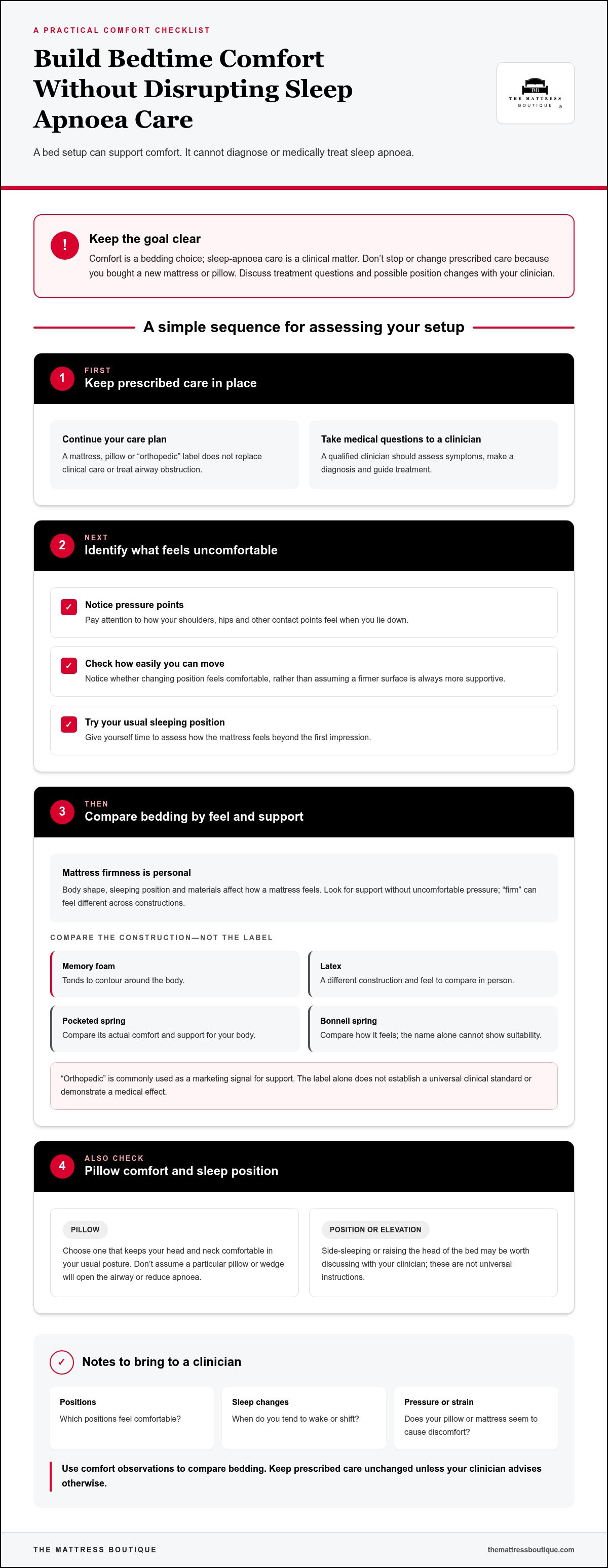
How to Build a More Comfortable Bed Setup Without Disrupting Care
Make bedding changes in a measured order. Keep your prescribed sleep-apnoea care in place, identify what feels uncomfortable, then assess whether the mattress, pillow or bed frame may be contributing. Shopping for an orthopedic mattress singapore option should be a comfort decision, not a reason to change how you use prescribed equipment or follow clinical advice.
What should you assess before changing the bed?
Start by noting the condition of your current mattress and the comfort issues you experience. Does it feel uneven or uncomfortable in a particular position? Do you wake with pressure or find it difficult to turn? Record your usual sleep position and recurring concerns instead of relying on a general impression. If the discomfort occurs in a specific area or position, include that detail in your notes.
Also check how the mattress and frame work together. The mattress should sit stably on the frame, without shifting or feeling uneven during ordinary use. When comparing a new mattress, consider how its feel suits your body and sleep habits. Product descriptions can help you understand materials and construction, but marketing claims aren’t a reason to change prescribed equipment use.
- Write down where and when discomfort occurs.
- Note your usual sleep position and whether you change position during the night.
- Describe any concerns about mattress feel, movement or stability on the bed frame.
- Keep prescribed equipment use and care instructions unchanged unless your clinician advises otherwise.
This short record can make a conversation with your treating clinician more specific. It can help distinguish bedding discomfort from questions about your sleep-apnoea care.
When should you ask a clinician about positioning?
Discuss side-sleeping, bed elevation or persistent discomfort with your treating clinician, especially if you’re considering a change to your sleep routine while following prescribed care. A position that feels comfortable isn’t automatically appropriate for every person or diagnosis. Don’t change a prescribed treatment routine based on a mattress claim, online advice or a preferred sleeping position alone.
Bed adjustments should complement, not replace, prescribed sleep-apnoea care. Keep that principle in view as you compare pillows, mattresses and frames. The aim is to make your bed more comfortable while leaving diagnosis and treatment decisions with your clinician.
To compare bedding options with comfort and support in mind, explore mattresses, pillows and bed frames.
Choosing a Supportive Mattress in Singapore: Turn Your Needs into a Shortlist
A useful shortlist starts with everyday comfort priorities, not a promise on a product label. If you’re searching for an orthopedic mattress singapore shoppers can compare, write down what matters in your usual sleeping position: the feel you prefer, where you notice pressure, how easily you turn, and whether your current mattress and frame feel stable together. Keep medical questions about sleep apnoea separate from these bedding criteria.
How can you make a practical mattress shortlist?
Choose two or three comfort priorities before comparing options. For instance, you might favour a more contouring feel, prefer a responsive surface, or want turning to feel easy. Then compare mattress categories by their construction and how they feel to you, rather than assuming that a particular material or the word “orthopedic” signals a medical benefit.
- Feel: Note whether you prefer a firmer or more cushioning surface.
- Material: Compare memory foam, latex, pocketed spring and Bonnell spring options by how they feel to you.
- Movement: Consider whether changing position and getting in or out of bed feel comfortable.
- Fit: Check that the mattress works with your bed frame, and consider whether your pillow supports a comfortable head and neck position.
These criteria make the comparison manageable without relying on broad claims about support. If your preferences point towards a particular brand, compare its mattress options by feel, material and fit, while keeping the decision focused on your comfort.
What is the next step after choosing your priorities?
Compare options that match your comfort checklist, and treat claims about sleep-apnoea treatment differently from descriptions of mattress feel or materials. A bed may suit your preferred way of resting, but it doesn’t diagnose or treat the condition. Bring unanswered questions about sleep position, elevation or prescribed care to your qualified clinician before changing your routine.
For your shortlist, focus on what you can assess directly: how the surface feels, whether you can move comfortably, and how the mattress works with your frame and pillow. The Mattress Boutique offers memory foam, latex, pocketed spring and Bonnell spring mattresses, alongside pillows and bed frames, so you can consider the pieces of your setup together.
Explore mattresses and bedding at The Mattress Boutique to compare options with comfort and support in mind, while keeping clinical decisions grounded in professional advice.
Choose Bedding for Comfort, Keep Care Clinical
A supportive bed setup can make rest feel more comfortable, but it can’t treat sleep apnoea or replace advice from your clinician. Use your own comfort preferences to compare mattress feel, materials, pillows and bed-frame fit. The orthopedic mattress singapore search term may suggest a medical benefit, but the label alone is no measure of treatment suitability.
Keep prescribed care in place as you consider bedding changes. If you’re unsure about sleep position, bed elevation or treatment, bring those questions to your clinician. For mattress shopping, focus on what feels supportive and practical for your everyday sleep habits.
The Mattress Boutique carries memory foam, latex, pocketed spring and Bonnell spring mattresses, as well as trusted sleep solutions to suit your preferences. Explore mattresses and bedding at The Mattress Boutique to compare options for your comfort needs. With clear priorities and clinical guidance for health decisions, you can make a thoughtful choice for a more comfortable bed.
Frequently Asked Questions
Can an orthopedic mattress help with sleep apnoea?
An orthopedic mattress may feel supportive or comfortable, but it isn’t a sleep-apnoea treatment. In an orthopedic mattress singapore search, the label generally signals support-oriented marketing, not proof of a medical benefit. Choose a mattress based on comfort, support preference and practical fit, and continue following your clinician’s treatment plan. If you have concerns about symptoms or care, raise them with a qualified clinician rather than relying on product claims.
What type of mattress is best for someone with sleep apnoea?
There isn’t one mattress type established as best for everyone with sleep apnoea. Memory foam, latex, pocketed spring and Bonnell spring mattresses differ in construction and feel, so consider what feels comfortable and how easily you can change position. These are bedding comparisons, not treatment recommendations. If you have questions about sleep position, symptoms or your prescribed care, discuss them with your clinician before changing your routine.
Can sleeping on your side reduce sleep apnoea?
Side-sleeping may be relevant for some people, but its suitability depends on the individual and their condition. Don’t assume changing position will treat sleep apnoea or replace prescribed care. If you’re considering a different sleep position, ask your clinician whether it makes sense for you, especially if you use prescribed equipment or still have symptoms. Keep following your care plan unless your clinician advises a change.
Can raising the head of the bed help with sleep apnoea?
Raising the head of the bed isn’t a universal solution for sleep apnoea, and it may not be appropriate for everyone. Before trying a wedge or adjusting the bed, discuss the idea with your clinician, particularly if you have prescribed treatment. Make sure your bedding feels stable and comfortable, but don’t stop or alter treatment because of a bed adjustment. Your clinician can advise based on your individual needs.
Does mattress firmness affect sleep apnoea?
Mattress firmness can affect how comfortable and supported you feel, but it isn’t a sleep-apnoea treatment. Your preferred firmness may vary with body shape, sleep position and personal comfort. Compare mattresses by how they feel when you lie down and change position, rather than treating firmness as a breathing benefit. Take questions about symptoms or treatment to a qualified clinician, and keep prescribed care in place.
Should I replace my mattress if I have sleep apnoea?
Sleep apnoea alone doesn’t mean you need to replace your mattress. Consider a new mattress if the current one no longer feels comfortable or supportive, or if its condition affects your everyday rest. Don’t expect a mattress purchase to treat the condition. If sleep concerns continue, discuss them with your clinician rather than relying on a bed change or adjusting prescribed care without medical advice.