

A bed frame’s height alone won’t tell you whether the finished bed will feel comfortable. What matters is the height of the complete setup: the frame, any foundation and the mattress. This bed frame height guide explains how to measure them together.
Mattress thickness can change how a frame feels in everyday use, and a bed that’s too high or too low may be awkward to get into. The right height depends on your comfort, mobility and how you use your bedroom.
Learn how to measure total bed height, compare frame styles and use a simple sit test to decide what feels right. We’ll also look at storage and divan bed frames, so you can compare options without overlooking mattress thickness. Once you know the finished height, choosing a bed that suits your routine and room becomes easier.
Key Takeaways
- This bed frame height guide explains why the finished bed height matters more than the frame alone when planning a comfortable setup.
- Compare low-profile, platform, divan and storage frames by their construction and visual effect, rather than assuming each style has a fixed height.
- Use a simple checklist to match the frame and mattress to your routine, bedroom layout and access needs.
- Consider whether under-bed storage matters when weighing the practical trade-offs of different frame styles.
- Compare storage and divan bed frames with mattress options to find a complete setup that suits your everyday needs.
What Does Bed Frame Height Mean? Measure the Whole Bed, Not Just the Frame
A bed’s listed frame height is only one part of its finished height. To work out how high the mattress will sit, measure from the floor to the mattress’s top surface. This is more useful than the frame measurement alone, particularly when pairing a frame with a mattress you already own or are selecting separately.
Total bed height is the distance from the finished floor to the top surface of the mattress, including any base or foundation beneath it. Frame height usually describes the structure, but product specifications may measure from different points, such as the legs, side rails or mattress-support surface. A quick overview of bed frame styles explains how construction can vary. For your setup, focus on the specific measurements.
How to measure bed frame height accurately
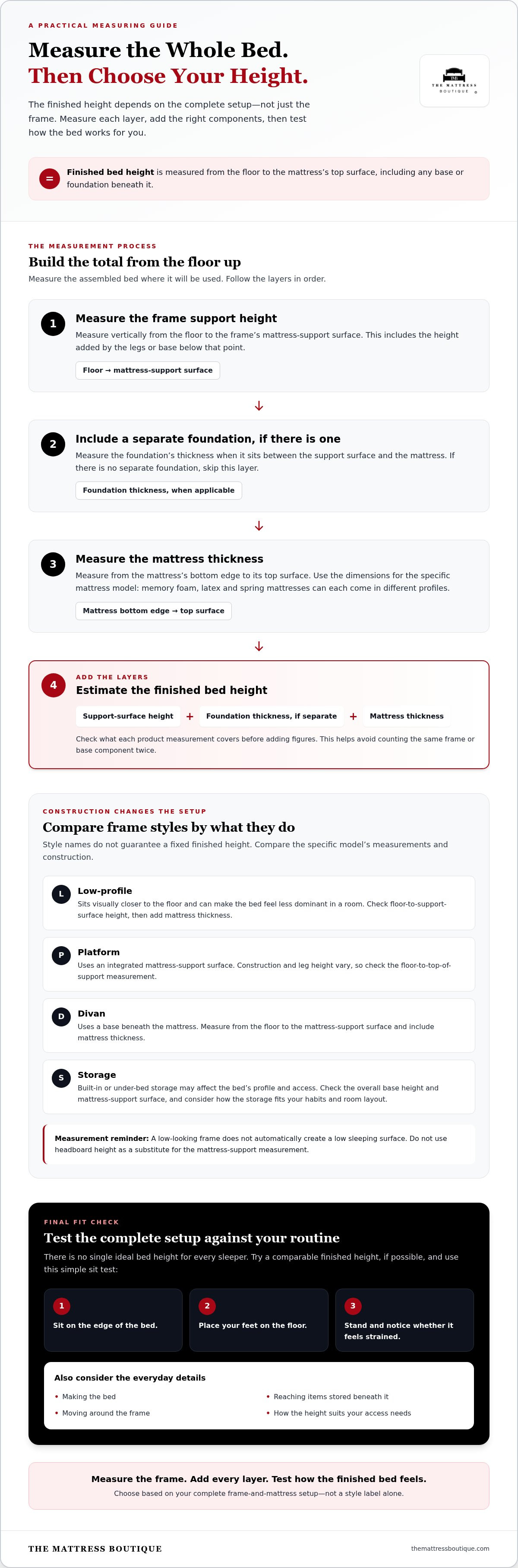
Measure the bed assembled on the floor where it will be used. First, measure vertically from the floor to the frame’s mattress-support surface. This includes the height added by the legs or base below that point. Then measure the mattress from its bottom edge to its top surface. Add the measurements to estimate the finished height.
If there’s a separate foundation, include its thickness too: support-surface height + foundation thickness + mattress thickness. Before adding the figures, check what each product measurement covers. This helps you avoid counting the same frame or base component twice.
Why mattress thickness changes the final height
Two beds with the same frame can have different finished heights if their mattresses differ in thickness. A thicker mattress raises the sleeping surface, while a thinner one leaves it lower on the same support. That affects both the bed’s appearance and how it feels to get in and out of.
Mattress material doesn’t determine thickness. Memory foam, latex and spring mattresses can each come in different profiles, so use the dimensions for the specific model rather than relying on its material category. When comparing frames and mattresses, calculate the combined height for each pairing. This gives you a clearer picture of the full setup, not just an isolated frame specification.
How Bed Frame Styles Change Your Finished Bed Height
Frame style affects more than appearance. Legs, the height of the supporting base and built-in storage can all change where the mattress sits. Terms such as “platform” and “divan” describe broad construction types, not a guaranteed finished height. Compare the model’s measurements and how its structure works with your mattress.
A low-profile frame may create a more open, grounded look, while a taller-looking base can give the bed more visual presence. Neither appearance tells you the exact mattress height. Measure from the floor to the mattress-support surface, then add the mattress thickness. Don’t use the headboard’s height as a substitute, since it may rise well above the sleeping surface.
Low-profile and platform bed frames
Low-profile frames sit visually closer to the floor, which can make a bed feel less dominant in a room. Platform frames use an integrated mattress-support surface, but construction and leg height differ between models. Check the height from the floor to the top of the support surface, then add the mattress thickness. A low-looking frame doesn’t automatically create a low sleeping surface.
Divan and storage bed frames
Divan frames use a base beneath the mattress, while storage frames incorporate space within or under the bed. Depending on the design, the base or storage structure may raise the mattress position. Consider how often you’ll use the storage and whether the bed’s position works with your room layout. For more on storage designs, see this storage bed frame guide.
Bed height can affect tasks performed around it, but context matters. An OSHA discussion of reducing back injuries concerns patient-care work and caregiver ergonomics, not a universal height recommendation for home beds. Choose based on your own access needs and the complete frame-and-mattress setup.
| Frame style | Practical effect | Measurement to check |
|---|---|---|
| Low-profile | Creates a lower visual profile in the room. | Floor to mattress-support surface, plus mattress thickness. |
| Platform | Uses an integrated mattress-support surface. | Floor to the top of that surface. |
| Divan | Uses a base beneath the mattress. | Floor to the mattress-support surface and mattress thickness. |
| Storage | Adds storage structure that may affect the bed’s profile and access. | Overall base height and the mattress-support surface. |
Compare specifications for the exact frame and mattress pairing rather than relying on style labels. Explore bed frames and mattresses to consider how storage and divan options fit your room and routine.
Is a Higher or Lower Bed Better? Compare Comfort, Access and Room Fit
There isn’t one ideal bed height for every sleeper. A higher setup may feel easier to sit down on or stand up from, while a lower one can suit someone who prefers a closer-to-the-floor feel or a less imposing look. The right choice depends on how the complete bed works with your body, routine and bedroom, not on a universal measurement.
Consider everyday tasks as well as first impressions. Can you sit on the edge, place your feet on the floor and stand without feeling strained? Think about making the bed, reaching items stored beneath it and moving around the frame. A storage bed may provide useful space, but its access method and position should suit your habits. Choose a height by testing the complete setup against your daily needs.
What to consider if getting into bed feels difficult
If possible, try a comparable finished bed height before deciding. Sit on the edge and notice whether your feet rest comfortably on the floor, and whether lowering yourself onto the mattress or standing back up feels manageable. A height that feels convenient for one person may not suit someone with different knee, hip or mobility needs. If mobility concerns persist, seek advice from a qualified health professional rather than relying on general bed-height guidance.
How bed height affects a bedroom’s proportions
A taller frame can make a compact room feel visually fuller, while a lower bed may leave more open space above and around the sleeping surface. These are matters of appearance, not guarantees about how spacious a room will feel. The mattress and headboard also affect the overall look, so consider them with the frame.
Check the room’s practical layout too. Compare the mattress surface with the height of bedside furniture so items are easy to reach. Leave enough walking space to get in and out of bed without awkward manoeuvring, and consider whether drawers, doors or other furniture could obstruct access. A visually appealing height may not be convenient if it makes the route around the bed feel cramped.
Keep the measurements separate from the design impression. “Low-looking” or “tall-looking” describes how a bed appears; total bed height is measured from the floor to the top of the mattress. Compare that finished measurement with how you prefer to sit, stand and move around the room. Even a small difference in mattress thickness can change the feel, so judge the actual frame-and-mattress pairing rather than the frame alone.
How to Choose the Right Bed Frame Height for Your Mattress and Routine
A comfortable height starts with the mattress you plan to use and the way you move around your room. Treat the frame and mattress as one setup, then check that their combined dimensions suit your daily routine. Use this checklist to compare options before deciding.
A simple bed height checklist before you buy
- Record the frame measurement. Find the distance from the floor to the frame’s mattress-support surface. Check that the specification refers to this point, not the top of a headboard or side rail.
- Note the mattress thickness. Use the dimensions for the specific mattress model you plan to pair with the frame.
- Calculate the finished height. Add the support-surface height and mattress thickness. Include the height of any separate base or foundation.
- Test everyday access. Consider how the finished height feels when sitting down, getting up and making the bed. If possible, try a similar complete setup.
- Check the room and your routine. Consider walking space, bedside furniture, sleep habits, mobility needs and whether you’ll use under-bed storage.
Write down the measurements and your observations. This makes it easier to compare frames consistently instead of relying on product photos, which can’t show how a particular mattress changes the bed’s profile.
Check the complete frame-and-mattress fit
Height is only one part of a good fit. Compare the mattress size with the frame’s stated sleeping-surface dimensions to ensure it suits the space. Then consider whether a headboard or footboard affects access, room proportions or bedside furniture placement. Keep those layout details separate from the finished floor-to-mattress measurement.
Your sleep habits can help guide the choice. If you regularly use storage beneath the bed, consider whether the frame design makes access practical. If you tend to sit on the edge before standing, pay attention to how the complete setup feels in that position. If you haven’t chosen a mattress yet, compare models and their dimensions with your frame.
Explore bed frames and mattresses together, then use your measurements to narrow the options to a setup that fits your comfort preferences, room and routine.
Find a Bed Frame That Complements Your Mattress and Everyday Needs
The best fit is a complete sleep setup, not just a frame that looks right on its own. Before deciding, calculate the finished floor-to-mattress height, test how comfortably you can get in and out, and check that the frame and mattress dimensions work together. Then consider what you need from the space around and beneath the bed.
Use the measurements for the specific frame and mattress you plan to pair. Frame styles don’t have universal heights, and mattress thickness affects where the finished sleeping surface sits. These practical checks can help narrow your choice:
- Does the combined height feel manageable when sitting down and standing up?
- Can you move around the bed and reach bedside furniture comfortably?
- Will the mattress fit the frame’s stated sleeping-surface dimensions?
- Would under-bed storage be useful, and will you access it often?
Measure the full setup, assess access in everyday use and choose a style that supports your priorities. These steps make it easier to compare bed frames by how they’ll work in your home.
When a storage frame suits your priorities
A storage bed frame may suit you if you want to make practical use of space beneath or within the bed. Think about what you plan to store and how often you’ll retrieve it. If you’ll need frequent access, the opening method and clearance around the bed matter. Compare these practical details with the frame’s support-surface height and your mattress thickness. For more planning ideas, read this storage bed guide for Singapore.
When a divan frame may suit your setup
A divan is another frame category to consider. Estimate the finished height by adding the frame’s floor-to-support-surface measurement to the thickness of the mattress you intend to use. This gives you a more useful picture than the frame category alone and helps you assess access and proportions before choosing.
Explore bed frame options and compare them with a mattress that suits your preferences. With the dimensions, access needs and storage priorities in view, you can make a considered choice for your room and routine.
Choose a Bed Setup That Feels Right for You
The most useful lesson from this bed frame height guide is to judge the complete setup, not the frame by itself. Add mattress thickness to the frame’s support height, then consider how easily you can get in and out of bed and move around your room. Your comfort and everyday routine matter more than choosing a supposedly universal height.
Storage and divan bed frames give you different options to weigh against your space and priorities. Pair your preferred frame with a mattress that fits its dimensions and suits your needs. The Mattress Boutique offers both frame types, alongside a wide selection of premium mattresses in materials such as memory foam, latex and spring.
Ready to compare options for your bedroom? Explore bed frame and mattress options and take the next step towards a setup that works for you.
Frequently Asked Questions
What is the ideal height for a bed frame?
There isn’t one ideal frame height because comfort depends on the complete bed and the person using it. A total height of around 18 to 25 inches (46 to 64 cm), measured from the floor to the mattress top, is a commonly suggested range for many adults, but it’s a starting point, not a rule. Try sitting on a comparable setup and consider whether your feet reach the floor comfortably.
How do I calculate the total height of a bed?
Add the frame height from the floor to its mattress-support surface to the mattress thickness. If you use a separate foundation, include its height too. For example, a 30 cm support-surface height plus a 25 cm mattress gives an estimated total of 55 cm. Measure each part from the correct point and use the specific frame and mattress dimensions, rather than relying on the frame label alone.
Is a higher bed or a lower bed better?
Neither is automatically better. A higher sleeping surface may feel easier to sit on or rise from, while a lower one can suit your preferred look and leave the bed visually closer to the floor. Room layout, mattress thickness, mobility and daily habits all affect the choice. If possible, test a similar complete setup and consider how you’ll get in and out, make the bed and move around it.
Can I use a thick mattress with a low bed frame?
Yes, a thick mattress can sit on a low frame if its size and support requirements suit the frame. Keep in mind that mattress thickness adds directly to the finished bed height, so the result may sit higher than the frame’s low profile suggests. Check the frame’s sleeping-surface dimensions and the mattress measurements for the specific models, then judge whether the combined height feels comfortable in your room.
Does a storage bed frame make the bed higher?
A storage frame may raise the mattress position because its base or storage structure adds height, but the effect depends on the design. Don’t assume all storage beds sit at the same level. Check the measurement from the floor to the mattress-support surface and add your mattress thickness to estimate the finished height. Also consider how the storage opens and whether there’s enough space to access it easily.
Should the bed frame and mattress be the same height?
No. The frame and mattress are separate parts of the setup, so they don’t need to have matching heights. Check that the mattress dimensions suit the frame’s sleeping surface and that the combined height works for you. A thicker mattress sits higher on the same frame than a thinner one. Calculate the total from the floor to the mattress top, then consider access and room fit.