

A mattress is often considered for replacement after six to eight years, but age alone does not decide when it is time. The signs you need to replace your mattress can also include ongoing discomfort, visible sagging, worn surfaces, or allergy symptoms that seem worse around your bed. If your mattress still feels supportive, it may not need replacing simply because it has reached a certain age.
It is understandable to hesitate: replacing a mattress is a practical decision, and a topper or simple adjustment may seem like an easier fix. The key is to distinguish surface discomfort from lost support that a temporary fix cannot address.
This guide explains how to assess mattress age, possible allergens, repair options, and visible wear. You will have a clearer way to decide whether to keep your current mattress, try a temporary improvement, or consider a replacement.
Key Takeaways
- Use the six-to-eight-year range as a prompt to assess your mattress, not as an automatic replacement deadline.
- Consider whether allergy symptoms seem connected to your sleep environment, and whether cleaning and airing the mattress make a difference.
- Match expected lifespan to mattress material, while keeping comfort and support in mind.
- Look for lasting sagging, lumps, or pressure discomfort; a topper may improve surface comfort but won’t fix deeper support problems.
1. Allergies, asthma, dust mites, and other allergens
A mattress can collect dust, skin flakes, and moisture within its layers. Dust mites can live in household dust, so an older mattress may hold allergens that surface vacuuming cannot fully remove. After the 7 to 8 year mark, consider whether allergy symptoms have become more noticeable around your bed. Persistent symptoms may be among the signs you need to replace your mattress, especially if cleaning and routine maintenance don’t improve the sleep environment.
Look for a pattern rather than assuming the mattress is the cause. For example, note whether you wake with a blocked nose, itchy eyes, coughing, or wheezing after sleeping in your own bed, and compare those mornings with how you feel after nights elsewhere. Wash bedding regularly, use a breathable mattress protector, and air the mattress when practical. If symptoms persist or worsen, discuss them with a healthcare professional; changing your mattress alone cannot identify the cause.
Allergens may aggravate discomfort for someone with asthma, but dust mites do not prove that a mattress is triggering symptoms. Both innerspring and memory foam mattresses can collect household dust on their surfaces and bedding. Focus on the pattern: worsening symptoms in bed, visible dust, and little improvement after cleaning are reasons to assess your sleep setup, not a diagnosis.
Allergies and sleep apnea are separate concerns. A mattress replacement may change comfort, but it should not be treated as a remedy for sleep apnea or breathing pauses during sleep. If those symptoms are a concern, seek medical advice rather than relying on mattress maintenance or a new mattress to address them.
In Singapore, coverage for sagging and defects depends on the warranty terms for that mattress. Review the stated defect criteria, exclusions, and claim steps; the written terms determine what qualifies for coverage.
Use a simple sequence before deciding: clean the bedding and mattress surface, air the room, then note whether symptoms continue. If the mattress is older than 7 to 8 years and discomfort or allergy symptoms persist despite those steps, age and condition together may support considering a replacement.
2. Lifespan by mattress type
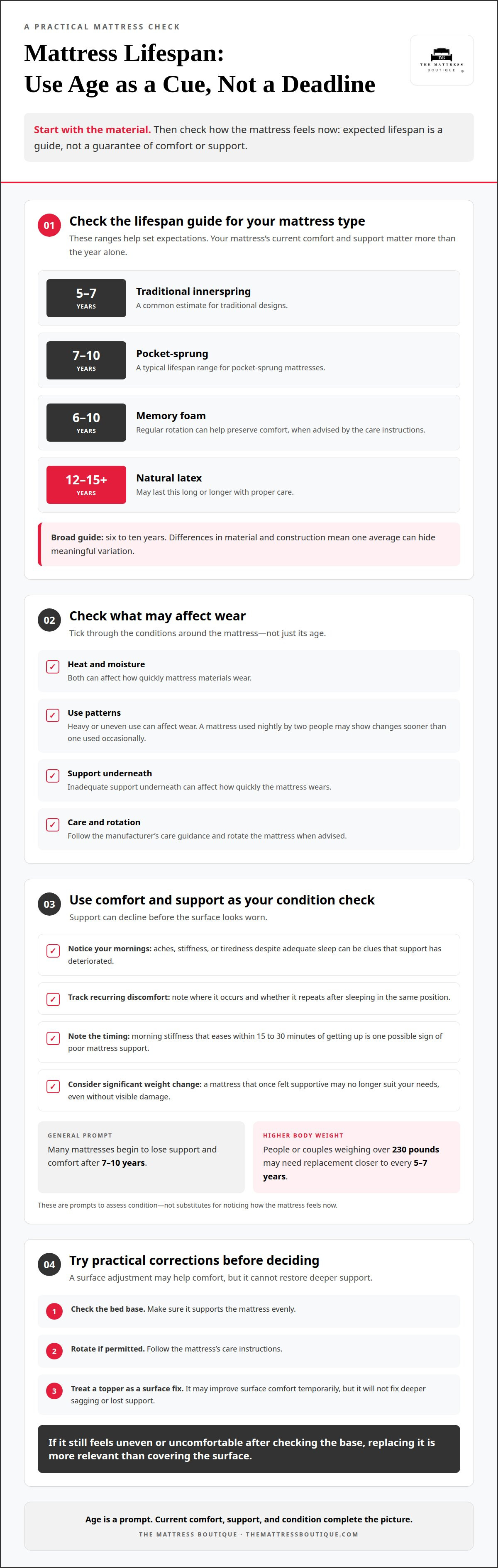
Mattress lifespan depends partly on its materials, construction, use, and care. A broad guide is six to ten years, but that average can hide meaningful differences between types. Treat your mattress’s age as a cue to notice changes, not a guarantee that it will remain comfortable until a specific year. Its support can decline before the surface looks worn.
Typical estimates vary by construction. For example, traditional innerspring mattresses are often listed at five to seven years, while pocket-sprung mattresses may last seven to ten years. Memory foam mattresses typically last six to ten years. Natural latex mattresses can last 12 to 15 years or more with proper care. These ranges help set expectations, but they don’t replace checking comfort and support.
- Innerspring: five to seven years is a common estimate for traditional designs.
- Pocket-sprung: seven to ten years is a typical lifespan range.
- Memory foam: six to ten years, with regular rotation helping preserve comfort.
- Natural latex: 12 to 15 years or more with proper care.
Heat, moisture, heavy or uneven use, and inadequate support underneath can affect how quickly materials wear. A mattress used nightly by two people may show changes sooner than one used occasionally. Follow the manufacturer’s care guidance, rotate the mattress when advised, and notice whether you wake with stiffness or feel less supported. If it no longer feels comfortable, its material’s expected lifespan matters less than its current condition.
In Singapore, replacement cost depends on size, material, construction, and brand. A single average can hide those differences, so base your budget on the mattress type and features you need rather than its age alone.
If you’re comparing materials before buying, explore mattress materials and construction alongside the lifespan ranges. Your morning comfort and the mattress’s condition remain practical guides as it approaches 10 years.
3. Is it worth repairing a mattress instead of replacing it?
Changes in weight can alter how a mattress distributes pressure and supports your body. After a significant weight change, notice whether your usual sleeping position now leaves you with pressure-point discomfort or a sense of sinking. A mattress that once felt supportive may no longer suit your needs, even if it has no visible damage.
Use your morning comfort as a practical clue. Waking with aches, stiffness, or tiredness despite adequate sleep can indicate that support has deteriorated. Morning stiffness that eases within 15 to 30 minutes of getting up is another possible sign of poor mattress support. Track where discomfort occurs and whether it repeats after sleeping in the same position.
Repair or adjustment makes sense when the problem has a correctable cause. Check that the bed base supports the mattress evenly, then rotate the mattress if its care instructions allow. A topper may improve surface comfort temporarily, but it cannot fix deeper sagging or lost support. If the mattress still feels uneven or uncomfortable after correcting the base, replacing it is more relevant than covering the surface.
Age and use also matter. Most mattresses begin to lose support and comfort after seven to ten years. People or couples weighing over 230 pounds may need to replace a mattress closer to every 5 to 7 years. These are useful prompts to assess condition, not a substitute for noticing how the mattress feels now.
Materials affect the kind of wear you may notice. An innerspring mattress can feel less supportive if its structure no longer distributes weight evenly; foam may feel less comfortable as it loses resilience. Natural materials do not prevent support from changing with regular use.
Asthma symptoms and stress can affect sleep, but they do not establish that a mattress needs repair or replacement. Focus on repeatable physical signs, such as morning aches or persistent pressure discomfort. If correcting the base and following appropriate care do not restore comfort, and the mattress no longer supports you, replacement is the practical next step.
4. Visible sagging, lumps, and worn surfaces
Look across the mattress surface in daylight and check for dips, raised lumps, torn seams, or exposed filling. A body impression deeper than 1.5 inches can indicate the mattress no longer supports you properly. Sagging between the shoulders and hips may also create pressure points, even if the rest of the bed looks level.
Check the bed base before judging an indentation. An uneven or unsuitable base can affect how the mattress sits, so correct the base issue and rotate the mattress if its care guidance allows. If sagging remains after those steps, the mattress itself may have lost support. A 1-to-1.5-inch dip can disrupt spinal alignment and create pressure points.
Surface damage calls for a closer look, not an automatic decision. A small stain may affect appearance, while a hole, torn cover, or exposed spring can signal more serious wear. If you can feel springs through the padding or lumps remain beneath the cover, the internal structure may no longer provide an even sleeping surface.
Wear can look different depending on the material. A memory foam mattress may develop a body impression where you sleep, while natural latex can also show wear or unevenness. Ask someone to observe the mattress while you lie in your usual position; a dip under your weight may be easier to see. Then note whether you wake with discomfort in your shoulders, hips, or back.
Keep the mattress if a base adjustment or permitted rotation resolves the issue and comfort returns. Consider replacement if deep impressions persist, springs are exposed, or the surface remains uneven. For help choosing a mattress that suits your support needs, explore mattress options.
The Mattress Boutique
The Mattress Boutique can help you compare replacement options when cleaning, rotating, or correcting the bed base has not restored comfort. If your mattress has persistent sagging, worn surfaces, or support that no longer suits you, comparing different constructions and brands can clarify your next step.
The Mattress Boutique carries King Koil, Slumberland, Dunlopillo, and SofzSleep mattresses. Consider what you have noticed: where the mattress feels uneven, whether you wake with discomfort, and which materials or support styles you prefer. These observations can guide a focused comparison without making age alone a reason to replace your mattress.
If you are ready to discuss your mattress needs and replacement options, contact The Mattress Boutique for personal guidance.
Choose a mattress that fits your next chapter
Your next mattress should suit the way you sleep now, not simply replace the one you bought before. Consider which sleep positions feel comfortable, where you need support, and whether your preferences have changed. Those details help you focus on a suitable feel and construction instead of choosing by appearance alone.
The signs you need to replace your mattress are useful decision points, not a reason to rush. If you are still uncertain, note what feels uncomfortable and what you want to improve. A clear picture of your needs can make your next choice more practical and personal.
The Mattress Boutique offers King Koil, Slumberland, and Dunlopillo mattresses for those considering a replacement. Contact The Mattress Boutique for help exploring your options and deciding what may suit your sleep preferences. A considered choice can help you move forward with greater confidence.
Frequently Asked Questions
Is It Time for a New Mattress?
Consider replacing your mattress when its condition affects your sleep, comfort, or support, rather than relying on age alone. A mattress that looks intact may still feel uncomfortable night after night. Consider whether the problem is consistent, whether basic adjustments help, and whether the mattress still suits your current sleep preferences before deciding.
How do I know if my back pain is caused by my mattress?
Notice whether discomfort follows a consistent pattern: pain after sleeping in your bed that eases after a night elsewhere may suggest the mattress contributes. This comparison does not establish the cause, but it gives you useful information about your sleep setup. Note where and when pain occurs, and seek medical advice for persistent or worsening back pain.
Is It Time?
It may be time to act if your mattress repeatedly interrupts sleep or leaves you uncomfortable, and the problem persists after reasonable adjustments. Separate what you can change, such as bedding or the bed setup, from what remains part of the mattress itself. If your mattress is still comfortable and supportive, replacement may not be necessary.
Is it worth repairing a mattress instead of replacing it?
Repair is worth considering when the problem is limited and a practical fix can restore the mattress’s function. For instance, a loose bed-frame component can be addressed separately from the mattress. Before spending on a repair, review the mattress warranty and care instructions, then consider whether the repair addresses the underlying issue or only improves appearance temporarily.
What are the common signs a mattress needs replacing?
Common signs you need to replace your mattress include lasting discomfort, uneven support, persistent body impressions, exposed springs, or a damaged surface. A change in sleep comfort can matter even without obvious exterior wear. Consider how several clues fit together: a worn area alongside recurring discomfort is more informative than a small cosmetic mark alone.
How many years does a mattress typically last by type?
Typical estimates vary: traditional innerspring mattresses may last five to seven years, memory foam six to ten years, and pocket-sprung mattresses seven to ten years. Natural latex may last 12 to 15 years or more with proper care. A broad average is six to ten years, but construction, use, and maintenance affect an individual mattress’s lifespan.