

The benefits of investing in a quality mattress begin with finding a comfortable fit for your body and sleep preferences, not with a promise of more productive days. It’s reasonable to ask whether a higher price reflects features and construction that matter to you, or simply premium-sounding claims. A useful comparison starts with the mattress’s stated materials, firmness, care requirements and warranty, then considers how those details fit your needs.
A mattress that feels comfortable and supportive to you may make it easier to settle in bed. But results vary, and a mattress cannot guarantee uninterrupted sleep or more energy the next day. Sleep habits, stress, health and your bedroom environment also play a part.
This guide explains how to compare comfort, materials, construction and product-specific warranty terms. You’ll also find practical ways to match firmness, material and size to your preferences, and examples of how specifications differ between products. The aim is to help you judge value by suitability and useful details, rather than assume that one mattress or price point is right for everyone.
Key Takeaways
- The benefits of investing in a quality mattress depend on finding a comfortable fit with appropriate support, not simply choosing the highest-priced option.
- A comfortable mattress may make it easier to rest, but daytime energy is also shaped by sleep habits, health, stress and your environment.
- Compare each mattress’s stated construction, comfort, care requirements and warranty terms to assess its value beyond marketing claims.
- Define your comfort needs first, then compare similar product details and plan for the care your chosen design requires.
- Personal guidance can help you compare mattress firmness, materials and size preferences across options from The Mattress Boutique.
Why investing in a quality mattress can matter beyond bedtime
A mattress is part of your routine every night, but quality is difficult to judge from a label or a quick glance. A higher price or premium wording does not tell you whether the mattress will feel comfortable or offer the support you prefer. The benefits of investing in a quality mattress are best judged by its everyday fit, construction and care requirements, rather than the impression it makes in an advertisement.
A quality mattress is one that suits the sleeper, feels comfortable and supportive, and is made for regular use. That puts personal fit and product details ahead of status. Two mattresses can share a material category yet differ in firmness, construction and feel.
Mattresses use different materials and internal structures, and a category name alone won’t explain every detail. The Wikipedia article on mattresses offers a broad overview of mattress types, construction and history. When comparing products, focus on the specific construction and terms stated for each model instead of assuming that “premium” guarantees a particular experience.
What does investing in a quality mattress actually mean?
Comfort is personal. Your preferred firmness, sleeping position and sensitivity to pressure can all shape how a mattress feels. Support is personal, too: a mattress should feel suitable for your body, not merely carry a label such as firm, soft or suitable for everyone. There is no single material or firmness level that is right for every sleeper.
Investing means choosing with repeated use in mind. Look beyond promotional wording and compare the materials, construction, care instructions and warranty terms for the exact product. A higher price may reflect features that matter to you, but it is not proof of a better fit. A mattress can support comfort, but it cannot guarantee perfect sleep or prevent, treat or cure a health condition.
Why does mattress quality matter in everyday life?
Your mattress is one part of the sleep environment you experience night after night. If its feel or support makes it difficult to settle comfortably, that discomfort may contribute to disruption. A mattress that suits you better may make your bed more comfortable to use, though sleep is also influenced by factors beyond the mattress.
After a more restful night, you may feel better prepared for ordinary tasks such as concentrating at work, managing household responsibilities or keeping up with your routine. That is a possibility, not a productivity guarantee. Sleep duration, health, stress, daily habits and the bedroom environment can all affect how rested and energetic you feel. A quality mattress is one practical part of the picture, not a shortcut to better health or a substitute for addressing other causes of poor sleep.
Judge the investment by whether the mattress suits your comfort preferences and offers clear, relevant product information. A thoughtful choice aims for dependable comfort over repeated nights, without assuming the most expensive option or a particular mattress type will suit everyone.
How mattress comfort may support sleep and daytime productivity
A mattress doesn’t control how well you sleep, but comfort can be one part of the experience. If a surface feels distracting or difficult to settle on, you may find it harder to get comfortable. A mattress that feels better suited to you may make it easier to relax into rest. That is a possible benefit, not a promise that changing your mattress will fix disrupted sleep.
Can a comfortable mattress make it easier to rest well?
Think about what happens as you settle down. If you keep adjusting because the bed feels uncomfortable, that discomfort may compete with the calm you need to unwind. A more suitable surface may help you feel at ease, while appropriate support can contribute to a comfortable sleeping position. Neither effect is identical for everyone, and mattress comfort alone can’t guarantee uninterrupted or restorative sleep.
Preferences differ. One sleeper may like a more cushioned feel, while another may prefer a firmer surface. Body shape, sleeping position and personal comfort all influence what feels supportive. There isn’t one firmness level or material that’s best for every person. The practical goal is to find a mattress that feels comfortable to you, rather than relying on a general claim about what all sleepers should choose.
What is the realistic link between sleep and productivity?
Sleep and daytime readiness are connected, but a mattress is only one influence among several. A 2026 survey of 1,000 working adults in Singapore by Easmed and The Air Station reported that 97% experienced a decline in productivity after a poor night’s sleep. This survey describes people’s reported experiences with poor sleep; it is not evidence that a particular mattress improves work performance.
If a comfortable mattress helps you rest more easily, you may feel more prepared for tasks that require attention, planning or patience. But that outcome can’t be promised or attributed to the mattress alone. Sleep duration, health, routines, stress and your bedroom environment also shape how alert you feel. Work demands and personal circumstances matter, too.
Any productivity benefit from a quality mattress is indirect, individual and never guaranteed. A mattress may support comfort as part of a more restful night, but it isn’t a treatment for pain, insomnia, stress or any medical condition. Persistent sleep difficulties deserve attention beyond a mattress purchase.
For a practical comparison, consider how different firmness levels and mattress materials match your preferences instead of looking for a universal answer. Personal guidance can help you think through those preferences and narrow down options. Explore mattress options at The Mattress Boutique as you consider what may feel right for your sleep needs.
How to judge mattress quality without assuming higher price means better
A higher price can reflect a product’s materials or construction, but it can’t tell you whether the mattress suits your preferences. To compare options fairly, look for clear product details and assess them alongside comfort, care needs and warranty terms. The benefits of investing in a quality mattress are easier to weigh when you compare what each product actually offers, not just its headline claims.
Which quality signals are useful when comparing mattresses?
Use the same questions for each option. This makes it easier to separate specific, useful information from broad descriptions such as “premium comfort.”
| Quality signal | What to inspect | Why it matters |
|---|---|---|
| Construction | Read the product’s stated materials and construction details. | Specific information gives you a clearer basis for comparison than a general quality claim. |
| Comfort fit | Consider whether the firmness and feel suit your preferences and sleeping position. | A well-made mattress may still feel unsuitable if its comfort doesn’t work for you. |
| Stated warranty | Review the warranty for that exact mattress, including its terms and coverage limits. | Coverage varies by product. A warranty is a product term, not proof that the mattress will last for the full warranty period. |
| Care requirements | Look at the product’s care instructions and any requirements for its base. | Understanding care helps you judge whether the mattress fits your home and routine. |
| Product-specific information | Compare the details given for each model, rather than assuming features from its brand or category. | It helps prevent broad marketing language from being mistaken for a specific feature. |
Why is the right mattress a personal fit?
People can experience the same mattress differently. Your sleeping position, how your body feels on a surface and your preferred level of firmness all shape whether it feels comfortable and supportive. These factors are useful starting points, not a formula for identifying one ideal mattress for everyone. Weight-based firmness rules shouldn’t be treated as universal advice, either.
Material categories can help organise your search, but they don’t settle the comfort question on their own. Memory foam, latex, pocketed-spring and Bonnell-spring mattresses use different constructions; the specific product details and your preferences still matter. For example, The Mattress Boutique offers a Sofzsleep Starlight Full Latex Mattress with dual firmness, medium on one side and firm when flipped. That product-specific feature does not mean every latex mattress offers two comfort options. Compare the exact mattress rather than assuming every product in a category feels the same.
Construction details can also distinguish two products in the same broad category. One model might feature an individual pocketed spring system, a pure natural latex pillow top, a firm feel of approximately 8/10 and a 15-year warranty. Another model could feature an individual pocketed spring system, a micro-gel pillow top, natural latex and memory foam padding, a medium-firm feel of approximately 7/10 and a 15-year warranty. Those specifications describe the individual products; they are not general features shared by all mattresses from a single manufacturer.
A practical comparison comes down to fit, construction, clear terms and care. Price can be part of your decision, but it isn’t a reliable shortcut to personal suitability. Treat the stated warranty as coverage with defined terms, not a promise of a particular lifespan.
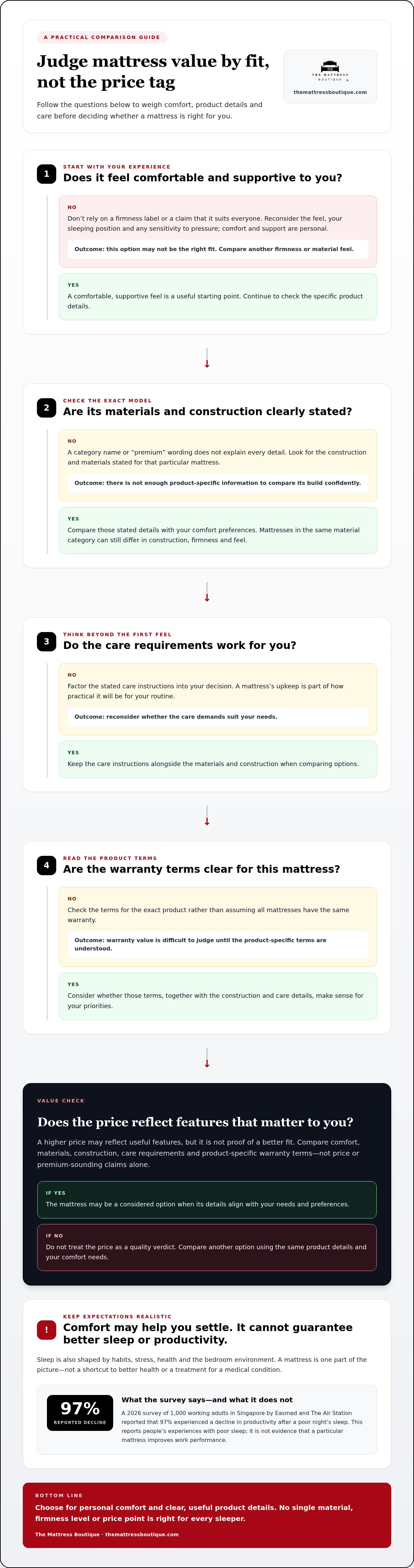
Practical ways to make a quality mattress investment worthwhile
A useful mattress choice starts with your needs, then moves to the details that show how each option may fit them. Follow a consistent process to compare products instead of relying on a headline claim or a single feature.
- Define your comfort needs. Consider who will use the mattress, preferred firmness and feel, sleeping position, and any comfort preferences that matter to you. If two people will share it, include both sleepers’ preferences in the decision.
- Match the size and bed frame. Choose a mattress size that suits the intended sleeper and bedroom, then consider whether the existing or planned frame is appropriate. A mattress and frame work as a sleep setup, so follow relevant product instructions rather than assuming every base suits every design.
- Compare construction and exact product details. Set descriptions side by side. Look at stated materials, construction, care requirements and features for each specific mattress. Compare like with like, and don’t treat broad terms such as “premium” as a substitute for useful product information.
- Read the warranty and plan for care. Review the warranty terms for the exact product, including what the coverage says. Note its care instructions before deciding. Warranty periods and requirements vary by mattress, and a warranty does not promise a particular lifespan.
If you’d like a more detailed framework for weighing size, comfort and other selection factors, use this complete mattress choosing guide. You can also compare mattress options with The Mattress Boutique, where personal guidance can help you consider firmness, material and size preferences.
How can regular care help protect your investment?
Care won’t guarantee a set lifespan, but following the product’s instructions helps you look after the mattress as intended. Rotate or flip it every 4-6 months, depending on its design, and follow the directions for that model. Not every mattress is designed to be flipped, so check its instructions before turning it over. Keep latex mattresses away from direct sunlight.
Care requirements differ across products, including instructions for the mattress cover and the type of bed base. Don’t apply one mattress’s care advice to another. If you use a slatted base, keep the slat spacing below 3 in (7.62 cm). For a Sofzsleep mattress cover, machine-wash at 40 °C and do not tumble dry, soak, bleach or iron it. Checking these details during selection makes it easier to choose a mattress that fits your comfort preferences, bed setup and care routine.
A considered choice connects comfort, construction, terms and care. Comparing those points for each exact product gives you a clearer basis for deciding whether the mattress suits your needs and represents worthwhile value over repeated use.
Finding a quality mattress with guidance from The Mattress Boutique
Choosing between mattress types and product descriptions can feel like a lot to weigh at once. The Mattress Boutique offers memory foam, latex, pocketed-spring and Bonnell-spring mattresses, with brands including King Koil, Dunlopillo, Slumberland, SofzSleep and MaxCoil. The range gives you different options to compare, but the right choice still depends on your preferences and needs.
Personal guidance can make the comparison more focused. Consider firmness, material and size preferences together rather than starting with a brand name or premium claim. This helps narrow the options to mattresses worth examining more closely, without assuming one construction or feel is right for everyone.
How can personal guidance simplify a mattress decision?
Start with the details that matter to you: how firm you prefer a mattress to feel, what size suits your bed setup and which materials you’re considering. The Mattress Boutique’s personal guidance can help you compare those preferences with the stated specifications of individual products. For a focused look at one brand, the King Koil mattress buying guide offers a brand-specific next step.
Keep the goal practical. Guidance can help you understand product differences and identify options that may suit your comfort preferences. It can’t guarantee better sleep, improved health or higher productivity, and no recommendation replaces your own assessment of fit.
What makes the next step feel straightforward?
Use a short checklist as you compare: does the mattress feel suitable for your preferences, are its construction details clear, can you follow its care instructions, and are the warranty terms clear for that exact product? These points help you assess value without relying on broad marketing language. Warranties vary by mattress, so review the terms for the product you’re considering rather than applying one model’s coverage to another.
The Mattress Boutique offers direct-factory pricing and delivery across Singapore. Those practical details can be part of your decision, alongside the mattress’s fit and specifications. Take time to compare options against your priorities, including firmness, materials, size and the care you’re prepared to follow.
The benefits of investing in a quality mattress are personal, so the most useful next step is an informed comparison. Explore mattress options at The Mattress Boutique when you’re ready to consider materials, firmness and sizes that align with your preferences.
Take the next step towards a better-fitting mattress
Your next mattress decision doesn’t need to be based on a promise of perfect sleep or a premium label. Think instead about what feels comfortable to you and which product details help you make a confident choice. The benefits of investing in a quality mattress are personal, so a considered match is more useful than assuming one option suits everyone.
The Mattress Boutique’s selection includes King Koil, Dunlopillo, Slumberland, SofzSleep and MaxCoil mattresses. Personal guidance can help you compare firmness, material and size preferences, while each mattress’s own warranty terms give you product-specific information to weigh. Consider those details alongside construction and care requirements to find an option that fits your needs.
When you’re ready to explore, compare options at your own pace and keep your preferences in mind. Explore mattresses and get personal guidance from The Mattress Boutique to take a practical next step towards a mattress that feels right for your everyday rest.
Frequently Asked Questions
Can investing in a quality mattress improve productivity?
It may support productivity indirectly if a more comfortable sleep surface helps you rest, but it can’t guarantee better work performance. The benefits of investing in a quality mattress should be judged as one part of your sleep setup, not a quick fix for low energy. If you’re considering a change, notice whether discomfort at bedtime is affecting your rest, while also considering sleep habits, stress, health and daily demands.
Does a more expensive mattress always mean better quality?
No. A higher price doesn’t show whether a mattress feels comfortable to you or suits your bed setup. Compare specific details such as materials, construction, care instructions and warranty terms for that exact product. For example, two mattresses described as “premium” may have different constructions or care requirements. Judge those differences against your needs instead of treating price or marketing language as a quality rating.
How can I tell whether a mattress is good quality?
Look for clear product information and consider how the mattress feels for its intended sleeper. Check the stated construction, firmness, size, care requirements and warranty terms, then compare those details across options. A useful test is whether you can explain why a particular mattress suits your preferences beyond its brand name or promotional description. Warranty coverage helps you understand the product terms, but it doesn’t guarantee a specific lifespan.
Can a quality mattress prevent or cure back pain?
No mattress can be relied on to prevent or cure back pain. A surface that feels more comfortable and supportive to you may make resting easier, but that isn’t the same as treating a medical condition. Back discomfort can have different causes, and a mattress change may not address them. If pain is persistent, severe or affecting daily activities, seek advice from a qualified health professional rather than relying on a mattress alone.
How often should I rotate or flip a mattress?
Rotate or flip a mattress every 4-6 months, depending on its design and the care instructions for that specific product. Some mattresses are designed to be rotated but not flipped, so check before turning one over. Following the correct directions helps you care for the mattress as intended. Use the product’s instructions rather than assuming all mattresses need the same treatment.
Do different mattress materials need different care?
Yes. Care instructions can differ by mattress and by its cover, so follow the directions for the exact product. Keep latex mattresses away from direct sunlight. For a Sofzsleep mattress, machine-wash the cover at 40 °C; do not soak, bleach, iron or tumble-dry it. These are product-specific instructions, not general rules for every mattress, so check the relevant care information before cleaning or moving a cover.
Is mattress firmness a matter of personal preference?
Yes. Firmness is experienced differently, and what feels supportive to one sleeper may not feel comfortable to another. Your sleeping position, body comfort and preferred feel can help guide your comparison, but they don’t dictate one correct firmness. If you share a bed, discuss what each person prefers and compare options with both sleepers in mind. Treat firmness labels as a starting point, not a universal recommendation.