

A mattress can feel cool on the surface without allowing air to move freely through it. Breathable mattress materials help heat escape, while cooling features aim to make the sleep surface feel less warm. In Singapore’s humid climate, that difference can affect how comfortable a bed feels at night.
It pays to look beyond a mattress’s “cooling” label: materials, construction and cover all influence airflow and surface feel. Latex’s airflow channels, spaces between pocketed springs and some open-cell foam designs can support ventilation. Dense foam may feel warmer when air movement is limited.
This guide explains what makes a mattress breathable, how covers affect airflow and moisture, and why breathability differs from cooling. You’ll also learn how these features work together, so you can weigh them alongside support and comfort when choosing a mattress.
Key Takeaways
- Look at how a mattress’s layers are built, not just its label, to understand whether air can move through it.
- Match your choice to how you sleep and what feels comfortable, balancing airflow with cushioning and support.
- Consider the cover as part of the sleep system: its fabric can affect airflow and how moisture feels against your skin.
- Separate ventilation from a cool-to-the-touch feel, then compare suitable mattress options from The Mattress Boutique’s King Koil, Slumberland, Dunlopillo and SofzSleep ranges.
What Is a Breathable Mattress?
A breathable mattress lets air move through or around its layers, helping heat escape instead of becoming trapped. In Singapore’s humid climate, airflow can affect how stuffy a mattress feels overnight.
Airflow Through Mattress Materials
Breathable mattress materials create pathways for air through the mattress, rather than relying only on a cool-feeling surface. Natural latex, for example, has small pinholes that support ventilation, while dense foam can restrict movement through its layers. Breathable crib mattresses use construction that allows airflow through or around the mattress. To assess breathability before buying, look at the listed materials and construction, then try the mattress in person to compare its feel.
Cotton and Wool for Airflow
Cotton and wool have open structures that let air pass and help move moisture away from the body. This can matter in Singapore, where humidity may make perspiration feel clammy against bedding. A cotton or wool layer can contribute to a less stuffy sleep surface, but it works as part of the overall design. Cover fabric, comfort layers and the mattress core all affect airflow and how moisture feels.
Airflow in Pocket Coils and Innerspring Mattresses
Pocket coils and innerspring mattresses have spaces between springs where air can circulate. In pocketed designs, springs sit in separate fabric pockets, leaving pathways between them. These spaces can support airflow, unlike dense foam that may limit air movement. A hybrid combines springs with foam or other comfort layers, so its breathability depends on how the materials are arranged and how much air can move between them.
Breathability and Mattress Tradeoffs
Breathability alone doesn’t determine support or durability; the materials and construction do. These breathable mattress materials can be paired with different support systems and comfort layers, so an airy feel doesn’t automatically mean less support. A spring layer can provide structure, while other layers shape cushioning and firmness. Consider the complete build and how the mattress feels under your shoulders and hips, alongside airflow, to weigh comfort and support together.
What Makes a Cooling Mattress Actually Work?
A cooling mattress aims to make the sleep surface feel less warm; breathability describes air movement through the mattress. In Singapore, humidity can make heat build-up more noticeable at night.
Choosing a Mattress for Hot Sleepers
For warm sleepers, the right mattress depends on whether heat, pressure or both affect comfort. Latex and pocketed springs can support airflow, while dense memory foam may feel warmer when air movement is limited. Side sleepers may prefer cushioning around their shoulders and hips; back sleepers may favour a steadier feel. A hybrid combines springs and comfort layers, so its temperature and support depend on its complete construction.
Try the sleep surface in your usual position. Notice whether the comfort layers feel too warm or firm, and whether your body feels supported. Couples can weigh motion control and firmness alongside cooling, since the mattress needs to suit both sleepers.
Comfort and Moisture Management
Comfort for warm sleepers involves more than a cool first touch. Mattress fabric, comfort layers, room temperature and sleep habits all shape how warm a bed feels. Cotton, linen and bamboo are cooler fabrics for bedding and sleepwear, according to University of Utah Health. Suitable sheets can improve the feel against your skin, while moisture-wicking fabric can help reduce a clammy sensation.
Moisture management matters because perspiration against the skin can make a humid night less comfortable. A breathable cover and bedding that moves moisture away can help you feel drier. Choose materials for both touch and ventilation, rather than expecting a cooling label alone to determine comfort.
Materials for Singapore’s Hot, Humid Climate
Singapore’s humidity makes airflow and moisture handling useful considerations when choosing a mattress. Cotton and wool have open structures that let air pass and wick moisture; natural latex also has airflow channels. These traits can help reduce trapped heat and stuffiness, but they don’t establish that a material resists mould or dust mites. Breathable natural latex may help reduce dust and mite accumulation, which can matter to people with allergies or asthma.
For a cooler, more breathable setup, pair the mattress with cotton, linen or bamboo sheets and a bed base that allows air to move around the mattress. Keep the room’s airflow in mind too. For newborns, place them on their backs to sleep.
Breathable mattress covers
A cover sits between you and the mattress, so its fabric affects surface feel and moisture management. In Singapore’s humid bedrooms, cover choice matters alongside the materials beneath it.
Cooling and Moisture-Friendly Cover Fabrics
A moisture-friendly cover helps manage perspiration at the sleep surface, while cooling fabric can feel cooler against the skin. These qualities are related, but don’t mean air moves freely through every mattress layer. Gel-infused foam is another cooling feature; its presence alone doesn’t show how breathable the mattress structure is. Consider the cover and comfort layers together, especially when dense foam makes up much of the core.
TENCEL™ Lyocell and certain treated cotton blends move perspiration away from skin more efficiently than conventional cotton, according to the National Sleep Foundation. That can reduce a clammy, humid feeling. Cotton, linen and bamboo are cooler fabrics for bedding and sleepwear, according to University of Utah Health. Pairing suitable sheets with a breathable cover can improve the feel of the sleep surface without treating cooling and airflow as the same feature.
Cotton, Bamboo, and Tencel Covers
Cotton, bamboo and Tencel are cover-material options associated with airflow and moisture management. Cotton and linen have open structures, while Tencel™ Lyocell can move perspiration away from the skin. The exact feel depends on the fabric and the mattress layers underneath. In a warm bedroom, consider whether the cover feels comfortable against your skin and works with the mattress construction.
Care matters too. A removable cover isn’t automatically washable, and a mattress core shouldn’t be treated as washable unless its care instructions say so. Follow the specific label before cleaning either part. If the cover’s instructions allow washing, follow those directions; keep the core dry unless its manufacturer advises otherwise. This helps avoid damaging the fabric or structure.
How breathable mattresses differ from cooling mattresses
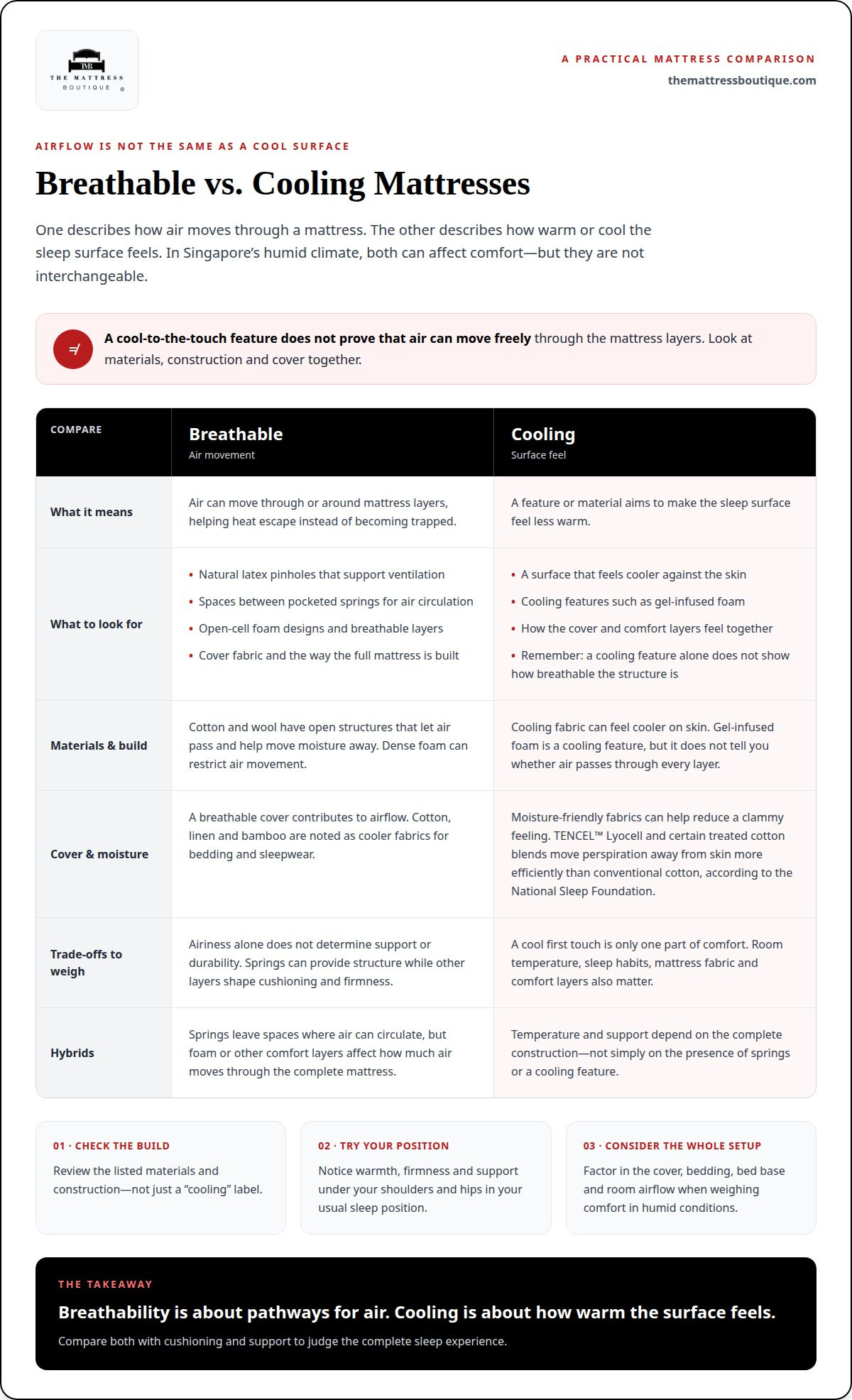
Breathability concerns airflow through a mattress; cooling describes how warm its surface feels. One feature doesn’t guarantee the other, so understanding the difference helps you choose for Singapore’s humid climate.
A breathable design creates air routes through its construction. Pocket springs leave spaces between coils, while natural latex has small ventilation channels. These structures can help heat escape instead of remaining trapped. A cooling mattress instead aims to make the sleep surface feel less warm, not icy. The sensation may come from the fabric or comfort layers, even if airflow through the core is limited.
Consider dense memory foam as an example. It can contour closely, but may feel warmer when airflow is restricted. Open-cell foam designs allow more air movement through interconnected pockets. A mattress with gel-infused foam may feel different at the surface, but gel alone doesn’t show whether air can circulate through all layers. The material, layer thickness and overall construction shape the result.
The room environment also affects how each feature feels. Singapore’s humidity can make heat build-up more noticeable, while limited airflow in a smaller bedroom may add to the warmth. Bedding and sleep habits influence comfort too. A responsive feel or an organic fabric label doesn’t, by itself, establish that a mattress is breathable or cooling. Focus on the complete build and how the surface feels in your usual sleeping position.
For a practical comparison, assess two things separately: whether the construction supports airflow, and whether the surface feels comfortable rather than warm. Trying a mattress in person can help you compare its feel, firmness and support. Choose the combination that suits your climate and comfort needs, instead of relying on one cooling claim. Explore mattress options with different constructions and materials.
The Mattress Boutique
The Mattress Boutique can help you consider mattress options when you’re weighing airflow, surface feel and support. Its range includes SofzSleep and other high-quality mattresses, giving you different designs to explore as you decide what matters most in Singapore’s humid climate.
Think about whether you tend to feel warm, prefer a firmer or softer surface, or need cushioning in a particular sleep position. These priorities can guide a comparison of breathable mattress materials and construction without relying on a cooling label alone. Speak with The Mattress Boutique’s team for personal guidance on options that fit your comfort priorities.
Choose a mattress with your next night in mind
Turn what you’ve learned into a personal comfort priority. Think about what you want to change in your sleep experience, then decide what matters most: surface feel, support or a less stuffy sensation. A clear priority can make the choice more manageable.
When considering breathable mattress materials, focus on how each option fits your preferences rather than expecting one feature to solve every comfort concern. A mattress is part of your wider sleep environment, and the right balance is the one that feels suitable for your body and bedroom.
You can also treat the decision as an investment in everyday comfort. Take time to consider what you value, and choose with confidence rather than being guided by a single label. Your preferences are a useful starting point.
For help exploring mattress options, contact The Mattress Boutique. A thoughtful choice starts with what feels right for you.
Frequently Asked Questions
Is Natural Latex a Good Mattress for Hot Sleepers?
Natural latex can suit warm sleepers because its pinholed structure supports ventilation. Whether it feels comfortable also depends on the mattress’s other layers, cover, room temperature and sleep habits. For example, a latex comfort layer over a dense foam core may feel different from latex in a more open construction. Consider airflow and support together rather than choosing by material name alone.
Which mattress materials are most breathable?
Pocketed springs, innerspring coils, natural latex and open-cell foam can all support airflow through different structures. Cotton and wool can also allow air to pass through cover or comfort layers. The most breathable choice depends on the whole mattress, including layer density, thickness and cover fabric. For a useful comparison, consider where air can move through the construction, not just which material appears on the label.
How do latex, memory foam, and innerspring mattresses compare for airflow?
Innerspring mattresses generally allow airflow through spaces between coils, while natural latex has small ventilation channels. Memory foam varies by design: open-cell versions have interconnected pockets that let air move through the foam, while dense foam may restrict airflow. A hybrid combines materials, so its performance depends on how its spring and foam layers are arranged. Compare the complete construction, not just the mattress category.
Are natural latex mattresses cooler than synthetic latex?
There isn’t enough information here to rank natural latex as cooler than synthetic latex in every mattress. Natural latex has small pinholes that support ventilation, but temperature depends on the complete design, including layer density, thickness and cover fabric. Mattresses using different latex formulations may also have different constructions. Compare airflow features and surface feel rather than assuming the “natural” label guarantees a cooler night.
How breathable are wool, cotton, and Tencel mattress covers?
Wool and cotton have open structures that let air pass, and both can help move moisture away from the body. TENCEL™ Lyocell is valued for moving perspiration away from skin, which can reduce a clammy feeling. Cover performance still depends on fabric construction and the layers beneath it. If you tend to wake feeling damp, compare moisture management as well as airflow and touch.
Do gel-infused or open-cell memory foams help keep mattresses cool?
Open-cell memory foam supports airflow through interconnected air pockets, helping heat move through the foam. Gel-infused foam is intended to affect the cooling feel, but gel alone doesn’t show how breathable the entire mattress is. Consider how the comfort layer, core and cover work together. A mattress can feel cooler at first touch without allowing the same airflow through all its layers.