

Could a longer pillow make it easier to settle into a comfortable position, or would it simply crowd your bed? The body pillow benefits for adults depend less on bold health claims than on whether its shape supports the way you sleep. For some people, having something to hug or rest a knee against can make side-sleeping feel more comfortable. For others, a standard pillow may be all they need.
It’s understandable to be unsure whether a body pillow is a practical addition or an unnecessary extra. It may help you feel more supported while staying in a preferred position, but it shouldn’t be treated as a cure for pain or a substitute for medical care.
This guide explains when a body pillow may improve comfort, how adults can position one for different sleep styles, and what to consider if they share a bed. You’ll also learn how to try one realistically, so you can decide whether it suits your sleep setup without expecting it to solve every sleep concern.
Key Takeaways
- Body pillow benefits for adults depend on whether extra support matches your preferred sleeping position and comfort needs.
- Compare where a body pillow and standard pillows provide support to decide what fits your sleep setup.
- Try one placement at a time, such as between your knees or against your torso, and notice whether it feels comfortable.
- Make room to move, especially if you share a bed or prefer a less crowded sleep space.
- Consider pillow comfort as one part of your overall sleep setup, alongside a mattress that suits your needs.
What Are Body Pillow Benefits for Adults, and Who Might Notice Them?
A body pillow is a long pillow used to support or position parts of the body while you rest. It can sit alongside you, between your legs, or against your torso, depending on what feels comfortable. Put simply, it gives you a longer surface to lean on or rest against. It’s a positioning aid, not a treatment, and its presence doesn’t guarantee better sleep or a change in health.
Adults often consider one because it can make a preferred sleep position feel more comfortable. A side sleeper, for example, might like having something between the knees or to hug. Someone who shifts around may value the sensation of extra support. These are personal comfort outcomes: the same pillow can feel helpful to one sleeper and cumbersome to another.
Body pillows are sometimes grouped with orthopedic pillows, a broad category described in this Orthopedic pillow overview. The label alone doesn’t establish that a pillow will correct posture or relieve a health problem. Start with the practical question: does its shape help you rest in a way that feels natural?
How a body pillow differs from a standard bed pillow
A standard bed pillow is generally used near the head, while a body pillow’s longer shape can extend alongside the torso or legs. That coverage lets it support more than one contact point, such as the arms and knees, without needing to reposition a smaller pillow between them. It usually supplements a head pillow rather than replacing it. Your head and neck may still need their own comfortable support.
Which adults may find a body pillow useful?
Side sleepers who like a cushion between their knees or something to hug may appreciate the added contact and support. Adults who prefer a more stable-feeling position might also find it comfortable, though a body pillow won’t hold everyone in place or suit every sleep habit. Whether it works depends on how you move at night, your comfort preferences, and the room available in your bed.
- You may value one if you naturally sleep on your side and like having support along your front or between your legs.
- You may prefer fewer pillows if you change positions often, feel restricted by extra bedding, or share a bed with limited space.
- Your setup matters because the mattress, head pillow, and available room all contribute to how comfortable a position feels.
The key takeaway is that body pillow benefits for adults are possible comfort and positioning advantages, not promised medical results. You don’t need to assume a longer pillow is better. It only needs to suit the way you actually rest. When reviewing your sleep setup, assess the pillow alongside your existing pillows and mattress rather than treating it as a standalone solution.
How Body Pillows May Support Sleep Position and Everyday Comfort
A body pillow can change how your limbs rest against one another or the bed. For a side sleeper, placing it between the knees creates a soft contact point that may feel more comfortable than letting the upper leg rest directly on the lower one. It can also offer something to hug, which some people find reassuring. These are positioning and comfort preferences, not proof that a pillow corrects alignment or treats a condition.
Small adjustments can change how the setup feels. If the pillow between your knees seems awkward, reposition it so it supports your legs without forcing them apart. If you like hugging a pillow, let your arms and upper body rest naturally rather than pulling yourself into a new posture. There’s no single placement that suits every body or sleeping position.
Body pillows for side-sleeping comfort
For side-sleeping, a pillow can provide a cushioned buffer between the legs. Some people prefer it to reach from the knees towards the ankles; others find that support at the knees is enough. You can also rest an arm or part of your torso against the pillow if that feels pleasant. Adjust its position to your natural posture, and move it away if it creates pressure or makes turning uncomfortable.
Using a body pillow when discomfort affects sleep
Some adults try extra pillow support when discomfort makes it harder to settle into a resting position. A pillow may make a particular posture feel more comfortable temporarily, but that experience doesn’t identify the cause of discomfort or show that a health problem has been prevented or treated. Pillow support may improve comfort, but it cannot guarantee pain relief.
Pay attention to what changes as you adjust the pillow. Does the position feel easier to maintain, or are you tensing your body to keep the pillow in place? Does the added support feel welcome, or does it crowd your legs and restrict movement? These observations can help you judge comfort, but they aren’t a substitute for medical advice.
- Keep the position natural: Let the pillow support you without forcing your knees, arms, or torso into an unfamiliar angle.
- Notice how you feel: If the pillow increases discomfort or makes it harder to move freely, try a different placement or sleep without it.
- Seek professional guidance: Persistent, severe, or unexplained symptoms deserve assessment from a healthcare professional rather than relying on a pillow adjustment.
The realistic body pillow benefits for adults are about whether extra support feels comfortable in a chosen sleep position. A body pillow shouldn’t be presented as a way to improve circulation, diagnose pain, or replace appropriate care. It also works as part of a wider sleep setup, so consider how it fits alongside your head pillow and mattress. You can explore The Mattress Boutique’s pillow and mattress options as part of that overall comfort assessment.
Body Pillow Benefits for Adults: Matching the Pillow to the Situation
The most useful pillow depends on the kind of support you want. A body pillow provides a longer surface for positioning part of the body, while a standard pillow is typically used for more targeted support, such as under the head. Neither is automatically better. The possible body pillow benefits for adults come down to whether its coverage suits your sleep position, comfort preferences, and available bed space.
Use this guide to think through common situations. These placements are options to try, not rules or medical instructions.
| Situation | Possible placement | Practical caveat |
|---|---|---|
| Side-sleeping | Along the front of the body or between the knees | Keep it comfortable and easy to move around. |
| Looking for targeted head support | Use a standard pillow beneath the head | A body pillow may not replace the support your head and neck need. |
| Wanting extra torso contact | Hug or rest against a longer pillow | Added coverage can feel restrictive to some sleepers. |
| Sharing a bed | Choose a placement that stays within your side of the bed | Consider your bed partner’s space and comfort too. |
Body pillow or standard pillow: which use case fits?
A standard pillow is suited to focused support around the head and neck. A body pillow can extend further, creating a place for an arm, torso, or legs to rest. You may prefer to combine them, using a standard pillow for your head and a longer one for positioning elsewhere. That combination may feel comfortable, but it can’t guarantee better sleep. In a shared bed, consider whether the extra pillow leaves enough room for both people to move easily.
Pregnancy, changing mobility, and other adult needs
Some people consider additional pillow support during pregnancy as their preferred resting positions change. Comfort varies, so a body pillow isn’t a universal recommendation. If you have pregnancy-related concerns about sleep position or discomfort, follow your clinician’s guidance. A pillow is for comfort, not a substitute for individual medical advice.
Comfort needs can also change for other reasons, including changes in mobility or sleep habits. Adjust the pillow’s placement if it feels awkward, gets in the way, or makes it harder to move. You can stop using it if it doesn’t feel helpful. There’s no need to keep adding pillows simply because a particular setup works for someone else.
A body pillow is optional. It may suit someone who wants broader positioning support, but it may be unnecessary for a sleeper who prefers a clear bed or only needs head support. Consider the whole setup, including the mattress, standard pillows, room to move, and whether you share the bed. The right choice is the one that feels comfortable in your actual sleeping space.
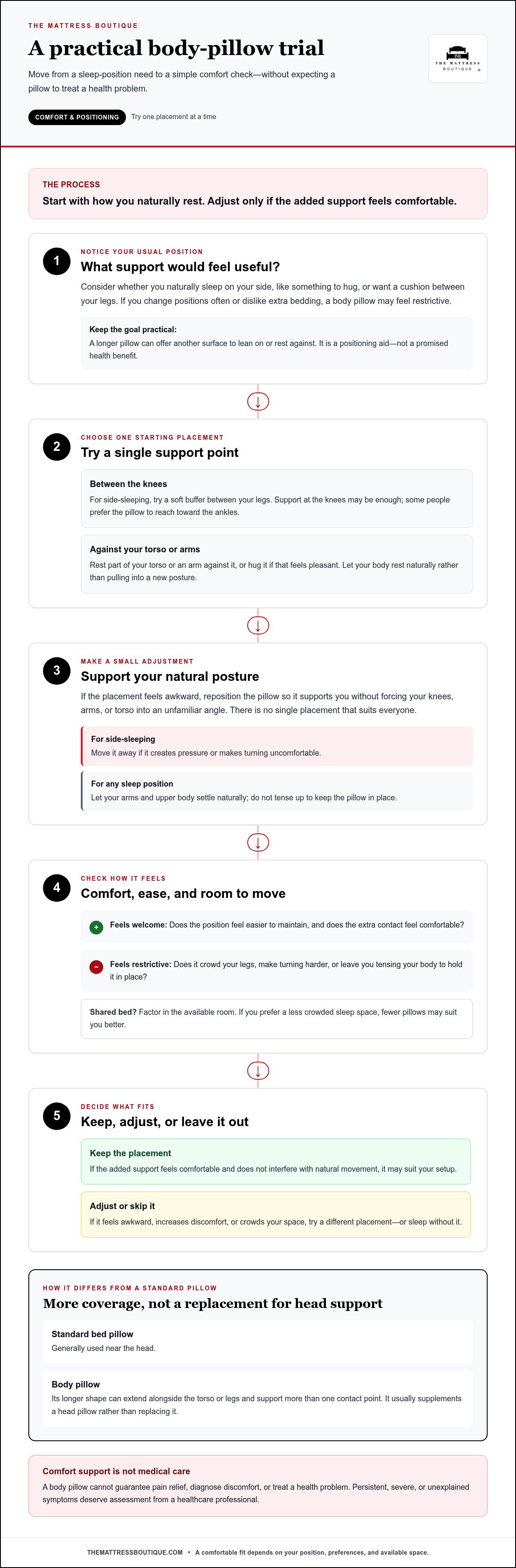
How to Try a Body Pillow and Tell Whether It Helps
A simple trial can help you judge whether a body pillow feels useful in your own bed. Keep the test focused: choose one comfort goal, try one placement, and notice how it feels rather than expecting a medical result. If you’re reviewing your overall sleep setup too, consider how the mattress and pillows work together. This complete mattress guide offers broader context for thinking about mattress comfort.
A simple at-home comfort trial
Start with a placement that matches your goal, such as between your knees or against your torso. Let your usual sleep position guide you; don’t force a posture just to keep the pillow in place. Check comfort at bedtime and again when you wake, then adjust or stop if it feels awkward.
- Choose one goal. Decide whether you want a cushioned contact point between your legs or something to rest your arms and torso against.
- Adjust the placement. Move the pillow until it feels supportive without making you hold an unfamiliar position. Make sure you can still turn or shift naturally.
- Reassess the experience. At bedtime, notice whether the pillow feels comfortable and leaves enough room. On waking, consider whether it stayed in place, felt too warm, or made repositioning difficult.
Change one thing at a time. If the pillow feels bulky, try a different placement rather than adding more pillows. If it causes discomfort or interrupts your movement, discontinue that position. The aim is a comfortable setup, not a perfect posture or a guaranteed improvement in sleep.
Practical details matter. A longer pillow can take up space, particularly in a shared bed, so consider whether you and your bed partner can move comfortably. On warm nights, pay attention to whether the extra layer feels comfortable for you. The best test is how the arrangement works in your usual sleeping space, not how it looks when arranged neatly.
When a pillow is not enough
A pillow can change how a resting position feels, but it can’t identify or treat the cause of ongoing symptoms. If discomfort is persistent, severe, or unexplained, speak with a qualified healthcare professional. A pillow trial is only a comfort check, not a substitute for individual medical guidance.
Your mattress is another part of the wider sleep setup, though reading about it can’t diagnose symptoms either. Consider mattress comfort as one factor in your overall setup, alongside the pillow and your preferred sleeping position. To see how pillows fit alongside mattresses, explore pillow and mattress options.
Choosing a Comfortable Sleep Setup After Learning the Benefits
A body pillow is worth keeping in your routine only if it makes your preferred sleep position feel more comfortable without getting in the way. The body pillow benefits for adults are personal: extra support may suit someone who likes a cushion along the torso or between the legs, while another sleeper may rest more easily with fewer pillows. Comfort, freedom to move, and the space available in your bed are practical measures to guide your decision.
Signs a body pillow may suit your routine
Look for everyday signs rather than a promised health outcome. If the pillow feels comfortable, stays positioned well enough for your needs, and doesn’t restrict your usual movement, it may be a useful addition. If you only want targeted support for your head, a standard pillow may be enough. There’s no need to keep using a body pillow that feels bulky or distracting.
- It feels natural: You can settle into your usual position without forcing your body around the pillow.
- You can move easily: Shifting or turning doesn’t feel awkward, and the pillow doesn’t take up more bed space than you can spare.
- The support matches your preference: You like the added contact, rather than feeling crowded by it.
- Your overall setup feels balanced: The pillow works alongside your head pillow and mattress instead of creating a new source of discomfort.
These are simple comfort checks, not evidence that a pillow has treated or prevented a health condition. Your own experience is the useful measure. If a smaller pillow gives you the specific support you want, choosing less bedding can be the better fit.
Explore the wider pillow and mattress selection
Pillows and mattresses work together as parts of one sleep setup. A pillow can change where you feel support, while the mattress is the surface you rest on. Considering both can help you assess comfort in context. Think about the position you prefer, how much room you have to move, and whether the setup remains comfortable through the night. A body pillow is one optional choice among broader pillow and mattress categories.
There’s no need to add a pillow simply because it suits someone else. Keep what feels comfortable, adjust what gets in the way, and choose a setup that fits your space and sleep habits. If you’re reviewing those options, you’re welcome to explore pillows and mattresses at your own pace.
Make Your Sleep Setup Work for You
Let your own comfort guide the next step. If extra positioning feels useful, consider how a pillow fits alongside your mattress and the way you like to sleep. If it feels bulky or distracting, there’s no need to add one. The practical value of body pillow benefits for adults lies in finding a setup that feels right for you, without expecting a pillow to resolve a medical concern.
The Mattress Boutique offers a wide variety of quality sleep solutions to suit your individual needs. Its selection includes memory foam, latex, pocketed spring, and bonnell spring mattresses, along with supportive pillows, storage beds, and divan bed frames. Exploring these broader categories can help you think about your sleep setup as a whole, rather than focusing on one accessory alone.
Explore pillows and mattresses at The Mattress Boutique to find options for a sleep space that feels comfortable and personal to you.
Frequently Asked Questions
Are body pillows good for adults?
Yes, body pillows can be useful for adults who enjoy having a larger cushion to lean against or position around their body. The body pillow benefits for adults are mainly about personal comfort, not guaranteed health improvements. For example, someone who likes extra cushioning while reading in bed may also find it pleasant at rest. If you prefer an uncluttered bed or already feel comfortable, you may not need one.
Can a body pillow help with back pain?
A body pillow may make a resting position feel more comfortable for some people, but it can’t diagnose, prevent, or reliably treat back pain. Comfort with a pillow doesn’t reveal what’s causing the pain. If back pain persists, becomes severe, or is unexplained, speak with a qualified healthcare professional for individual advice. Don’t rely on changing pillows alone to manage symptoms that interfere with everyday activities.
Is a body pillow useful for side sleepers?
It can be, particularly if you like a cushion near your legs or want something to hold while lying on your side. For instance, a side sleeper who tends to let the upper arm fall forward might prefer a pillow to rest against. That preference is individual, though. If the pillow makes you feel trapped or causes you to twist into an uncomfortable position, adjust it or leave it out.
Can adults use a body pillow during pregnancy?
Some pregnant adults find extra cushioning comfortable as their preferred resting positions change, but there’s no single pillow arrangement that suits everyone. A body pillow shouldn’t replace medical guidance or be treated as a way to manage pregnancy-related symptoms. If you have questions about sleep position, discomfort, or a pregnancy-related concern, follow advice from your clinician and stop using any placement that feels uncomfortable.
Does a body pillow take up too much bed space?
It can, depending on the pillow’s shape, your bed, and whether you share it. Before settling on a position, check that you and your bed partner still have room to shift without pushing the pillow aside. A straight pillow may be easier to arrange than a shape that surrounds more of the body, but the best fit depends on your space. If movement feels restricted, use fewer pillows.
Can you sleep on your stomach with a body pillow?
You can try resting beside a body pillow while lying on your stomach, but its length may feel awkward if you move around or prefer close contact with the mattress. Don’t use it to force yourself into a different position. If it presses uncomfortably against your body, interferes with turning, or makes your usual posture feel strained, move it away and choose a setup that feels natural.