

That cool-to-the-touch fabric on a showroom bed might actually trap the ambient moisture keeping you awake. If you are searching for the best cooling mattress for humid weather, superficial topical treatments won't solve the problem. True climate comfort requires structural airflow and dynamic heat dissipation from the inside out.
Waking up clammy on a dense foam slab is thoroughly frustrating, especially when heavy bedroom air turns trapped body heat into a sticky night of broken sleep. You shouldn't have to guess whether a mattress will stay fresh or become a breeding ground for humidity and dust mites. In this guide, you'll discover how to identify sleep systems engineered to disperse vapor and regulate your core temperature without relying on short-lived chemical coatings.
We'll examine the cooling advantages of open-cell natural latex, multi-tier pocketed coil cores, and breathable hybrid builds so you can choose the right design with total confidence.
Key Takeaways
- Understand why ambient humidity traps body heat and how natural core airflow allows your body to reach restorative sleep temperatures.
- Discover how to identify the best cooling mattress for humid weather by prioritizing structural ventilation over short-lived topical cooling gels.
- Compare the distinct cooling benefits of open-cell natural latex against pocketed spring cores to find your ideal balance of support and breathability.
- Explore how proven engineering from heritage labels like King Koil, Dunlopillo, and Slumberland resists moisture buildup and dust mites.
- Learn how to optimize your complete sleep setup with ventilated bed frames and breathable linens to prevent humidity from accumulating beneath you.
The Science of Sleep in Humid Weather: Why Conventional Mattresses Sleep Hot
Sleeping comfortably in a warm, moisture-heavy climate involves more than just setting an air conditioner to a low temperature. To achieve deep restorative rest, your body relies on biological cues driven by internal thermoregulation. When ambient humidity remains elevated, traditional bedding materials actively work against this process. Understanding The Science of Sleep in Humid Weather reveals why finding the best cooling mattress for humid weather requires looking past surface marketing and evaluating how core materials manage moisture and airflow.
How Relative Humidity Disrupts Natural Nocturnal Thermoregulation
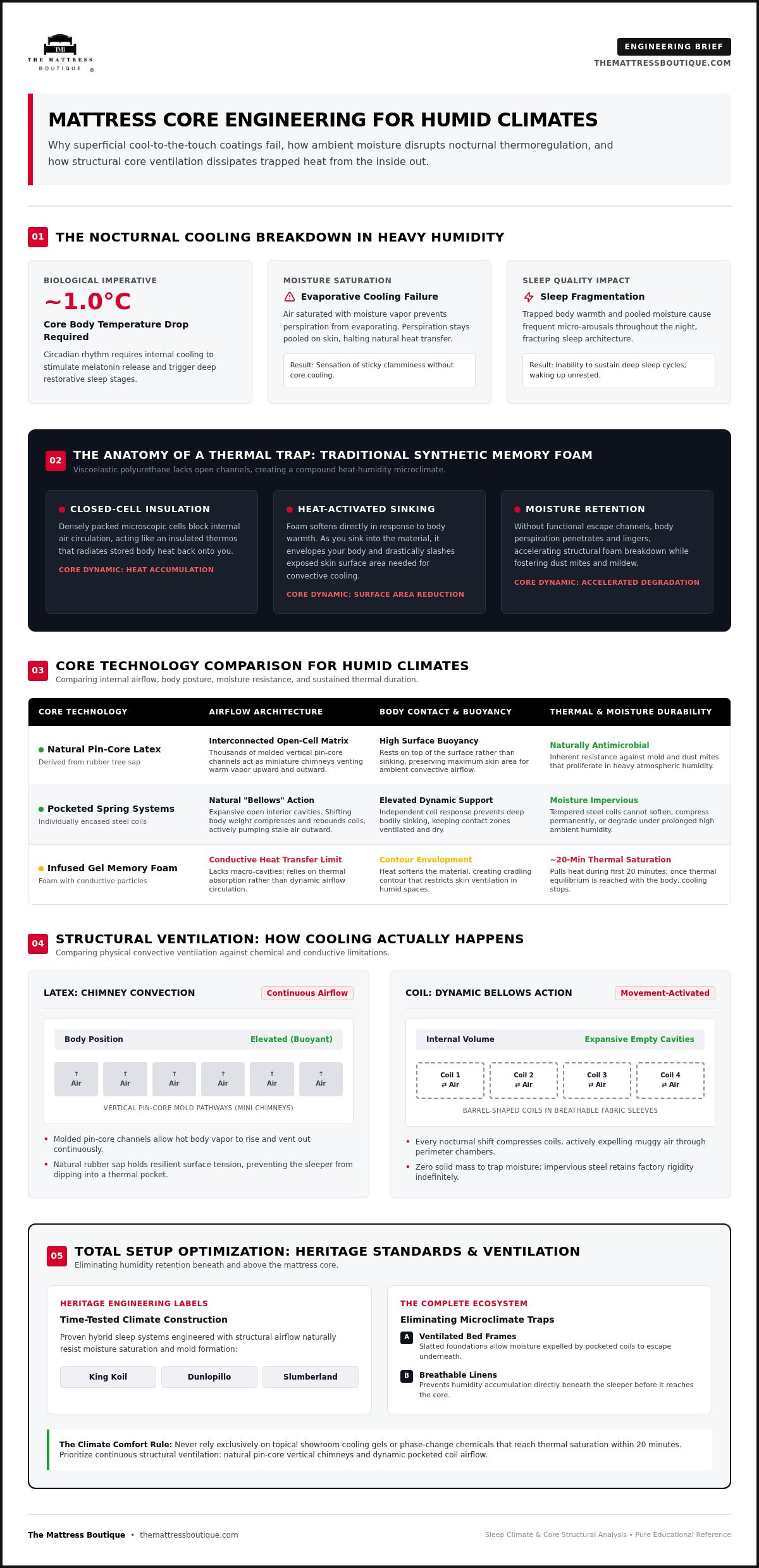
Your internal circadian clock requires a core temperature drop of roughly one degree Celsius to stimulate melatonin release and initiate deep sleep stages. Under normal conditions, your body sheds this thermal energy through the evaporation of perspiration. In high ambient humidity, however, the air is already saturated with moisture vapor. Sweat remains pooled against your skin rather than evaporating, effectively halting your body's primary cooling mechanism. This persistent clamminess causes frequent micro-arousals throughout the night, fragmenting sleep architecture and leaving you feeling unrested by morning.
The Thermal Trap of Traditional Synthetic Memory Foam
Standard synthetic memory foam compounds this physiological challenge through its physical composition:
- Closed-cell insulation: Traditional viscoelastic polyurethane foam consists of densely packed, closed microscopic cells. Instead of allowing air circulation, these cells trap radiated body heat like an insulated thermos.
- Heat-activated contouring: Memory foam softens directly in response to your body warmth. As you sink deeper into the material, the foam envelopes your body, significantly reducing the exposed skin surface area available for natural convective cooling.
- Moisture retention and allergens: Standard synthetic foams lack functional channels to disperse perspiration. Over time, trapped body dampness creates a humid microclimate inside the mattress, accelerating the growth of dust mites, mildew, and structural foam degradation.
Selecting the best cooling mattress for humid weather means avoiding materials that trap moisture next to your skin. Real relief demands sleep surfaces engineered with open structures that circulate air continuously, drawing both heat and humidity away from your body throughout the night.
Comparing Mattress Core Technologies for Humid Climates: Latex, Springs, and Foam
Finding the best cooling mattress for humid weather comes down to the core engine supporting your body. While marketing campaigns emphasize surface fabrics, internal airflow dictates whether a mattress expels moisture or holds onto ambient dampness.
Natural Pin-Core Latex: Breathability, Hygiene, and Instant Response
Natural latex derived from rubber tree sap features an interconnected, open-cell matrix. During vulcanization, pin-core molds introduce thousands of vertical channels that run directly through the slab. These pathways act like miniature chimneys, venting trapped body heat straight out of the comfort layer. Because natural latex maintains high buoyancy, you rest on top of the surface rather than sinking into it. This keeps your skin exposed to ambient airflow. The material is also naturally antimicrobial, resisting mold and dust mites that thrive in heavy atmospheric humidity.
Pocketed Spring Systems: Air Circulation Powered by Natural Movement
Pocketed spring mattresses offer an unmatched advantage in moisture-heavy environments: empty space. Each barrel-shaped steel coil is encased in breathable fabric, leaving expansive interior cavities where air circulates freely. Every time you shift positions, the coils compress and rebound, functioning like a natural bellows that pushes stale, humid air outward. Steel coils are completely impervious to ambient moisture, ensuring the support core never softens or deteriorates over time.
Infused Gel and Open-Cell Foams: Capabilities and Thermal Saturation
Infused memory foam represents a clear improvement over legacy closed-cell slabs, but it has distinct physical limits. Cooling gel beads or conductive particles pull thermal energy away during your first twenty minutes in bed. However, once those conductive infusions reach thermal equilibrium with your body, heat transfer slows down. In muggy rooms where sweat cannot evaporate, gel foam can feel clammy over an eight-hour sleep cycle. If you prefer pressure-relieving contouring, pairing advanced open-cell foam with a pocketed coil base provides the dynamic ventilation needed to prevent heat saturation.
Evaluating these internal materials side-by-side helps you determine whether pure latex, an airy spring base, or a hybrid configuration suits your sleep style. To see how these technologies perform under real resting conditions, you can explore specialized collections at The Mattress Boutique to find the ideal balance of breathability and ergonomic support.
Key Structural Features to Look for in a Humid-Weather Mattress
Identifying the best cooling mattress for humid weather requires looking past superficial marketing tags. A truly cool sleep environment depends on a complete engineering chain that moves heat and moisture away from your body all night long. When assessing options, look for these four core structural elements:
- Step 1: Continuous vertical airflow pathways. A mattress must have unrestricted ventilation running from the base foundation up through the comfort layers to vent warm air out.
- Step 2: Moisture-wicking natural textiles. Surface ticking should pull perspiration away from your skin, unlike synthetic polyester blends that hold onto moisture.
- Step 3: Responsive surface elevation. The mattress should support your body buoyant on top of the bed rather than allowing you to sink deep into it.
- Step 4: Certified anti-microbial treatments. The build should actively resist mold, mildew, and dust mites in warm, moisture-rich rooms.
Ticking Textiles: Phase-Change Materials vs. Moisture-Wicking Fibres
Many modern mattresses feature fabrics woven with Phase Change Materials (PCMs) that absorb excess thermal energy upon initial skin contact. While PCMs provide an immediate sensation of coolness, they work best when paired with breathable fibers like Tencel, bamboo lyocell, or specialized moisture-wicking knits. Unlike dense synthetic polyester covers that trap humidity beneath your body, open-weave jacquards allow internal coil or pin-core ventilation to release moisture continuously into the room.
Firmness and Elevation: Preventing the Heat-Trapping Body Hug
Mattress firmness directly affects temperature regulation. Plush, ultra-soft beds let your hips and torso sink deeply into the upper layers. That deep contouring envelopes your body, severely cutting down the skin surface area exposed to ambient airflow. To stay dry, select a medium-firm to firm comfort level. This level of support maintains healthy spinal alignment while keeping you gently elevated. Staying buoyant keeps maximum skin exposed to moving air, letting your mattress perform as the best cooling mattress for humid weather night after night.
Top Mattress Categories and Heritage Brands Engineered for Humid Climates
A single universal mattress design cannot suit every sleeper, especially when atmospheric humidity complicates how materials manage heat. The best cooling mattress for humid weather balances your specific body weight and sleep position against purposeful ventilation features. Established bedding manufacturers approach this balance using proven architectures developed over decades.
King Koil: Independent Spring Dynamics and Moisture Control
King Koil pairs chiropractor-endorsed support systems with dedicated thermal management. Their multi-zone pocketed spring arrangements maintain open internal conduits, allowing trapped heat to vent horizontally away from your body. Combined with specialized cooling ticking that wicks away moisture before it penetrates the comfort layers, these systems protect against clammy skin. You can explore full brand specifications in our King Koil mattress guide.
Dunlopillo and SofzSleep: Premium Breathable Natural Latex
For sleepers who want contouring relief without the heat retention of memory foam, natural latex delivers exceptional airflow. Dunlopillo relies on resilient open-cell latex formulations that circulate air directly beneath primary pressure points. SofzSleep builds on this with micro-perforated natural latex cores that are certified toxic-free and naturally resistant to mildew and dust mites. You can compare construction philosophies in our Dunlopillo vs Slumberland guide.
Slumberland and MaxCoil: Ventilated High-Resilience Hybrids
Hybrid constructions offer an effective middle ground by merging spring airflow with tailored comfort layers:
- Slumberland: Utilizes robust hospitality-grade spring networks that preserve deep internal air channels while providing durable lumbar reinforcement under warm ambient conditions.
- MaxCoil: Incorporates multi-zone pocketed coils bordered by aerated foam encasements, maximizing edge-to-edge air circulation while reducing motion transfer between partners.
To learn how material selection shapes comfort across these options, review our complete mattress guide. When you are ready to evaluate these options in person, visit The Mattress Boutique to test cooling mattress models and find the right sleep setup for your home.
Optimizing Your Bed Setup for Humid Weather: Foundations, Linen, and Showroom Testing
Investing in the best cooling mattress for humid weather is only half the battle. If you pair a highly breathable mattress with suffocating bedding or an unventilated foundation, moisture remains trapped within your sleep ecosystem. Achieving consistent, sweat-free nights requires optimizing every layer surrounding your mattress.
Bed Base Compatibility: Preventing Under-Mattress Moisture Buildup
Where your mattress rests directly impacts its internal airflow. Placing a mattress directly on a solid floor or an unvented solid platform traps bottom condensation, creating an ideal breeding ground for mold and mildew. To maintain proper air circulation, choose an elevated base:
- Slatted bed bases: Evenly spaced slats allow air to flow underneath the mattress, venting warm air downward and away from the core.
- Elevated divan bed frames: Raising the sleeping surface off the floor encourages ambient room currents to circulate underneath the mattress perimeter.
- Ventilated storage bed frames: If you need built-in cabinetry, look for designs with breathable base boards or aeration panels. You can evaluate space-efficient options through our storage bed guide.
Your choice of top layers is just as critical. Thick synthetic mattress protectors lined with solid plastic backings turn your bed into an impermeable heat trap. Instead, choose breathable, water-resistant protectors made with microporous membranes. Complement this setup with natural linen or crisp cotton percale sheets, which maintain high thermal conductivity and let rising body heat escape unrestricted.
How to Accurately Test Mattress Cooling Performance In-Store
Briefly sitting on the edge of a mattress in an air-conditioned showroom won't show you how it performs during real sleep. To find the best cooling mattress for humid weather, give yourself at least fifteen continuous minutes lying down in your natural sleeping posture. Keep still and pay close attention to your contact zones, especially behind the shoulders, lower back, and hips. If heat starts accumulating against your skin within ten minutes, that construction will likely sleep hot once high ambient humidity sets in at night. To compare responsive springs and pin-core natural latex side by side, explore cooling mattresses at The Mattress Boutique today.
Upgrade to Restful, Sweat-Free Sleep Tonight
Achieving deep, restorative sleep in heavy humidity comes down to proper airflow engineering rather than temporary cooling fabric treatments. When you combine open-cell natural latex or responsive pocketed coils with an elevated bed frame and breathable linens, you create an active ventilation system that continuously expels heat and moisture. Choosing the best cooling mattress for humid weather ensures your body temperature drops naturally, keeping you dry and comfortable all night long.
As an authorised retailer of trusted heritage labels, including King Koil, Dunlopillo, Slumberland, SofzSleep, and MaxCoil, we make finding your ideal setup straightforward. Every mattress is backed by direct factory value and comprehensive manufacturer warranties, giving you lasting peace of mind. Our showroom consultants specialize in climate-optimized sleep setups and are ready to help you compare breathable designs in person. Explore the Best Cooling Mattresses at The Mattress Boutique and transform your nightly rest today.
Frequently Asked Questions
What type of mattress is best for hot and humid weather?
Hybrid mattresses combining pocketed spring coils with open-cell natural latex are widely considered the best cooling mattress for humid weather. The open coil structure facilitates dynamic internal air circulation with every shift in position, while pin-core latex prevents deep body sinkage and lets thermal energy disperse vertically. This combination keeps ambient moisture moving away from your body, unlike dense solid-foam models.
Can memory foam mattresses ever sleep cool in humid conditions?
Traditional memory foam struggles in high humidity because closed viscoelastic cells naturally trap body heat and perspiration. However, newer models using open-cell polyfoams infused with conductive particles or cooling gel offer improved breathability. For humid rooms, these foams should be paired with ventilated pocketed spring bases and moisture-wicking covers to prevent the comfort layer from reaching thermal saturation during sleep.
Is a natural latex mattress cooler than a pocketed spring mattress?
Pocketed spring mattresses generally sleep slightly cooler than solid latex cores because their hollow coil cavities provide far more open space for interior air movement. Natural latex remains exceptionally breathable due to its open-cell sap matrix and pin-core ventilation channels, but spring units physically pump air out as you move. Hybrids pairing a pocketed spring base with a natural latex comfort layer offer an ideal balance.
How does ambient humidity affect the lifespan of a mattress?
High ambient humidity shortens mattress durability by introducing persistent moisture into internal layers. Polyurethane foams can soften prematurely and lose structural elasticity when exposed to chronic dampness. Unchecked moisture also accelerates the accumulation of dust mites, bacteria, and mold spores deep within the upholstery. Choosing resilient materials like tempered steel springs and antimicrobial natural latex protects structural integrity over years of humid exposure.
What mattress cover fabric works best to prevent night sweats?
Knitted covers made from natural cellulose fibers like Tencel, bamboo lyocell, or crisp cotton work best for night sweats. These plant-derived fibers naturally pull sweat away from your skin and dry quickly through capillary action. Standard synthetic polyester ticking traps vapor and creates a clammy surface. For added temperature regulation, look for covers enhanced with Phase Change Materials (PCMs) to draw off initial contact heat.
Does placing a mattress on the floor cause mold in humid climates?
Yes, resting a mattress directly on the floor frequently causes mold in moisture-heavy environments. Your body releases perspiration and warmth into the bed, which migrates downward toward the cool floor surface. Without ventilation beneath the mattress base, condensation accumulates along the bottom fabric. Using a slatted frame or raised divan ensures 360-degree air circulation, preventing dampness from settling underneath.
How can I protect my mattress from moisture without trapping heat?
Use a breathable, water-resistant mattress protector constructed with a microporous membrane rather than a heavy vinyl or PVC barrier. Microporous layers block liquid droplets from penetrating the core while still allowing hot air and moisture vapor to vent outward. Pairing this with a moisture-wicking top fabric protects the best cooling mattress for humid weather without compromising airflow.