

You are finally in a deep sleep when your partner shifts slightly to get comfortable; suddenly, you feel like you are on a small boat in a choppy sea. This ripple effect is one of the most common reasons couples wake up feeling exhausted rather than refreshed. It is frustrating when you can't get a full night of rest because of someone else's movements, especially when you are also dealing with morning back stiffness or the stifling heat of a humid night. Finding a balance between individual comfort and shared stability is the essential key to a better night for both of you.
Choosing a high quality pocketed spring mattress offers a specialized solution to these exact frustrations. Unlike traditional beds, this technology uses individually wrapped coils that move independently to provide superior motion isolation and precise spinal support. We will explore how these technical features translate into practical benefits like zero motion transfer and a cooler sleep surface. You will discover why this specific mattress construction is the most reliable choice for couples who want to prioritize their physical well-being and long-term sleep quality.
Key Takeaways
- Understand how individually wrapped coils act as an independent suspension to eliminate the trampoline effect caused by a partner's movement.
- Learn why a pocketed spring mattress with specific 3-zone or 5-zone support is essential for maintaining natural spinal alignment throughout the night.
- Compare the structural differences between traditional Bonnell springs and pocketed coils to see why modern technology provides better durability.
- Discover why trusted brands like King Koil and Slumberland are the preferred choice for couples seeking chiropractor-tested support and hospitality-grade quality.
- Get practical advice on the 15-minute rule for in-store testing to ensure your new mattress matches your specific comfort and spatial requirements.
What is a Pocketed Spring Mattress and How Does It Work?
To understand why this technology has become the preferred choice for couples, we need to look beneath the fabric surface. A pocketed spring mattress is constructed using a system of individual wire coils, each encased in its own durable fabric sleeve. This design is technically known as a Marshall coil system, and you can explore the history of What is a pocketed spring? to see how this innovation revolutionized sleep. Unlike traditional mattresses that use a network of interconnected wires, these springs operate entirely on their own.
Think of the difference between a traditional mattress and a pocketed system as the difference between a trampoline and an independent vehicle suspension. On a trampoline, when one person jumps, the entire surface reacts because the springs are linked. In a pocketed system, each spring only reacts to the weight placed directly on top of it. This independent suspension allows the mattress to contour precisely to your body shape without affecting the area where your partner is sleeping. The fabric pockets also play a vital role by preventing metal-on-metal friction, which eliminates the annoying squeaks and groans common in older bed designs. This level of precision is why pocketed technology is now considered the gold standard for modern orthopedic support, as it allows for a tailored response to different body weights and shapes.
The Mechanics of Motion Isolation
When you or your partner turn over or get out of bed, that energy has to go somewhere. In a pocketed spring mattress, the energy is absorbed locally by the specific coils under pressure rather than traveling across the entire bed. This localized reaction is a game changer for couples who operate on different schedules or for those who are light sleepers. Motion isolation is defined as the ability to move without disturbing a partner. Because the coils aren't tied together, your movements remain on your side of the bed, ensuring a peaceful environment for everyone involved.
Airflow and Breathability in a Tropical Climate
In our humid climate, heat management is just as important as physical support. Solid blocks of material, like some memory foam mattresses, can sometimes trap body heat and create a stifling environment. Pocketed springs offer a natural advantage because the structure is mostly air. The space between the individual fabric pockets allows for consistent air circulation throughout the night. This ventilation helps to dissipate body heat and moisture, keeping the mattress surface significantly cooler. For sleepers who struggle with night sweats or the local humidity, this breathable architecture provides a much more comfortable and hygienic sleep experience than dense, non-ventilated materials.
Understanding Zoning: 3-Zone vs. 5-Zone vs. 7-Zone Support
While the independent movement of coils is a primary benefit, the most advanced versions of a pocketed spring mattress use a technique called zoning to enhance ergonomic support. Zoning is the strategic arrangement of coils with varying levels of tension across the bed's surface to match the human body's weight distribution. Because your head, shoulders, hips, and legs all exert different amounts of pressure, a mattress with uniform firmness can't provide perfect alignment for everyone. Manufacturers solve this by using different wire gauges; a thicker wire gauge creates a firmer zone, while a thinner wire allows for more "give" and contouring.
The science of spinal alignment relies on keeping your back straight regardless of whether you sleep on your back, side, or stomach. If a mattress is too soft in the middle, your hips sink too far, pulling your spine out of its natural curve. Conversely, if it is too firm at the shoulders, it can cause pressure points and numbness. If you are looking for more technical details on how coil systems are evaluated for quality, this innerspring mattress buying guide explains why robust support is a non-negotiable feature for long-term health. Understanding which zone count fits your lifestyle is the next step in your decision-making process.
3-Zone Support: The Practical Standard
3-zone support is a highly effective and functional configuration that focuses on the middle third of the mattress. By placing firmer, reinforced coils in the center section, the mattress provides extra lift for the hip and lumbar area. This is the heaviest part of the body for most people, and providing this extra support prevents the "hammock" effect that leads to chronic back pain. It is an ideal choice for back sleepers who need consistent lumbar support and offers a great balance between orthopedic benefits and affordability. You can find many of these reliable options when you browse the collections at The Mattress Boutique.
7-Zone Support: Precision for Side Sleepers
For those who need maximum pressure relief, 7-zone support offers the highest level of precision. This system features seven distinct areas of tension tailored to the head, shoulders, lumbar, hips, knees, lower legs, and feet. It is especially beneficial for side sleepers who often suffer from "shoulder jam" or hip pain. In a 7-zone system, the shoulder area is softer to allow for deep contouring, while the waist and hip areas remain firm to keep the spine level. If this matches your sleeping style, researching the best mattress for side sleepers singapore will point you toward models designed specifically for this level of ergonomic detail.
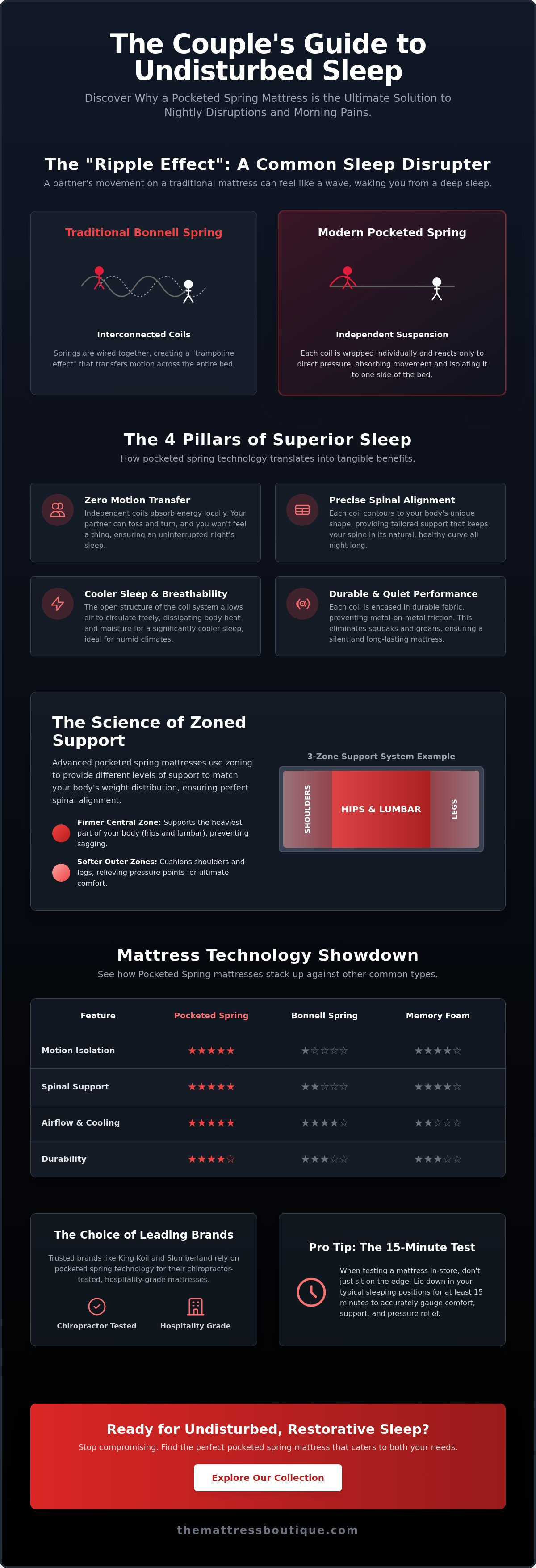
Pocketed Spring vs. Bonnell Spring vs. Memory Foam
Selecting the right sleep surface requires a clear understanding of how different internal structures respond to your body. While the market offers a variety of materials, most shoppers find themselves choosing between traditional Bonnell springs, memory foam, or a modern pocketed spring mattress. Each technology has distinct characteristics that affect everything from how much you sink into the bed to how long the mattress will actually last before it needs replacing.
Bonnell springs are the oldest and most common type of innerspring system. These feature hourglass-shaped coils that are interconnected by a metal wire frame. Because the entire unit is linked, pressure on one spring creates a chain reaction across the whole bed. In contrast, memory foam uses high-density polyurethane to create a "cradle" effect that conforms to your shape using body heat. While foam is excellent for pressure relief, it often lacks the active "push-back" support provided by steel coils. Many sleepers also find that pure foam can feel restrictive or "bottom out" over time, whereas a spring system maintains a consistent level of upward resistance.
When we look at durability, high-quality steel coils generally hold their structural integrity longer than pure foam blocks. Foam is susceptible to permanent indentations, especially in a humid environment where the material can soften. Investing in a pocketed system might require a slightly higher initial cost than a basic Bonnell or foam model, but the long-term ROI is significantly better. You are paying for a mattress that maintains its height and support levels for years, rather than one that sags after a few seasons of use.
Why Pocketed Springs Outperform Bonnell Coils
The biggest flaw of the Bonnell system is the "roll-together" effect. When two people share a bed, the interconnected springs naturally pull both sleepers toward the center. Pocketed coils eliminate this issue entirely by allowing each spring to compress independently. These systems also offer superior edge support. Many modern designs include reinforced coils around the perimeter, which prevents that unsettling feeling of sliding off the bed when you sit or sleep near the edge. Additionally, the fabric encasement around each spring prevents the metal-on-metal contact that causes the squeaks and creaks typical of older Bonnell units.
Hybrid Options: Combining Springs with Latex or Foam
If you enjoy the contouring feel of foam but need the stability of springs, a hybrid mattress is the "best of both worlds" solution. These models feature a robust pocketed spring core topped with layers of natural latex or specialized foam. This combination solves the common complaint that springs are "too bouncy" or that foam is "too sinking." It provides a responsive base with a comfortable, pressure-relieving surface. For a deeper dive into these material combinations, you can refer to The Ultimate Guide to Choosing the Best Mattress in Singapore to find the configuration that best suits your comfort preferences.
Top Pocketed Spring Brands: King Koil, Slumberland, and More
While the mechanical principles of the pocketed spring mattress are consistent across the industry, the way specific heritage brands implement this technology can vary significantly. Choosing between a King Koil, Slumberland, or Dunlopillo model often comes down to how they balance coil density, edge support, and material layers. These brands have spent decades refining their proprietary systems to address the specific needs of different body types and sleep preferences. By understanding the technical focus of each manufacturer, you can identify which brand aligns best with your requirements for support and longevity.
Dunlopillo is particularly well-known for its expertise in the hybrid category. They often integrate their world-class natural latex with a pocketed spring base to create a surface that is both responsive and pressure-relieving. This combination is ideal for sleepers who want the "push-back" support of coils but prefer the soft, hypoallergenic feel of latex. On the other hand, MaxCoil provides excellent value-driven orthopedic options. These are frequently the go-to choice for homeowners planning for HDB or condo spaces, as they offer robust structural integrity and reliable comfort without the premium price tag associated with high-end luxury lines.
King Koil’s Orthopedic Expertise
King Koil has long been synonymous with spinal health through its "Chiropractor Tested" approach. Their designs focus heavily on maintaining a neutral spine, which is why they are a top choice for individuals suffering from chronic lower back pain. One of their standout technical features is the "Excellent Edge" foam encasement. This high-density foam border surrounds the coil system, which reinforces the mattress perimeter and effectively increases the usable sleeping surface. If you want to compare specific models within their lineup, you can find detailed information in this King Koil mattress singapore guide.
Slumberland and the Pocketed Posture Spring
Slumberland takes a unique approach with its Pocketed Posture Spring system. Unlike a standard pocketed spring mattress that uses a traditional coil shape, Slumberland focuses on high coil counts and specialized wire geometry to enhance durability. This brand has a long-standing reputation for providing heavy-duty support and superior heat dissipation, making it a favorite for hospitality-grade environments. When deciding between the top heritage options, many consumers find it helpful to look at a direct comparison of Dunlopillo vs Slumberland to see which brand's specific spring technology wins for their personal needs.
Finding the right brand is a critical step in securing a better night's sleep for you and your partner. To explore our full range of curated orthopedic options, shop our collection at The Mattress Boutique today.
Practical Tips for Buying and Maintaining Your Mattress
Buying a pocketed spring mattress is a significant step toward better sleep, but the process doesn't end at the checkout counter. To ensure you and your partner receive the full benefits of this technology, you need to be deliberate about how you test the mattress and how you maintain its structural integrity over time. Proper care not only protects your investment but also ensures the internal coil system continues to provide the precise support your body requires.
When you visit a showroom, avoid the temptation to just sit on the edge or lie down for a few seconds. We recommend the 15-minute rule. Lie down in your typical sleeping position for at least 15 minutes to allow your muscles to relax and the coils to respond to your weight. Couples should test the mattress together. This is the only way to truly assess the motion isolation and see if the independent suspension actually prevents you from feeling your partner's movements. If you feel a dip or a roll toward the center, the coil density might not be sufficient for your combined weight.
The foundation underneath your mattress is just as important as the mattress itself. Pocketed springs work best on a solid, flat base or a slatted frame with narrow gaps. If the slats are too far apart, individual coils can lose their alignment, leading to premature sagging. Additionally, considering our local climate, a high-quality mattress protector is a necessity. It acts as a barrier against the humidity and perspiration that can degrade internal foam layers and cause the steel springs to age prematurely. Since most modern pocketed designs are one-sided, you don't need to flip them. Instead, rotate the mattress 180 degrees every three to six months to promote even wear across the surface.
Matching Your Mattress to a Storage Bed Frame
In many urban homes, space is at a premium, making hydraulic storage beds a popular choice. A pocketed spring mattress is an excellent match for these frames because it provides a stable, consistent weight distribution. However, you must verify that the mattress weight is compatible with the lift mechanism of your bed. If the mattress is too light, the hydraulics might spring up too quickly; if it's too heavy, the bed may be difficult to open or stay propped up. You can explore our storage bed guide to find space-saving bedroom ideas that work seamlessly with our mattress collections.
Signs Your Pocketed Spring Mattress Needs Replacing
Even the best support systems eventually fatigue. You can perform a "Sag Test" by looking for visible indentations deeper than 1.5 inches when no one is on the bed. Another clear indicator is waking up with new aches or stiffness that usually fades after an hour of being upright. This suggests the coils are no longer pushing back with the necessary force to keep your spine aligned. Most high-quality pocketed spring mattresses should be replaced every 7–10 years for optimal hygiene and support. If you find yourself frequently rolling into the center of the bed, it's a sign that the individual pockets have lost their independence and the unit is failing.
Secure a Better Night’s Sleep for Two
Securing a restful night for two doesn't have to be a compromise between physical support and shared stability. By choosing a pocketed spring mattress, you're investing in a sophisticated system that effectively isolates movement and adapts to your unique ergonomic needs. You have seen how independent coils eliminate the trampoline effect and how advanced zoning keeps your spine aligned throughout the night. This technology remains the most reliable way to ensure that you and your partner wake up feeling rejuvenated rather than restless.
At The Mattress Boutique, we act as your knowledgeable curator to simplify this important decision. We are an authorized retailer for industry leaders like King Koil, Slumberland, and Dunlopillo, providing you with direct access to the most reliable sleep technology available today. Our team offers expert in-store consultations to help you find the perfect balance of comfort and structural integrity. Plus, you can take advantage of free delivery on qualifying orders within Singapore. Browse our full collection of premium pocketed spring mattresses at The Mattress Boutique and discover how the right foundation can transform your shared lifestyle. You both deserve a sleep environment that supports your long-term health and well-being.
Frequently Asked Questions
Are pocket spring mattresses good for back pain?
Yes, they are highly effective for managing back pain because they provide localized support that follows the natural curvature of your spine. Each spring compresses independently, which ensures your hips and shoulders receive the right amount of "give" while your lumbar region stays supported. This prevents the spine from bowing, which is a common cause of morning stiffness.
How many pocket springs should a good mattress have?
A high-quality queen-sized mattress usually contains between 600 and 1,000 coils. While a higher spring count can offer more precise contouring, the thickness and quality of the wire are just as important for long-term durability. We focus on providing a balanced coil density that ensures both comfort and structural integrity for years to come.
Is a pocketed spring mattress better than a memory foam one?
A pocketed spring mattress is often the superior choice for those who prefer a responsive feel and better temperature regulation. Unlike memory foam, which can trap heat and create a "sinking" sensation, springs allow for natural airflow and provide active push-back support. This makes it much easier to change positions during the night without feeling stuck.
Can I use a pocketed spring mattress on a slatted bed frame?
You can certainly use these mattresses on slatted frames, provided the slats are no more than 7 centimeters apart. If the gaps are too wide, individual springs may not have enough support from below, which can lead to sagging or uneven wear. A closely slatted or solid base ensures the coil system can function exactly as designed.
Do pocket spring mattresses need to be flipped?
Most modern versions are designed as "no-turn" mattresses, meaning they have a specific top-to-bottom construction that shouldn't be flipped. Instead of turning the mattress over, you should rotate it 180 degrees every three to six months. This simple maintenance step helps distribute weight evenly and prevents permanent indentations from forming in your favorite sleeping spots.
How long does a pocketed spring mattress last in Singapore?
In our humid tropical climate, a well-maintained pocketed spring mattress typically lasts between 7 and 10 years. Using a mattress protector and ensuring your bedroom is well-ventilated can help prevent moisture from affecting the internal components. After a decade, even the best support systems begin to fatigue and may no longer provide optimal orthopedic benefits.
What is the difference between 3-zone and 7-zone mattresses?
The difference lies in how many distinct areas of support the mattress provides. A 3-zone system reinforces the middle third of the bed to support your hips and lower back. A 7-zone system offers even more precision by varying the tension for your head, shoulders, lumbar, hips, knees, lower legs, and feet, providing maximum pressure relief for side sleepers.
Why are pocketed spring mattresses more expensive than Bonnell springs?
The higher price reflects a more complex and labor-intensive manufacturing process. Every spring must be individually tempered and encased in its own fabric pocket before being assembled into the final unit. This specialized construction is what provides the superior motion isolation and quiet operation that a traditional interconnected Bonnell system simply cannot match.