

Made from rubber tree sap, natural latex foam feels buoyant, supportive and responsive. Its resilience and airflow are among the natural latex mattress benefits that may matter in Singapore’s warm, humid climate.
If you’re looking for a cooler, more comfortable sleep surface, material matters, but so do the way a mattress responds to your body and the support it provides. The right feel is personal, and knowing how latex behaves can help you decide whether it suits your sleep needs.
This guide explains how latex’s structure allows airflow, contours to the body and cushions pressure points. It also clarifies what these qualities can and cannot tell you about comfort and spinal alignment, helping you weigh the benefits against your preferences.
Key Takeaways
- Natural latex comes from rubber tree sap, and its resilience can help a mattress retain its shape and support over time.
- Open-cell foam and pinholes allow airflow, a feature that may feel more comfortable in Singapore’s warm climate.
- Latex can contour to your body while supporting spinal alignment, but the right feel depends on your comfort needs.
- Its cushioning may ease pressure around sensitive areas; explore latex mattress options if pressure relief is a priority.
Is Latex Actually a Good Material for a Mattress?
Natural latex begins as sap from rubber trees, specifically Hevea brasiliensis. Formed into foam, it springs back after pressure, helping a mattress retain its shape and support. This resilience can contribute to durability, although construction and everyday use also affect wear.
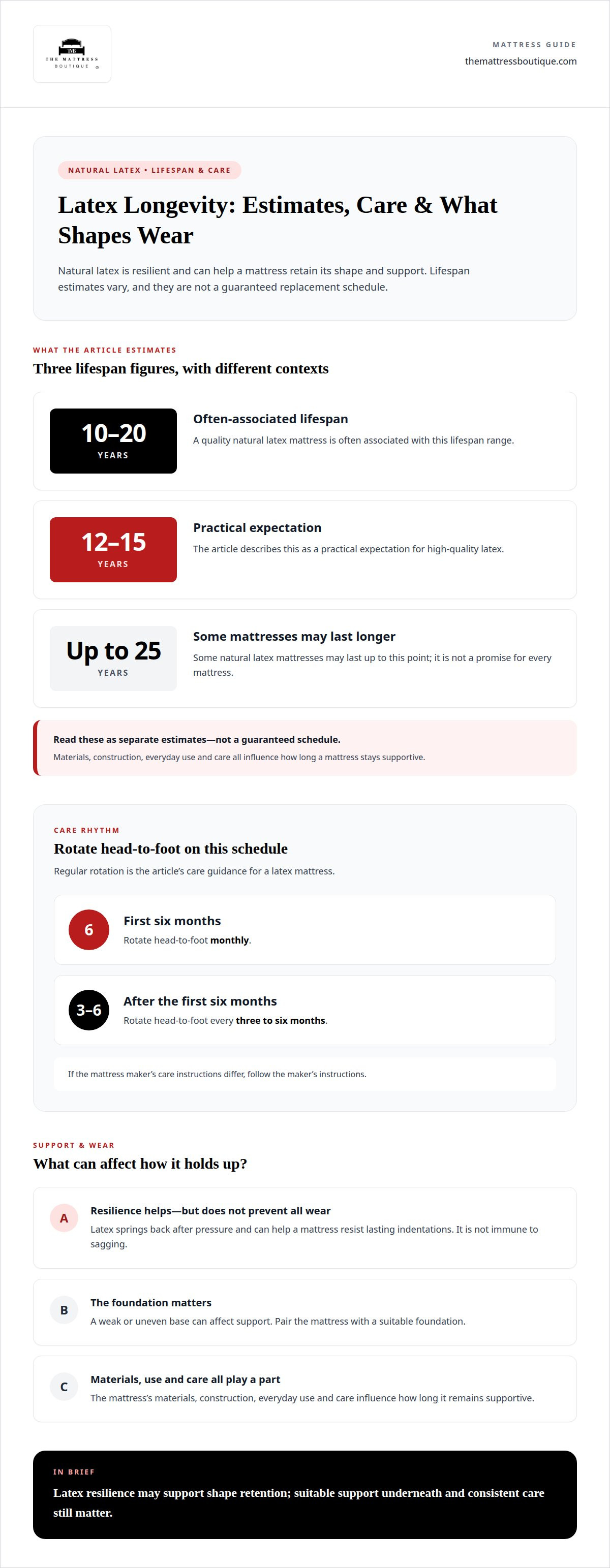
A quality natural latex mattress is often associated with a lifespan of 10 to 20 years. Some natural latex mattresses may last up to 25 years, while 12 to 15 years is a practical expectation for high-quality latex. These are different estimates, not a guaranteed replacement schedule. The mattress’s materials, use and care influence how long it stays supportive.
Latex’s resilience can help it resist lasting indentations, but it doesn’t make a mattress immune to sagging. A weak or uneven base can affect support, so pair the mattress with a suitable foundation. For care, rotate a latex mattress head-to-foot monthly for the first six months, then every three to six months. Follow the mattress maker’s care instructions if they differ.
Natural latex mattress prices in Singapore vary with size, construction, material composition and firmness. Compare those specifications with the support and durability you want, rather than choosing by material name alone.
Rubber trees can provide sap for decades without being cut down or damaged. This harvesting method may appeal if environmental impact is part of your decision, but a mattress’s overall profile also depends on its other materials and construction. Natural latex comes from tree sap, while synthetic latex is made from petrochemicals.
Firmness is a separate choice from latex type. A softer feel may suit someone seeking more cushioning, while a firmer feel offers a different support sensation. Latex allergies are rare but possible, so consider that alongside feel, durability and material preferences when deciding whether latex suits you.
Breathability and sleeping cool in Singapore
In Singapore’s warm, humid climate, mattress breathability can affect how comfortable the sleep surface feels. Natural latex foam has an open-cell structure and pinholes that allow air to move through it.
Air Circulation and Breathability
Air circulation refers to air moving through a mattress’s open cells and pinholes. In natural latex foam, these pathways allow airflow through the material. This structure may help reduce the feeling of heat collecting around the body at night.
When you lie on latex, the foam compresses beneath you while its internal structure still allows air to pass through. That is what breathability means. It does not mean active cooling or replace air-conditioning. Bedding and room conditions also affect how the mattress feels, so airflow is just one part of sleep comfort.
Material origin provides useful context: natural latex comes from rubber trees, while synthetic latex is made from petrochemicals. These labels describe where the materials come from, not how much airflow a mattress provides. An organic label also does not automatically mean the surface feels cooler. Compare the foam’s structure and the feel of the complete mattress.
Breathability and Temperature Regulation
Breathability describes airflow; temperature regulation refers to how comfortable the sleep surface feels as body heat builds during rest. Open cells and pinholes in latex foam allow air movement, which may help the surface feel less stuffy in Singapore’s climate.
When comparing memory foam, latex or a latex topper, assess the complete sleep setup. Foam type alone does not determine how warm you feel. Bedding can affect airflow to the sleeper, while room temperature and humidity also shape comfort. A material’s structure is a useful starting point, not a guarantee of a particular sleep temperature.
If you are choosing between natural latex, synthetic latex and memory foam, weigh airflow alongside feel and support. A breathable structure may suit someone who dislikes a stuffy sleep surface, but comfort also depends on the rest of the bed and the room.
Comfort, body contouring and spinal alignment
Natural latex cushions the body under pressure while retaining a supportive feel. How that balance feels depends on your sleeping position and preferred firmness.
Cushioning and Responsive Support
Cushioning softens contact at the surface, while responsive support pushes back as your body settles. Latex combines these qualities in a buoyant feel, rather than the slower-sinking sensation some people associate with foam mattresses.
When you shift from your back to your side, responsive latex adjusts to the change in pressure. Its cell structure lets the foam compress and recover, so you can move without feeling held in one position. Comfort still depends on whether the mattress firmness suits your body and sleep position.
Body Contouring and Spinal Alignment
Body contouring means a mattress gives way around your shape while supporting areas that need a steadier surface. Natural latex can conform to the body’s general contours while supporting spinal alignment. Uneven support, by contrast, may leave some areas feeling strained.
For a side sleeper, the shoulder and hip press more deeply into the mattress than the waist. Latex’s responsive surface can accommodate these differences while supporting the rest of the body. Back sleepers may experience a different balance because their weight is spread across a broader area. Sleeping position helps determine which firmness feels comfortable.
Comfort and Responsiveness
Responsiveness describes how quickly a mattress adjusts when you move or change position. Latex springs back quickly, which can make turning feel easier than on foam that moulds more slowly around the body. This may matter if you dislike a deeply sinking sensation.
Material labels alone cannot determine comfort. Natural and blended latex have different compositions, and a mattress’s construction also shapes its feel. Natural latex is resistant to dust mites, which may be relevant if you are concerned about allergens. A cooler surface or a chemical-free claim does not guarantee a particular comfort level; focus on how the mattress supports your body and responds to movement.
Pressure relief and back or joint pain
Natural latex mattresses can conform to the body’s general contours, cushioning pressure points while supporting the body. For side, back and stomach sleepers, comfort depends on where weight meets the mattress and how its surface responds. Sleeping position and preferred firmness both shape the experience.
Pressure-Point Relief
Pressure-point relief means cushioning areas where the body presses most firmly against the mattress. For a side sleeper, these may include the shoulder and hip. Latex can give way around these contours instead of pushing back evenly across the whole surface.
This response can spread pressure over a broader area, making the surface feel more comfortable. It is a practical advantage of a material that contours to the body. Actual pressure relief depends on how the mattress feels against your body, not just its material label.
Back and Joint Pain
Pressure relief matters because concentrated pressure around the hips, shoulders or joints can make a sleep surface uncomfortable. Latex can conform to the body’s general contours and cushion pressure points, which may help reduce lower back pain.
Support matters as much as cushioning. If your hips sink too deeply, your body may feel unevenly supported; if the surface is too firm, pressure may remain around contact points. Latex’s responsive feel can balance these needs, but pain relief is not guaranteed. Consider the mattress’s overall feel, not just its material.
Support Across Sleeping Positions
Support across sleeping positions means cushioning pressure points while supporting the body as its contact with the mattress changes. A side sleeper’s shoulder and hip meet the surface differently from a back sleeper’s broader contact area.
For stomach sleepers, comfort also depends on how the mattress supports the torso. Mattress size does not change these position-specific needs. The key is whether the surface feels supportive where your body presses down. Latex’s contouring and resilience can help balance those demands.
Think of pressure relief and support as working together: cushioning eases concentrated contact, while a responsive surface supports the body. That balance is central to deciding whether latex suits your preferred sleeping position.
Explore latex mattress options to find a surface that matches your comfort and support priorities.
The Mattress Boutique: Latex Mattresses
The Mattress Boutique offers latex mattresses for sleepers considering latex’s resilience, cushioning and airflow. If you are weighing these qualities against your preferred firmness and sleeping position, comparing available latex options can help you match the material’s characteristics to your comfort priorities.
The Mattress Boutique also offers various other premium mattress types and firmness levels to consider alongside latex. The right choice depends on the support and surface comfort you prefer, not on a material label alone. Comparing these options is a practical next step if you want to weigh latex against alternative construction styles.
Choose a Mattress That Fits Your Priorities
Your next step is to turn what matters most into a practical shortlist. Think about the sleep experience you want, such as a buoyant feel, a different level of firmness, or a surface that suits how you rest. The natural latex mattress benefits that matter to you can guide that choice, but your comfort preference should lead the final decision.
If you want to compare alternatives, The Mattress Boutique offers King Koil, Slumberland and Dunlopillo mattresses. Comparing their feel and support with latex options can help you identify what suits your needs, without assuming one material works best for everyone.
A mattress is a personal choice, and your preferred feel may become clearer as you explore suitable options. For help taking the next step, contact The Mattress Boutique to discuss your mattress preferences.
Once you know what feels right, you can choose a mattress that better suits your comfort needs.
Frequently Asked Questions
What Is Natural Latex?
Natural latex is made from the sap of the rubber tree, Hevea brasiliensis. For mattresses, the latex is formed into foam, but the word “latex” alone does not describe every layer or material in a finished mattress. When comparing options, check whether latex forms the main support layer, a comfort layer or just a topper.
Is It Safe to Sleep on Latex?
Latex foam tested to Oeko-Tex Standard 100 Class 1 is considered harmless to human health under that testing. This finding applies to the latex described by that standard, not automatically to every mattress component. Latex can be allergenic in rare instances. If you have a known latex allergy, consider your sensitivity and discuss mattress materials with a healthcare professional before choosing.
What Are Dunlop and Talalay Latex?
Dunlop and Talalay are two methods of making latex foam. Their processes differ and can affect the foam’s feel and consistency, but the method name alone does not tell you whether a mattress will feel soft or firm. Two mattresses labelled Talalay can still have different constructions. Compare the finished mattress’s comfort and support, not just its process.
What Is the Difference Between Latex and Memory Foam?
Latex foam is known for a springier, quicker response, while memory foam generally contours more slowly around the body. This distinction may matter if you change positions often or prefer a more moulded sensation. When comparing latex with memory foam, consider how easily you can move and whether you prefer a buoyant or more enveloping feel.
What Is Organic Latex?
Organic latex refers to latex produced under organic standards. GOLS-certified organic latex contains at least 95% certified organic latex; the described formulation’s remaining 5% consists of processing additives. This certification applies to the latex material, not necessarily every part of a finished mattress. Check how the product describes its layers if you’re comparing whole-mattress material claims.
What Are the Main Benefits of a Natural Latex Mattress?
The natural latex mattress benefits that matter most depend on your priorities, such as resilience, airflow or cushioning that adapts to your body. Natural latex is also resistant to dust mites, mold and mildew. Use these qualities as a comparison guide, then consider the mattress’s firmness, construction and your preferred sleeping position.