

Did you know that 1 in 2 Singaporeans wake up with back pain? This startling statistic reflects a common struggle for many of us living in humid HDB flats, where the quality of our rest is often compromised by the wrong bedding. You might spend your nights wrestling with a pillow that traps heat or waking up with a stiff neck that lingers through your morning commute. We understand how frustrating it is to invest in your rest only to end up with a sagging pillow that feels like it's harboring dust mites. Finding the right latex vs memory foam pillow singapore is the first step toward reclaiming your sleep quality.
You deserve a sleep solution that offers both cooling relief and correct spinal alignment without the guesswork. This 2026 guide provides a transparent comparison of these two popular materials, focusing on how they perform in our unique tropical environment. We'll examine the technical differences in breathability, support, and long-term durability to help you make an informed choice. From the springy resilience of natural latex to the pressure-relieving properties of memory foam, we've done the research so you can finally enjoy a cooler, deeper rest every single night.
Key Takeaways
- Understand the technical differences between viscoelastic memory foam and resilient natural latex to determine how each material supports your head and neck.
- Use our side-by-side comparison of a latex vs memory foam pillow singapore to weigh the benefits of immediate-rebound support against slow-sink pressure relief.
- Learn why breathability is the most important feature for tropical nights and how certain materials prevent the uncomfortable "heat trap" effect.
- Identify the ideal pillow loft and firmness levels needed to maintain a neutral spine based on your specific sleeping position.
- Get expert advice on selecting durable, high-quality options from trusted brands like King Koil and Dunlopillo that are built to last for five years or more.
What is the Difference Between Latex and Memory Foam Pillows?
Choosing between a latex vs memory foam pillow singapore often feels like choosing between two different philosophies of comfort. One material seeks to hug you, while the other aims to lift you. Understanding these core differences starts with looking at what's inside your bedding. There are many different types of pillow fillings available on the market today, but these two materials remain the top contenders for anyone seeking serious orthopedic support. While they might look similar from the outside, their chemical and structural compositions create two very different sleep experiences.
The Science of Memory Foam: Viscoelastic Support
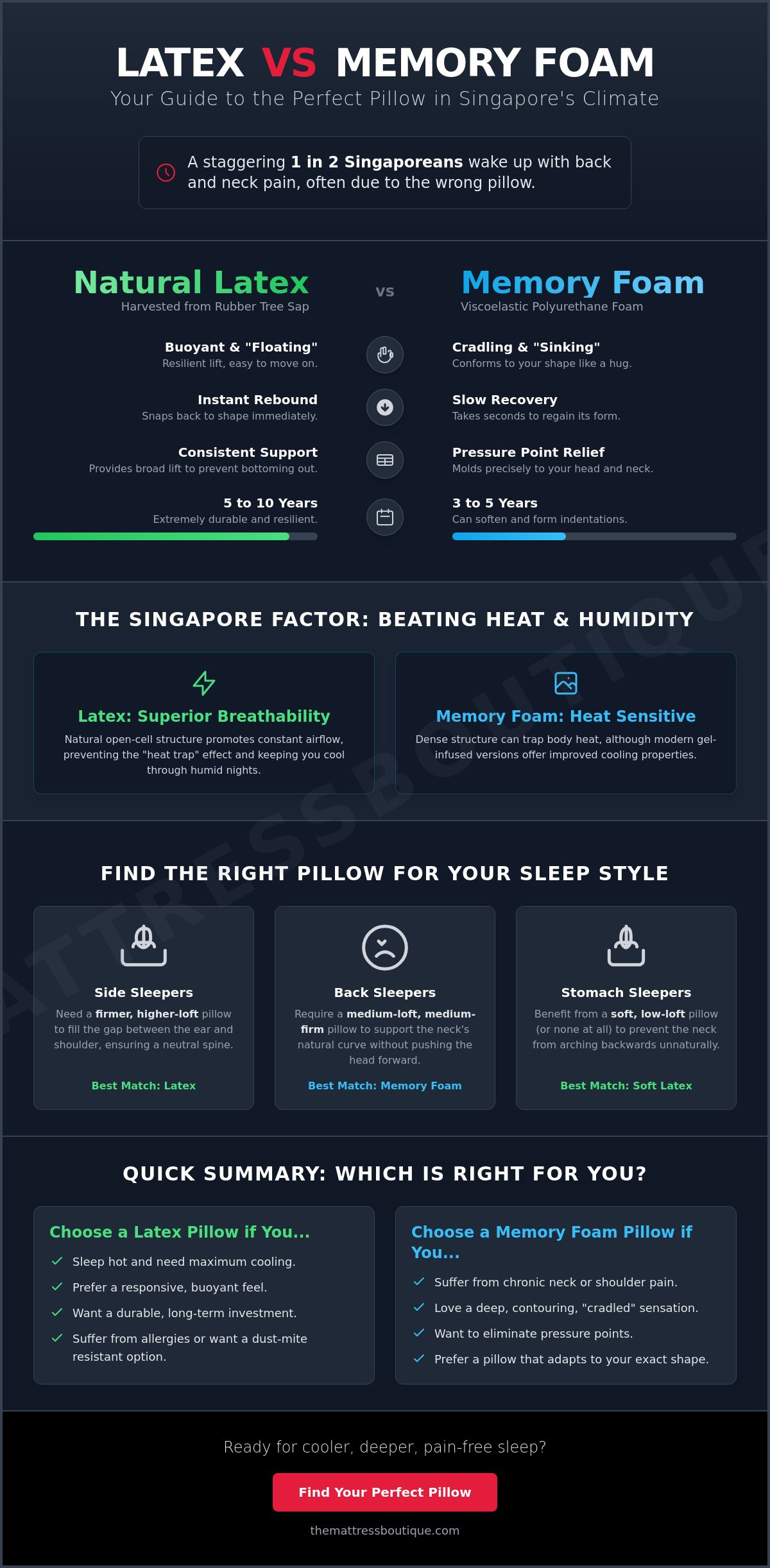
Memory foam is technically known as viscoelastic polyurethane foam. It was originally developed by NASA in the 1960s to improve seat cushioning and crash protection for pilots and passengers. The "visco" part of the name refers to its resistance to flow, while "elastic" means it eventually returns to its original shape. Because this material is heat-sensitive, it softens when it comes into contact with your body warmth. This allows it to contour precisely to the unique curves of your head and neck. You'll experience a distinct "sinking" sensation, often described as being cradled. While this is excellent for pressure relief, the slow-recovery nature means the material takes a few seconds to adjust when you move.
The Origin of Latex: Natural vs. Synthetic
Latex offers a completely different physical sensation. High-quality latex is a natural material harvested from the sap of the Hevea brasiliensis tree, commonly known as the rubber tree. Unlike the "hug" of memory foam, latex provides a "floating" sensation. It's incredibly resilient and buoyant. When you press down on a latex pillow, it snaps back to its original height instantly. This is due to its unique open-cell structure, which acts like thousands of tiny springs. While you can find synthetic or blended versions, 100% natural latex is prized for being inherently hypoallergenic and resistant to dust mites. This makes it a standout choice for Singaporeans concerned about respiratory health in our humid climate.
The material origin also dictates how long your pillow will maintain its integrity. Memory foam relies on a dense chemical structure that can soften over several years, often leading to a loss of support after three to five years of use. Latex, being a more robust natural rubber, often retains its shape for up to a decade. If you prefer a pillow that stays consistent without needing constant fluffing, the structural integrity of latex is hard to beat. Conversely, if you want a material that eliminates pressure points by conforming to your exact shape, memory foam remains the gold standard for personalized contouring.
Latex vs Memory Foam: A Side-by-Side Comparison
Selecting the right latex vs memory foam pillow singapore requires a clear understanding of how these materials behave under the weight of your head. The most immediate difference lies in responsiveness. Memory foam offers a slow-sink experience. When you lay down, the material yields to your shape and takes several seconds to recover once you move. Latex provides an immediate-rebound. It is a buoyant material that pushes back against pressure, ensuring you never feel stuck in one position. These physical traits define your nightly comfort and how much effort it takes to switch positions during sleep.
Contouring and Pressure Point Relief
Memory foam is widely recognized for its ability to isolate movement and cradle the cervical spine. By filling the narrow gap between your neck and the mattress, it provides highly localized contouring that eliminates pressure points. This is often the preferred choice for chronic neck pain sufferers who need a material that conforms to their specific anatomy. Latex offers a "lift" that prevents your head from bottoming out. This buoyant support is essential for sleepers who prefer feeling on top of their pillow rather than inside it. While foam excels at molding, latex provides broad support that keeps your neck aligned without the deep compression of traditional foam.
Longevity and Shape Retention
Durability is a major factor when weighing your investment. Memory foam pillows typically have a lifespan of three to five years. Because they are sensitive to heat and pressure, they may eventually develop permanent indentations or "dead spots" where the foam no longer recovers. Latex is far more resilient. A high-quality natural latex pillow can maintain its original shape and height for five to ten years. In Singapore’s high humidity, durability means a material's ability to resist structural breakdown caused by moisture and heat absorption. While memory foam is often more affordable initially, the longevity of latex often makes it more economical over time.
The price points for these materials reflect their construction and lifespan. You can find many affordable entry-level memory foam options that provide immediate comfort for guest rooms or short-term use. Premium natural latex requires a higher upfront cost due to the harvesting and manufacturing process of natural rubber. However, for a primary pillow that you intend to use every night, the structural integrity of latex is hard to beat. If you are ready to upgrade your sleep setup, you can explore our curated selection of pillows to find a model that fits your budget and support needs. Choosing between these two comes down to whether you prefer the customized "hug" of foam or the lasting "lift" of latex.
The Singapore Factor: Heat, Humidity, and Hygiene
Living in Singapore means managing an average relative humidity that often exceeds 80%. This environmental factor makes thermoregulation the absolute priority for anyone looking to improve their rest. A pillow that fails to dissipate heat will lead to "micro-awakenings" throughout the night as your body tries to cool itself down. When you are comparing a latex vs memory foam pillow singapore, the way each material interacts with our local climate is just as important as the support it provides. Choosing the wrong material can turn a peaceful night into a cycle of waking up hot and sweaty.
Beating the Heat: Breathability and Airflow
Traditional memory foam is a dense, closed-cell material. It actually uses your body heat to soften and contour, which can lead to the "heat trap" problem. You might find yourself flipping the pillow to the cool side every few hours because the foam has absorbed too much warmth. Modern manufacturers try to fix this by infusing the foam with cooling gels, but these can lose their effectiveness over a long night. Latex offers a more structural solution. During the manufacturing process, latex is formed with "pin-core" holes that act as a built-in ventilation system. Every time you shift your weight, air is pumped through these channels, keeping the surface temperature stable. You can maximize this effect by choosing covers made from natural fibers like bamboo or Tencel, which wick away moisture before it reaches the pillow core.
Hygiene and Allergy Prevention in the Tropics
High humidity levels in HDB apartments create a prime environment for dust mites and mold to flourish. This is where the choice of material becomes a health consideration. Natural latex is naturally hypoallergenic. The proteins found in rubber sap are inherently resistant to pests and fungi, making it a safer bet for those with asthma or sensitive skin. Memory foam is more susceptible to moisture retention. If sweat penetrates the dense foam, it can be difficult to dry out, potentially leading to hygiene issues over time. Maintaining a clean sleep environment is a holistic process. Much like choosing the right mattress in Singapore, selecting a breathable pillow ensures that your entire bed remains a dry, hygienic space that supports long-term physical well-being. A durable pillow that doesn't sag or trap moisture is an essential investment for a healthier home.
Which Pillow is Best for Your Sleeping Position?
Your sleep posture is the foundation of physical recovery. The primary objective of any pillow is to maintain a neutral spine, where your neck remains a straight extension of your back from your head to your hips. If your pillow is too high or too low, your neck muscles stay tense all night to compensate for the lack of support. This results in that familiar morning stiffness. When you are deciding on a latex vs memory foam pillow singapore, your preferred sleeping position serves as the most practical filter for your choice.
Side Sleepers: Finding the Right Loft
Side sleepers represent the largest percentage of the population and have the most specific support needs. They require a higher loft to bridge the physical gap between the ear and the mattress surface. Memory foam is often preferred for this group because it compresses under the weight of the head while filling the shoulder gap with precision. However, a contoured latex pillow is an excellent alternative for those who want height without the "sinking" feeling. Most side sleepers require a loft between 10cm and 15cm to ensure the head stays level with the spine. If the pillow is too soft, the head tilts downward, putting immense strain on the neck ligaments.
Back and Stomach Sleepers: Avoiding Strain
Back sleepers benefit from a medium loft that supports the natural cervical curve of the neck without pushing the chin toward the chest. The "cradle" effect of memory foam is particularly effective here as it distributes the weight of the skull evenly. Stomach sleepers face the highest risk of neck strain. Using a high-loft pillow while lying on your front forces the spine into an unnatural upward arch. For these sleepers, a very low-loft latex pillow is often the ideal solution. It provides a thin, resilient layer of support that keeps the head close to the mattress level while preventing the "bottoming out" feeling of cheap polyester fills.
When you visit a showroom, don't just test a pillow with your hands. Lay down in your natural sleeping position for at least five minutes to let the materials settle. Ask a consultant or a friend to check if your nose is in a straight line with your sternum. If your head is tilted at an angle, the loft isn't right for your frame. Finding the correct alignment is a process of trial and error that pays off in years of pain-free mornings. Ready to find your perfect match? You can visit our showroom to test our full range of pillows and get a personalized recommendation from our sleep specialists based on your unique body type.
Buying Guide: Choosing Your Pillow at The Mattress Boutique
Finalizing your decision on a latex vs memory foam pillow singapore involves more than just reading technical specifications. You need to experience how these materials interact with your specific shoulder width and head weight. While online shopping offers convenience, a pillow is a highly personal orthopedic tool. Visiting a showroom allows you to perform a "lay-down" test, which is the only way to verify if a pillow truly maintains your spinal alignment. Investing in a high-quality pillow is a commitment to your long-term health. When you choose a durable material like natural latex, you are budgeting for a product that can provide consistent support for five to ten years.
Trusted Brands for Every Sleep Need
We curate our selection to ensure every sleeper finds their ideal match. For those seeking the pinnacle of natural latex support, Dunlopillo remains the global standard. Their pillows utilize high-quality latex that offers the signature buoyant "lift" we discussed earlier. If you prefer the personalized contouring of viscoelastic materials, King Koil provides chiropractor-tested designs and memory foam innovations. Their products focus on pressure relief and spinal neutrality, making them a top choice for side sleepers. If you are looking to refresh your entire sleep setup, we suggest checking our King Koil Buying Guide for tips on matching your new pillow with a compatible mattress.
Care and Maintenance in Singapore
Our tropical climate requires a specific approach to pillow hygiene. You should never wash a solid latex or memory foam core in a washing machine. Submerging these materials can trap moisture inside the dense structure, leading to internal mold growth or structural breakdown. Instead, use a high-quality pillow protector. These layers guard against perspiration and humidity, keeping the core dry and hygienic. You can simply wash the protector and the outer pillowcase every week to maintain a fresh sleep surface.
One common concern in Singaporean apartments is the "new pillow smell" or off-gassing. This is a harmless scent caused by the release of trapped gases from the manufacturing process, particularly in memory foam. In a closed HDB room with limited cross-ventilation, this scent can sometimes feel intense. To manage this, place your new pillow in a well-ventilated area with a standing fan for 24 to 48 hours before you sleep on it. This allows the material to breathe and ensures your first night is as comfortable as possible. By following these simple maintenance steps, you ensure your investment stays "like new" for years to come.
Transform Your Sleep with the Right Support
Choosing between a latex vs memory foam pillow singapore doesn't have to be a difficult decision when you focus on your specific comfort needs. We've explored how the natural breathability of latex helps manage Singapore’s humidity, while the precise contouring of memory foam provides essential pressure relief for side sleepers. The ultimate goal is maintaining a neutral spine throughout the night to prevent that dreaded morning stiffness. Whether you prioritize the long term durability of natural rubber or the cradling support of viscoelastic foam, your choice will directly impact your physical well being and daily energy levels.
As an authorised retailer for King Koil, Dunlopillo, and Slumberland, we provide a wide range of pillows designed for every sleeping position. Our expert staff specialise in spinal alignment and are ready to help you navigate our curated selection to find the exact loft and firmness your body requires. Find your perfect pillow at The Mattress Boutique today and experience the difference that professional grade support makes. You're just one better pillow away from the restful, cooling sleep you deserve.
Frequently Asked Questions
Is a latex pillow better than memory foam for neck pain?
Both materials offer relief, but the better choice depends on your preference for support. Memory foam provides deep contouring that eliminates pressure points by molding to your unique shape. Latex offers a buoyant lift that keeps the head from sinking too far into the material. If you prefer a material that adjusts to your every move instantly, latex is often the more responsive solution for chronic neck stiffness.
Do memory foam pillows get hot in Singapore?
Traditional memory foam can trap heat because it is a dense, closed-cell material that relies on body warmth to soften. In Singapore's tropical climate, this often leads to a "heat trap" effect that can disrupt your sleep. You should look for foam pillows infused with cooling gels or those featuring open-cell structures. These modern variations help mitigate heat retention compared to older, standard foam models.
How long does a latex pillow last compared to memory foam?
A high-quality latex pillow typically lasts between five and ten years due to its natural resilience. In contrast, memory foam pillows usually need replacement every three to five years as they lose their ability to bounce back. When comparing a latex vs memory foam pillow singapore, the long-term structural integrity of latex often provides better value. It resists the permanent indentations that can plague older foam products.
Can I wash my latex or memory foam pillow?
You should never put a solid latex or memory foam core into a washing machine. Submerging these materials in water can cause the internal structure to break down or trap moisture that leads to mold growth. To keep your pillow clean, use a removable, washable protector and launder the cover regularly. If you need to clean the core, spot clean it gently with a damp cloth and allow it to air dry completely.
Are latex pillows better for people with allergies?
Natural latex is an excellent choice for allergy sufferers because it is inherently resistant to dust mites, mold, and mildew. The proteins in natural rubber sap create a hostile environment for common allergens without the need for added chemicals. This is particularly beneficial in humid HDB environments where dust mites thrive. While memory foam can be treated to be hypoallergenic, natural latex offers these protective properties as an inherent feature of the material.
Why does my new memory foam pillow have a chemical smell?
That scent is known as off-gassing, which occurs when volatile organic compounds are released from a new foam product. It is a common result of the manufacturing process and is generally harmless to most users. To clear the smell, place the pillow in a well-ventilated room with a fan for 24 to 48 hours. The scent will dissipate quickly once the material has had a chance to breathe outside of its packaging.
Which pillow is better for side sleepers in Singapore?
Side sleepers often prefer memory foam because it fills the gap between the ear and the shoulder with precise contouring. This helps maintain a neutral spine by allowing the shoulder to sink slightly. However, because of the high humidity in Singapore, many local side sleepers choose a high-loft latex pillow instead. Latex provides the necessary height and support without the heat retention issues associated with some dense foam brands.
Is natural latex more eco-friendly than memory foam?
Natural latex is significantly more eco-friendly because it is a renewable resource harvested from the sap of rubber trees. The production process has a lower environmental impact compared to memory foam, which is a petroleum-based synthetic product. Additionally, natural latex is biodegradable at the end of its long lifespan. Choosing natural latex is a sustainable option for consumers who want to reduce their environmental footprint while improving their sleep quality.