

The mattress itself is only part of the dust mite equation. A dust mite resistant mattress can be one part of a practical approach, but the material, the accuracy of its allergy claims, bedroom humidity and everyday ventilation habits all matter. Dust mites thrive at 20 to 30°C and prefer humidity above 50%, so choosing a mattress alone won’t address every factor.
It’s understandable to look for a clear label when allergies disturb your sleep. But terms such as “hypoallergenic” and “anti-dust mite” don’t tell the whole story, and memory foam deserves a closer look rather than an automatic yes or no. The key question is how the mattress fits your bedroom conditions and cleaning routine.
This guide explains how to assess mattress claims, what to consider about memory foam, and how humidity, ventilation and bedding habits can affect dust mite exposure. You’ll come away with practical criteria for comparing mattress types and deciding which changes make sense for your bedroom in Singapore.
Key Takeaways
- Look beyond “hypoallergenic” labels and learn what a material certification does, and doesn’t, tell you.
- Consider how dust, mould spores and pet dander may contribute to bedroom allergens, not just what’s inside the mattress.
- Use bedroom humidity and airflow as part of your decision, since mattress choice alone won’t control the sleep environment.
- Build consistent bedding and bedroom cleaning habits; a mattress cover can help, but it isn’t a complete solution.
- Assess memory foam by how its construction and your room conditions fit your needs, rather than assuming the material alone determines dust mite exposure.
1. Why choose an anti-dust mite mattress?
A dust mite resistant mattress can help address one source of allergen exposure, but it isn’t a complete bedroom solution. The University of Manchester estimates that a used mattress may contain 100,000 to 10 million dust mites. Mites feed on shed skin, and people shed approximately 1.5 grams each day. Their waste and body fragments can become airborne as bedding moves.
Dust mites aren’t the only possible bedroom trigger. Mould spores can collect where moisture builds up, while pet dander may settle on sheets, pillows and mattress surfaces. These allergens can affect people with allergies, though symptoms may have different causes. About 59% of people report indoor allergies. Identifying likely triggers helps you decide whether a mattress change or a wider bedroom routine deserves attention.
How much do dust mite resistant mattresses cost in Singapore? Prices vary by mattress size, construction, materials and features. Compare these details and the specific resistance claims when assessing options. Judge a dust mite resistant mattress by its construction and care requirements, not its label alone.
Which dust mite resistant mattresses are available in Singapore? Options include latex, memory foam, pocketed spring and Bonnell spring mattresses, each with different construction and comfort characteristics. Compare the stated materials and allergen-related claims rather than assuming every mattress in a category offers the same protection. Assess the complete product, including its cover and care instructions.
Do dust mite resistant mattresses help with dust mite allergies and asthma? They may form part of an approach to reducing dust mite exposure, but a mattress cannot remove every bedroom trigger. Keep bedding clean and consider a suitable cover. If asthma or allergy symptoms persist, discuss them with a healthcare professional, since dust mites, mould and pet dander can all affect the sleep environment.
For children, consider comfort, support and how easily the sleep surface can be kept clean. If you’re considering latex, treat questions about latex sensitivity separately from dust mite resistance: these involve different materials and exposures. Check the mattress construction and cover, and choose bedding that can be laundered regularly.
Cleaning remains essential. Washing bedding at 60°C can kill dust mites and remove their allergens. A mattress cover adds a barrier, but it isn’t a complete solution. Follow its care instructions and include nearby bedroom surfaces in your routine. For example, launder sheets, keep pet bedding away from the child’s sleep area, and address dampness that could encourage mould growth.
2. Anti-dust-mite and hypoallergenic mattress claims
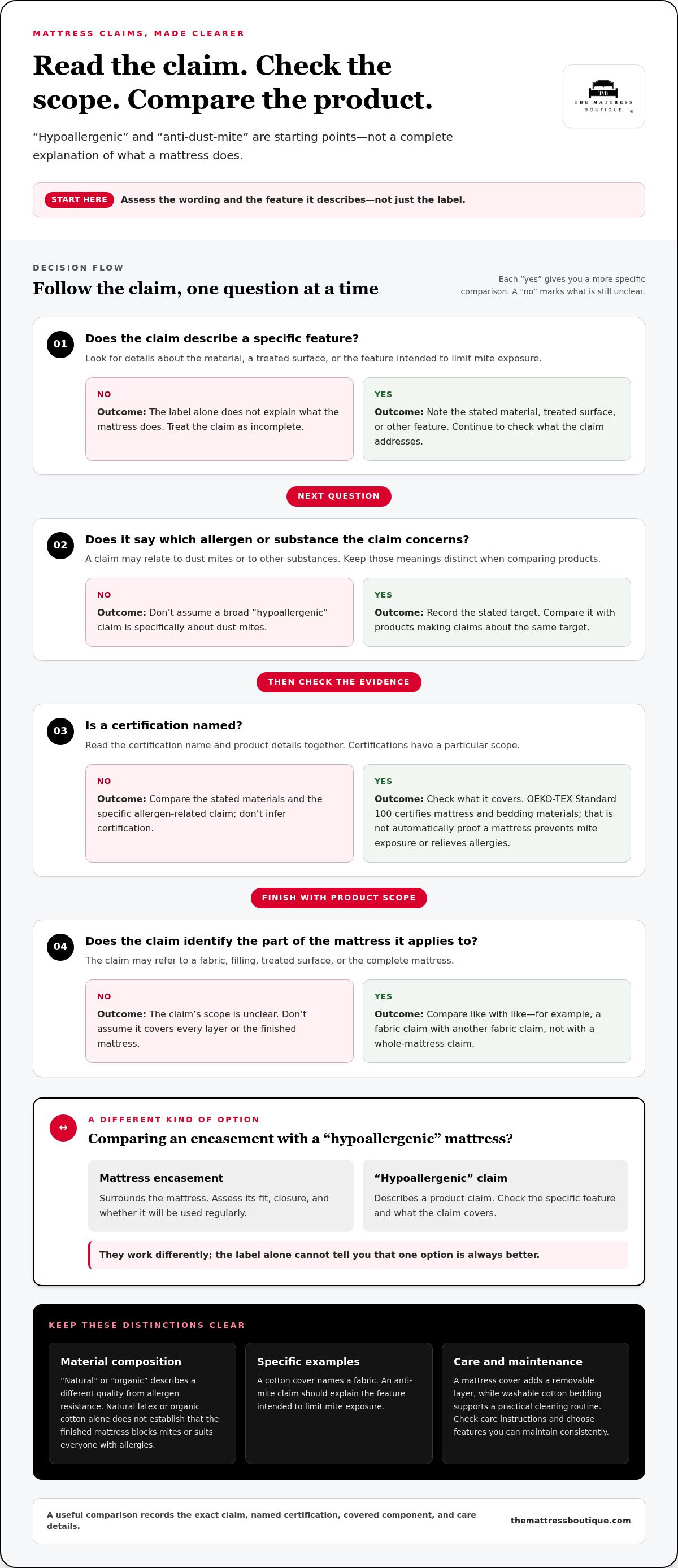
Terms such as “hypoallergenic” and “anti-dust-mite” can sound definitive, but they don’t explain what the mattress does or how the claim was assessed. Treat each claim as a starting point. Look for details about the material, treated surface and whether the claim concerns dust mites or other substances. A cotton cover describes its fabric, for example, while an anti-mite claim should explain the feature intended to limit mite exposure.
Certifications can add useful context, but each one has a particular scope. According to OEKO-TEX Association, OEKO-TEX Standard 100 is a certification for mattress and bedding materials. Read the certification name and product details together. A certified material claim is not automatically proof that a mattress prevents dust mite exposure or relieves allergies. Keep those claims distinct as you compare products.
“Naturally” and “organic” describe qualities different from allergen resistance. A mattress made with natural latex or organic cotton may appeal if material composition is a priority. Those terms alone don’t establish that the finished mattress blocks mites or suits everyone with allergies. Check which layer or component the claim covers, such as the fabric, filling or complete mattress.
Are dust mite-proof mattress encasements more effective than hypoallergenic mattresses? They work differently: an encasement surrounds the mattress, while “hypoallergenic” describes a product claim. An encasement’s usefulness depends on its fit, closure and regular use. Compare these details rather than assuming one option is always better.
What features make a mattress dust mite resistant? Look for a clearly described barrier, treatment or material feature, and identify which part of the mattress it applies to. A zippered cover, for example, is a specific feature to assess; the label alone doesn’t show how well the mattress limits exposure.
Before buying, write down each mattress’s exact claim, the layer it refers to and any named certification. Then compare like with like. A “hypoallergenic” label on one mattress and a certified-material statement on another may refer to different properties. This helps keep comfort, construction and allergen-related claims distinct.
Consider the whole sleep setup. A mattress cover adds a removable layer, while washable cotton bedding supports a practical cleaning routine. Choose materials and features you can maintain consistently. If you’re concerned about a particular material, such as latex, consider that separately from dust mite claims.
3. Bedroom humidity and mattress ventilation
Room conditions affect how welcoming a mattress may be to dust mites. They thrive at temperatures between 20 and 30°C and prefer humidity above 50%. In Singapore, consider bedroom humidity alongside mattress materials, since a resistant surface cannot control moisture throughout the room.
Use a hygrometer to observe relative humidity where you sleep, then adjust ventilation or dehumidification if readings remain high. The practical target is below 50% relative humidity, where dust mites struggle to survive. Keep windows and doors open when conditions allow, or use air-conditioning to help manage room moisture.
Overnight, the sleeper, pillow and bedding release warmth and moisture into the bed. A hot mattress that retains moisture can encourage mould and mildew growth, which is undesirable for people with allergies. After getting up, leave the bedding exposed for 20 to 30 minutes each morning. This gives overnight moisture time to evaporate before you remake the bed.
Material choice can affect how warm or damp the sleep surface feels. Natural wool and cotton wick away heat and moisture, helping bedding feel less stuffy. Synthetic fabrics vary, so consider the fabric construction and care instructions rather than assuming every synthetic surface ventilates equally. A comfortable sleep setup should suit your preferences and be practical to maintain.
Ventilation means more than opening a window. Check that the mattress base allows airflow around the mattress, and avoid trapping damp bedding beneath heavy covers just after waking. Keep pillow protectors and mattress covers clean, following their care labels. A fitted layer can protect the surface, but airflow and regular drying still matter.
- Measure bedroom humidity with a hygrometer and note readings during sleeping hours.
- Air bedding for 20 to 30 minutes each morning before making the bed.
- Choose cotton or wool where their moisture-wicking qualities suit your comfort needs.
- Review ventilation around the mattress and avoid leaving damp bedding compressed.
Humidity management is not about making a bedroom feel cold. Keep the room comfortable while reducing lingering moisture. A temperature in the 20 to 30°C range can suit dust mites when humidity also exceeds 50%, so controlling moisture is a useful part of the plan. If condensation or a musty smell appears, dry the affected area and improve airflow. These steps support a cleaner sleep environment while helping limit conditions that favour mites and mould.
4. Reducing dust mites in mattresses and bedrooms
A practical routine combines washable bedding, mattress care and bedroom cleaning. Start with sheets and pillowcases: washing them at 60°C can kill dust mites and remove their allergens. If washing at that temperature isn’t suitable for a fabric, check its care label and choose an appropriate cleaning method. For bedding that can tolerate it, tumble drying on high heat for at least 15 minutes can achieve a similar effect.
Use an anti-dust-mite mattress cover as a barrier and follow its care instructions. A cover can help limit exposure, but it isn’t a complete solution. Keep it fitted and intact, and wash it according to its label. If it has several layers, clean each removable layer as directed rather than assuming the outer surface protects the whole sleep environment.
Vacuum the mattress surface and surrounding floor regularly. A HEPA-filtered vacuum traps particles down to 0.3 microns. Move slowly over seams and edges, where dust can settle, and clean nearby areas such as the bed frame. After vacuuming, leave the mattress uncovered for 30 to 60 minutes if possible. This allows the surface to air before you replace bedding.
Keep humidity under control as part of your routine. Damp conditions can support dust mites and mould, so air the room and avoid covering a mattress while it still feels moist. If you use a chemical spray, follow its label rather than applying it broadly to sleep surfaces. A spray doesn’t replace washing, vacuuming or a properly fitted cover.
Pillows need attention, too. Replace them every 2 to 3 years, or more often for people with allergies. Fresh pillowcases alone don’t clean the pillow filling, so use a washable pillow protector if its care instructions suit your routine. Check pillows for visible wear and follow the manufacturer’s cleaning guidance.
For a manageable schedule, connect these steps to regular household tasks:
- Wash bedding at 60°C when the fabric care label permits.
- Vacuum the mattress seams, bed frame and nearby floor with a HEPA-filtered vacuum.
- Air the mattress uncovered for 30 to 60 minutes after vacuuming, when possible.
- Clean the mattress cover and pillow protectors according to their care labels.
- Review bedroom humidity and look for dampness or mould around the sleep area.
Consistency matters more than adding another product to the bed. A cover, washable bedding and regular cleaning address different parts of the sleep environment. Together, these steps help reduce exposure while keeping mattress care in line with the fabric and product instructions.
5. Memory foam and dust mite exposure
Memory foam is often discussed as an option for dust mite allergies, but the material alone doesn’t make a mattress mite-proof. Distinguish the mattress’s comfort and support qualities from features intended to limit allergen exposure. Check the cover, construction and care instructions alongside the foam type. A resistant label is more meaningful when it explains the feature behind the claim.
Viscoelastic foam and cold foam are often suggested for anti-dust-mite mattresses, but compare them by feel, construction and how easily the surface can be kept clean. Memory foam may suit someone who prefers its close contouring; another sleeper may prefer a different feel. Comfort matters because the mattress needs to meet your everyday sleep needs.
Moisture is a separate consideration. Dust mites prefer humidity above 50%, so a foam mattress doesn’t remove the need to manage bedroom humidity and ventilate bedding. If the sleep surface feels damp or the room holds moisture, focus on airflow and drying habits. A mattress cover can add a removable barrier, but follow its care label and keep the full sleep environment in mind.
Natural latex offers another point of comparison, but “natural” doesn’t automatically mean resistant to dust mites. A certification of organic raw latex content does not promise allergy relief. When comparing latex and memory foam, distinguish material credentials from claims about dust mite resistance.
For a practical comparison, review each mattress using the same criteria:
- Identify whether it uses memory foam, viscoelastic foam, cold foam or natural latex.
- Read the exact wording of any dust mite or hypoallergenic claim.
- Find out which layer or surface the claim applies to.
- Consider how the cover and mattress can be cleaned and aired.
- Match the feel and support to your comfort preferences.
This approach avoids treating any one material as an automatic solution. A comfortable foam mattress still needs a dry, ventilated room and consistent bedding care. Choosing latex for its material composition doesn’t replace allergen management either. The best fit is the one whose construction, care routine and comfort work together in your bedroom.
Compare memory foam and latex mattresses by their construction and comfort needs as you narrow your choices.
The Mattress Boutique: King Koil Mattresses
The Mattress Boutique can help you compare mattress options after considering materials, comfort and bedroom conditions. If you’re weighing a King Koil mattress against other choices, focus on the specific construction and any clearly described allergy-related claims, rather than assuming a brand name guarantees dust mite resistance.
Compare different mattress types by feel, materials and care requirements. This is a useful next step if you’ve narrowed down your preferred mattress type but still need to balance comfort with practical allergen management. A mattress works alongside washable bedding, a suitable cover and good bedroom ventilation, not instead of them.
For help exploring mattress options, contact The Mattress Boutique.
Make your next mattress choice with confidence
Turn what you’ve learned into a shortlist that fits your comfort preferences and bedroom routine. A dust mite resistant mattress should suit your sleep needs and your approach to everyday care. Consider which features matter most, then compare construction and comfort without relying on a label alone.
The Mattress Boutique offers King Koil, Slumberland and Dunlopillo mattresses to compare. As you narrow your options, consider how each dust mite resistant mattress fits your preferred feel and care routine. A thoughtful choice can complement your efforts to maintain a clean sleep environment.
Explore your options at your own pace. Contact The Mattress Boutique today to discuss mattress choices and find a comfortable fit for your routine.
Frequently Asked Questions
How Does a Mattress Impact Allergies?
A mattress can hold particles that disturb sensitive sleepers as they move during the night. Dust mite waste, mould spores and pet dander are possible bedroom allergens, but their importance varies by household. For example, a pet sleeping on the bed can leave dander on fabric surfaces. Note when symptoms occur and what has changed in the room to help identify useful adjustments.
How can I make my bedroom safe from allergens?
Make the bedroom easier to clean by reducing dust-catching clutter near the bed. Wipe shelves and hard surfaces with a damp cloth, and vacuum the floor around furniture. Keep laundry and worn clothing out of the sleeping area, since they can carry dust and pet dander. In Singapore’s humid conditions, also watch for damp patches near windows or walls and address moisture rather than masking it.
What Type of Bedding Is Best for Allergies?
Choose bedding that fits securely and can be washed according to its care label. Cotton is one practical option, and a washable pillow protector adds a removable layer beneath the pillowcase. Avoid letting sheets drag on the floor, where they can collect dust. The most useful bedding is easy to clean consistently and comfortable for everyday use.
What are the causes of allergies in bed?
Possible causes include dust mite allergens, mould spores and pet dander. Mites can live in bedding, mould may develop in damp areas, and pet allergens can travel on clothing or settle on fabric. A dust mite resistant mattress may help address one source, but it won’t remove every possible trigger. Consider whether symptoms coincide with a damp room, new bedding or pets entering the bedroom.
What is a hypoallergenic mattress?
A hypoallergenic mattress is marketed as designed to reduce exposure to potential allergens, but the term doesn’t identify the exact material or feature involved. Look for a clear description of whether the claim applies to the cover, a treatment or the complete mattress. OEKO-TEX Standard 100, according to OEKO-TEX Association, certifies mattress and bedding materials; that certification isn’t a guarantee of allergy relief.
Why choose an anti-dust mite mattress?
An anti-dust-mite design may help limit contact with mite allergens in the sleep area. It’s most useful as part of a considered routine, not as a substitute for clean bedding and room care. Compare construction and care instructions before choosing. A dust mite resistant mattress can suit someone prioritising this feature, provided its comfort and maintenance work for everyday use.
What mattress materials are least likely to harbour dust mites?
Viscoelastic and cold foam are among the options suggested for anti-dust-mite mattresses. Still, the material name alone doesn’t show whether the finished product limits exposure. Compare the cover, seams, construction and cleaning requirements. Natural latex may appeal if material composition matters to you, but “natural” by itself doesn’t establish resistance. Choose a design that’s comfortable and straightforward to care for.
How to clean and maintain a dust mite resistant mattress?
Follow the manufacturer’s care instructions, as cleaning methods depend on the mattress and cover. Vacuum the surface and seams with a suitable vacuum, then air the mattress before replacing the bedding. Wash removable covers only as directed. For ongoing upkeep, set a simple schedule for vacuuming and checking the sleep surface for dampness. A dust mite resistant mattress still benefits from regular care.