

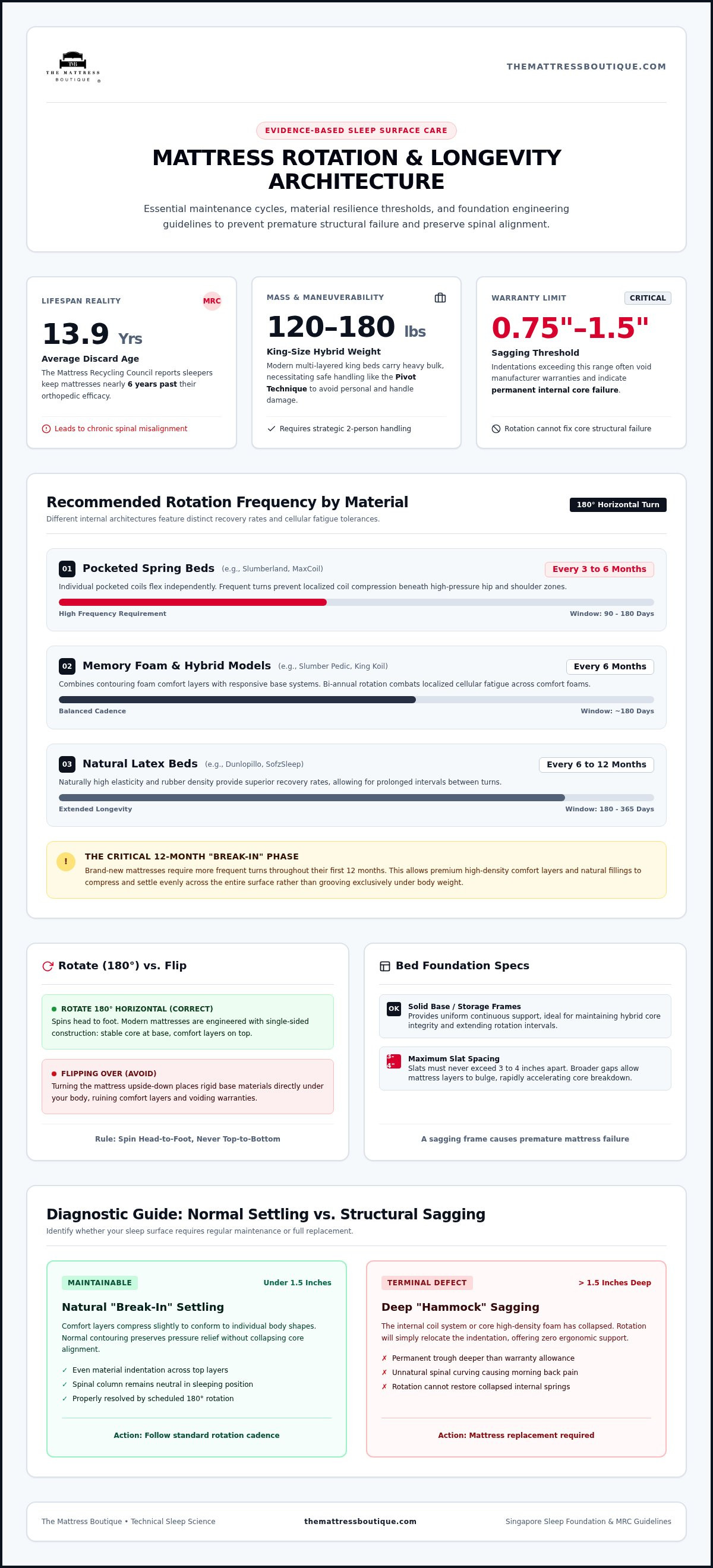
The Mattress Recycling Council reports that discarded mattresses average 13.9 years of age, which means many sleepers are resting on surfaces nearly six years past their orthopedic efficacy. You might already feel that subtle dip in the center or wake up with morning stiffness, wondering if your premium investment is losing its shape. It's a valid concern, especially since modern King-sized hybrids can weigh between 120 and 180 pounds, making regular maintenance feel like a physical burden. Learning exactly how often to rotate mattress surfaces is the single most important step you can take to prevent the sagging that leads to chronic back pain.
We agree that managing your sleep environment shouldn't be complicated or confusing. Whether you've invested in a chiropractor-tested King Koil or a resilient Dunlopillo latex bed, each material requires a tailored approach to handle pressure distribution. This 2026 guide promises to clarify your maintenance schedule and help you avoid the 0.75 to 1.5 inch indentations that often void manufacturer warranties. We'll preview the specific needs of memory foam, hybrids, and zoned ergonomic beds, ensuring you protect your mattress's structural integrity and maximize your ROI for years of restorative sleep.
Key Takeaways
- Understand the structural difference between rotating 180 degrees and flipping to protect the comfort layers of modern one-sided mattresses.
- Discover exactly how often to rotate mattress models based on their specific materials, with schedules tailored for pocketed springs, memory foam, and latex.
- Learn why the initial 12-month "break-in" period requires more frequent adjustments to ensure high-density materials settle evenly across the surface.
- Master the "Pivot Technique" to safely maneuver heavy King and Queen sizes without straining your back or damaging the bed's side handles.
- Identify the clear diagnostic signs that maintenance is no longer sufficient, such as permanent indentations that exceed the 1.5-inch warranty threshold.
Understanding Mattress Rotation: Why It Is Essential for Longevity
Mattress rotation is a 180-degree horizontal turn to redistribute pressure. This simple maintenance task is often overlooked, yet it’s vital for the longevity of your investment. When you sleep in the same position every night, your body weight creates localized pressure on the comfort layers. Over time, this leads to "body impressions," which are visible indentations where the materials have compressed under your hips or shoulders. Understanding how often to rotate mattress units ensures that wear is spread evenly across the entire surface, allowing the materials to recover from nightly compression.
High-density memory foam, natural latex, and wool comfort layers are engineered to provide localized support in modern mattress construction and materials. However, even the most resilient materials experience cellular fatigue if they're constantly compressed in the same spot. Consistent rotation helps redistribute these internal fillings, maintaining the structural integrity needed for proper spinal alignment. If you don't rotate regularly, the bed can develop a "hammock" effect, which forces your spine into an unnatural curve and leads to chronic morning back pain.
Rotation vs. Sagging: What Can and Can't be Fixed
Understanding the difference between normal settling and structural failure is key to managing your expectations. Settling occurs when the top comfort layers compress slightly to conform to your shape; this is a natural part of the "break-in" process. Rotation acts as a preventative measure, not a cure for a broken core or collapsed springs. If your mattress has developed a permanent sag deeper than 1.5 inches, rotating it will only move the dip to a different part of the bed. At that point, the internal support system has likely failed, and rotation won't restore the orthopedic benefits you need.
The Role of the Bed Frame in Mattress Health
Your bed's foundation plays a significant role in determining how often to rotate mattress surfaces. A solid, flat base is essential for preventing premature sagging. Many homeowners choose storage bed frames because they provide a continuous, even support system that helps the mattress maintain its shape. If you're using a slatted frame, ensure the gaps aren't wider than 3 to 4 inches. Excessive spacing allows the mattress to bulge between the slats, which accelerates material fatigue and makes frequent rotation even more critical to counteract the lack of uniform support.
How Often Should You Rotate Your Mattress? (Frequency by Material)
Determining how often to rotate mattress units isn't a one-size-fits-all rule. It depends heavily on the density of the internal materials and the support system. Premium mattresses, such as those from Slumberland or King Koil, utilize complex layers of pocketed springs and high-density foam that respond differently to pressure over time. While a basic foam bed might sag quickly, these specialized builds are designed for resilience, provided they're maintained correctly.
Rotation Schedule by Mattress Type
The internal architecture of your bed dictates its maintenance needs. Because different materials have varying recovery rates, you should adjust your schedule accordingly:
- Pocketed Spring Mattresses: Brands like Slumberland and MaxCoil feature individual coils that move independently. To protect the integrity of these coils and prevent localized sagging, rotate the mattress every 3 to 6 months.
- Memory Foam and Hybrids: High-end hybrids, including those from Slumber Pedic, combine foam comfort with spring support. These generally require rotation every 6 months to manage material fatigue effectively.
- Latex Mattresses: Natural latex, found in Dunlopillo or SofzSleep models, is exceptionally resilient. Because of this high elasticity and natural rubber durability, you can often wait 6 to 12 months between turns.
When considering rotating versus flipping your mattress, remember that modern designs are almost exclusively single-sided. This means the support core is on the bottom and the comfort layers are on top. Flipping them would result in sleeping on a rigid base, which is why a 180-degree horizontal rotation is the preferred method for modern luxury beds.
New Mattress Care: The First 12 Months
The first year is the most critical period for your mattress's long-term shape. This is known as the "break-in" period, where the comfort layers settle and begin to conform to your body. New King Koil mattresses should be rotated monthly for the first 90 days to ensure these layers stabilize evenly across the surface. After this initial quarter, you can transition to a standard seasonal schedule. This proactive approach helps the materials "set" without developing deep body impressions early in their lifespan.
For couples with significant weight differences, you may need to rotate more frequently than the standard guidelines suggest. A higher concentration of weight on one side can cause uneven settling, which is easily corrected by turning the bed every 2 to 3 months. If you're looking to upgrade your sleep surface, you can explore our range of premium brands to find a model that matches your specific support requirements.
Rotate vs. Flip: Clearing Up the Common Misconceptions
Historically, the "flip your mattress" mantra was sound advice. Older Bonnell spring beds were symmetrical, meaning the top and bottom were identical. Flipping helped balance the wear on both sides of the tempered steel coils. However, the industry has shifted significantly. Today, over 90% of mattresses sold are single-sided. Understanding how often to rotate mattress surfaces has replaced flipping as the primary maintenance task for modern sleep systems.
Modern premium brands like King Koil and Slumberland use a "stratified" construction. This means they're built like a house: a solid foundation on the bottom, a support core in the middle, and specialized comfort layers on top. If you flip one of these, you'll be sleeping on the rigid base foam or exposed coil scrim. This doesn't just feel uncomfortable; it has a significant impact of mattress support on back pain because the ergonomic zones are now upside down and unable to contour to your spine.
When Flipping is Actually Required
Double-sided mattresses still exist, though they're less common in the luxury segment. These models are finished with comfort materials on both faces, allowing you to use both sides. The main advantage is potentially longer life, but the trade-off is extreme weight and a lack of specialized "pillow-top" features. Most premium mattresses in Singapore are now designed as one-sided. This engineering allows manufacturers to focus high-quality materials where they matter most: right under your body. Since these beds are often heavy hybrids, a "no-flip" design makes maintenance much more manageable for the average homeowner.
The Danger of Flipping a No-Flip Mattress
If you mistakenly flip a one-sided mattress, you risk permanent structural damage. The delicate comfort layers, such as high-density latex or cooling gel foam, aren't designed to support the weight of the entire mattress core. When placed on the bottom, these layers can become crushed and lose their loft. Additionally, most manufacturers include specific maintenance clauses in their documentation. Flipping a mattress that's clearly labeled "No-Flip" or "Single-Sided" can void your warranty coverage. To identify your type, check the law tag at the head of the bed or look for a non-slip fabric on the underside. If the top has a distinct quilted pattern or a stitched-on pillow-top, it's a one-sided model that should only be rotated. Knowing how often to rotate mattress models like these ensures you stay within warranty guidelines while enjoying peak orthopedic support.
A Step-by-Step Guide to Rotating Your Mattress Safely
Rotating a premium mattress is a heavy-duty task that requires more than just a quick shove. Modern King and California King hybrids often weigh between 120 and 180 pounds, making safety a primary concern. While you've established a schedule for how often to rotate mattress surfaces, doing it incorrectly can lead to lumbar strain or damage to the bed's internal components. Proper preparation ensures the process is smooth and prevents the fabric from bunching or snagging against the frame.
Before you begin, clear the immediate bedside area. Remove lamps, water glasses, and fragile decor from nightstands to prevent accidental breakage. This maintenance window is also the perfect time for hygiene. Once the bedding is stripped, vacuum the surface of the mattress and the base of your storage bed frame or divan bed frame. Removing dust and skin cells from the foundation helps maintain a clean sleep environment and prevents allergens from settling into the lower layers of the bed.
The Two-Person Rotation Method
Working with a partner is the safest way to manage heavy Queen or King sizes. Follow these three steps to ensure a perfect 180-degree turn:
- Step 1: Pull the mattress roughly six inches away from the headboard. This creates enough clearance to prevent the top quilt from rubbing against the wall or headboard.
- Step 2: Use the 'Pivot Technique' by spinning the mattress 90 degrees. At this midpoint, the mattress will hang over the sides of the frame, allowing you to easily clear the corners without lifting the full weight.
- Step 3: Complete the final 90-degree turn and realign the mattress with the edges of the frame. Ensure it sits flush against the base to maintain uniform support across the entire surface.
Solo Rotation Tips for Smaller Sizes
If you're managing a Single or Super Single bed alone, use the 'walking' method. Shift one corner at a time in small, controlled increments rather than trying to slide the entire unit at once. Be extremely cautious with the side handles. In modern mattress construction, handles are often decorative or intended only for light lateral positioning. Attempting to lift a 130-pound mattress by these straps can rip the fabric and void your cosmetic warranty. Instead, always grip the mattress from the underside of the base foam.
If you find that your current bed is too cumbersome to move or shows signs of structural fatigue despite regular turns, browse our collection of premium mattresses to find a model with a weight-to-support ratio that fits your lifestyle.
When Maintenance Isn't Enough: Signs You Need a New Mattress
Even if you've followed a strict schedule for how often to rotate mattress units, there comes a point where maintenance can't counteract the laws of physics. High-quality materials like those in Slumberland or Dunlopillo beds are built to last, but they aren't eternal. One of the clearest indicators of structural failure is the presence of permanent indentations. If your mattress shows a visible dip deeper than 1.5 inches when unoccupied, the internal support system has likely collapsed. At this stage, turning the bed won't help; it will only relocate the problem to a different part of the frame.
Your physical health often provides the most reliable feedback. Try the "Morning Stiffness" test. If you wake up with lower back pain or joint stiffness that remarkably disappears after 30 minutes of moving around, your mattress is likely the culprit. As we age or experience changes in weight and health, our bodies' requirements for pressure relief evolve. A bed that felt perfect five years ago might now be too soft or too firm, making a replacement a vital investment in your long-term physical well-being rather than just another household purchase.
The Limits of Rotation
Rotation is a preventative measure, not a restorative one. It cannot fix a snapped Bonnell spring or the "dry rot" effect that can occur in low-density foams over time. In tropical climates like Singapore's, high humidity can also lead to internal moisture buildup and hygiene issues that compromise the bed's integrity from the inside out. If you notice persistent odors or localized "crunching" sounds when you sit down, the core has reached its limit. No amount of turning will restore the orthopedic benefits of a compromised core.
Choosing Your Next Upgrade
When it's time to move on, look for engineering that prioritizes durability and airflow. King Koil mattresses are specifically designed with chiropractor-tested technology to maintain their shape longer than standard foam alternatives. Their use of advanced pocketed springs ensures that even if you forget how often to rotate mattress surfaces occasionally, the bed remains supportive and resilient against sagging. Ready for a better night's sleep? Explore our full mattress collection to find your perfect match and reclaim your comfort.
Protecting Your Sleep Investment for the Long Term
Maintaining a consistent schedule for how often to rotate mattress units is the most effective way to extend your bed's lifespan. You've learned that modern one-sided constructions require a 180-degree turn rather than a flip; this protects the delicate comfort layers from unnecessary crushing. Whether you're managing a monthly schedule for a new bed or a seasonal turn for a resilient latex model, these steps ensure your mattress continues to provide the orthopedic support you bought it for. By using the pivot technique, you can manage even the heaviest hybrids safely.
As an authorized retailer of King Koil, Dunlopillo, and Slumberland, we specialize in providing expert advice on spinal support and mattress longevity. We also offer HDB-friendly storage bed solutions that provide the stable, flat foundation your bed needs to perform at its best. If your current mattress has reached its limit and no longer provides restorative rest, it's time for a professional upgrade. Upgrade your sleep with a premium King Koil mattress today and experience the difference that expert-curated comfort makes for your well-being. Rest easy knowing your investment is in capable hands.
Frequently Asked Questions
Is it better to flip or rotate a mattress?
Rotation is the preferred maintenance method for modern sleep systems. Most premium brands, such as King Koil and Slumberland, are engineered as one-sided "no-flip" models. Flipping these mattresses would force you to sleep on a rigid support core, which is uncomfortable and can damage the internal comfort layers. Unless you own a specific double-sided model, stick to a 180-degree horizontal rotation.
What happens if you never rotate your mattress?
Failing to rotate your bed leads to permanent "body impressions" or sagging in high-pressure areas like the hips and shoulders. Over time, these indentations exceed the 1.5-inch warranty threshold and cause spinal misalignment. Understanding how often to rotate mattress surfaces is essential because it redistributes your weight, preventing the internal materials from collapsing prematurely and causing chronic back pain.
Can one person rotate a king-size mattress alone?
Rotating a King hybrid alone is physically risky because these units can weigh over 150 pounds. If you must do it solo, use the "walking" method by shifting one corner at a time in small increments. However, we strongly recommend a two-person pivot to avoid lumbar strain and prevent damage to the internal pocketed springs. Never attempt to lift the full weight by the decorative side handles.
Do memory foam mattresses really need to be rotated?
Yes, memory foam requires regular rotation to prevent the foam cells from permanently compressing. While high-density foam is resilient, it naturally softens over time in the spots where you sleep most. Rotating the bed every 6 months ensures the material recovers its original shape. This practice provides consistent pressure relief across the entire surface and helps you maximize your return on investment.
How do I know if my mattress is 'no-flip'?
Check the underside and the manufacturer's label. A "no-flip" mattress typically has a non-slip fabric or a rigid, flat base on the bottom, while the top features a distinct quilted pattern or a stitched-on pillow-top layer. If the label specifies "Single-Sided" or "No-Flip," you should only perform a 180-degree turn. This design is standard for most luxury mattresses sold in Singapore today.
Should I rotate my mattress if I sleep alone on one side?
It is actually more critical to rotate your bed if you sleep alone on one side. Concentrated weight on just one half of the mattress causes uneven wear, which eventually creates a noticeable "hump" in the middle of the bed. Rotating every 3 months helps the materials settle evenly across the full width of the frame, maintaining a level sleeping surface and proper orthopedic support.
Do mattress toppers need to be rotated as well?
Yes, you should rotate your mattress topper just as frequently as the mattress itself. Toppers are usually made of softer latex or memory foam, which can be prone to quicker compression than the denser mattress core. Turning the topper 180 degrees every few months prevents deep body impressions from forming. This simple step ensures your top comfort layer remains plush and supportive for years.
Does rotating a mattress help with back pain?
Rotating helps prevent the sagging that leads to back pain, but it cannot fix a mattress that has already structurally failed. By spreading out the wear, you keep the surface flat and supportive for your spine's natural curve. If you're already waking up with significant stiffness, check for a sag deeper than 1.5 inches. If that indentation exists, rotation won't solve the orthopedic issue.