

What if your new mattress feels wrong simply because it’s new? A firmer, softer or less familiar feel can be unsettling, especially when you expected to sleep comfortably from the first night. The new mattress break-in period isn’t a single countdown: the materials may respond to use while your body adjusts to a different sleep surface.
Early discomfort doesn’t automatically mean the mattress is defective or unsuitable. Construction matters too. Memory foam, latex and spring mattresses can feel different as you get used to them, and there’s no one timeline that applies to every sleeper or mattress.
This guide explains which changes in feel may be normal, how to distinguish material response from your own adjustment, and what to check if comfort or support remains a concern. You’ll also find a setup checklist and guidance on when to review the care instructions, check the warranty, or ask the seller a product-specific question.
Key Takeaways
- The new mattress break-in period varies with mattress construction and how you adjust to the sleep surface, so one timeline won’t fit everyone.
- Memory foam, latex, pocketed spring and Bonnell spring mattresses can differ in contouring, responsiveness and surface feel.
- Use a simple comfort check to distinguish an unfamiliar feel from persistent discomfort, visible damage, unusual sagging or an unstable setup.
- Check the bed frame or foundation, follow the mattress care instructions and keep bedding consistent while assessing comfort.
- If concerns continue, review the manufacturer’s guidance and any applicable warranty, return or trial terms, or ask the retailer about the specific mattress.
What Is a New Mattress Break-In Period, and What Changes First?
An unfamiliar first impression doesn’t, by itself, mean your mattress is faulty. A new sleep surface may feel noticeably different from the one you’re used to, and that difference can take time to assess during regular use.
A mattress break-in period is the time in which a mattress’s feel may change through use while the sleeper also adjusts to a new sleep surface. These are related but distinct processes: materials may respond to repeated pressure, while your body becomes accustomed to a different level of cushioning and support. One doesn’t guarantee the other, and neither follows a universal schedule.
What you notice depends on the mattress construction, its setup, the manufacturer’s care instructions and your own perception. A mattress may feel different under your hips and shoulders than it did during a brief test, particularly if you sleep in a different position at home. Notice what feels unfamiliar without assuming it will change in a particular way.
Why can a new mattress feel different from the one in a showroom?
A showroom test is usually brief. At home, you spend hours in your usual position, with your own bedding and room conditions. Temperature, sheets or a mattress protector, sleep position and expectations can all influence how comfort feels. A quick lie-down gives you an initial impression, but it can’t reproduce a full night of sleep or show how the mattress feels across different parts of your body.
Construction also shapes first impressions. Foam, latex and spring systems have different characteristics; an overview of different mattress materials can help explain why their surfaces feel and respond differently. That doesn’t mean every mattress softens with use or that mattresses in the same broad category will feel identical.
Does every mattress need a break-in period?
No single rule applies to every mattress. Construction and product guidance differ. Some sleepers notice a change in the mattress feel, while others mainly notice their own comfort and sleeping habits adjusting. A mattress that feels unfamiliar at first may simply differ from your previous one, but don’t assume every concern will resolve with time.
Check the care information supplied with your mattress for setup and use instructions. If you have questions about a model’s materials or expected feel, ask the retailer for product-specific guidance rather than relying on a general timeline.
How Mattress Materials Can Affect the New-Mattress Break-In Period
Construction can shape a first impression, but it doesn’t predict exactly how a mattress will feel after regular use. Memory foam, latex and spring designs differ in contouring and responsiveness, and individual products vary within each category. The new mattress break-in period may involve a change in material feel, your adjustment to the support, or both.
Use the comparison below to identify what to notice, not as a promise that a particular mattress will soften or change in a specific way.
| Construction | Possible first impression | What to observe | Guidance to verify |
|---|---|---|---|
| Memory foam | A closer, more contouring feel; response may seem less immediate than springs. | Whether the surface feels comfortable in your usual sleep position. | Care instructions and any notes about room conditions. |
| Latex | A more responsive surface that may feel different from foam or springs. | How easily you change position and whether the support feels consistent. | Product-specific use and care directions. |
| Pocketed spring | A spring-supported feel, with a response that depends on the full mattress design. | Whether the mattress feels stable and supportive where you lie. | Manufacturer guidance for the model. |
| Bonnell spring | A spring feel shaped by its connected coil construction. | How the surface responds as you move and settle into position. | Setup and care requirements for the specific product. |
What might memory foam feel like at first?
Memory foam contours around the body, so its response may feel unfamiliar if you’re used to the quicker push-back of a spring mattress. The perceived feel may also vary with room conditions. Rather than assuming the foam will soften by a set amount, check the manufacturer’s instructions and notice how it feels during your normal sleep routine. For perspective on adjusting to a new mattress, consider both material response and your own adjustment.
Do latex and spring mattresses settle in the same way?
Not necessarily. Latex may feel more responsive than memory foam, while spring mattresses have a different kind of support and surface response. Pocketed springs use separate coils, whereas Bonnell springs are connected. These are distinct constructions, not interchangeable labels, and neither is universally better. Check your model’s care information and note whether its feel changes or simply becomes more familiar.
If you’re comparing these constructions, reviewing the mattress types available can help you frame questions about how a particular model is designed to feel.
Normal Discomfort or a Sign Your Mattress Isn't Right?
A different feel can take getting used to, but don’t dismiss discomfort automatically as part of the new mattress break-in period. Look for patterns and check the sleep setup before deciding what the experience means. No checklist can confirm that a mattress suits every sleeper, but it can help you identify what to investigate.
What signs may simply reflect getting used to a new sleep surface?
Notice whether the mattress feels firmer or softer than expected, contours around your body differently, or responds to movement in a new way. These are observations, not proof of a fault or a guarantee that the feel will change. Your previous mattress, usual sleep position and comfort preferences can all affect how the new surface feels.
Keep brief notes so you can compare like with like. Record your comfort, sleep position and bedding, and note whether the mattress feels different across areas or from one night to another. A simple log can help you explain a concern to the seller or manufacturer. Use your notes to guide questions, not to diagnose a problem.
What should prompt a setup or product check?
Investigate signs that go beyond an unfamiliar surface feel. Check promptly if you notice visible damage, unusual sagging, uneven support, or a bed frame that shifts or feels unstable. These observations don’t establish the cause, but they are reasons to review the setup and product instructions rather than assume the issue will resolve on its own.
- Check the position: Confirm the mattress is placed correctly on its base and hasn’t shifted.
- Review the foundation: Make sure the bed frame or foundation matches the manufacturer’s guidance for the mattress.
- Inspect the surface and frame: Look for visible damage, uneven areas or movement that could affect support.
- Compare with the instructions: Follow the supplied care and setup information, including any model-specific requirements.
If the setup appears correct but discomfort persists, or you’re unsure whether a visible change is expected, contact the seller or manufacturer with a clear description. Include when the concern began and relevant setup details. Check the product instructions and any applicable warranty or return terms directly; don’t assume a particular policy applies. If you have health concerns, consult an appropriate healthcare professional rather than relying on mattress guidance for medical advice.
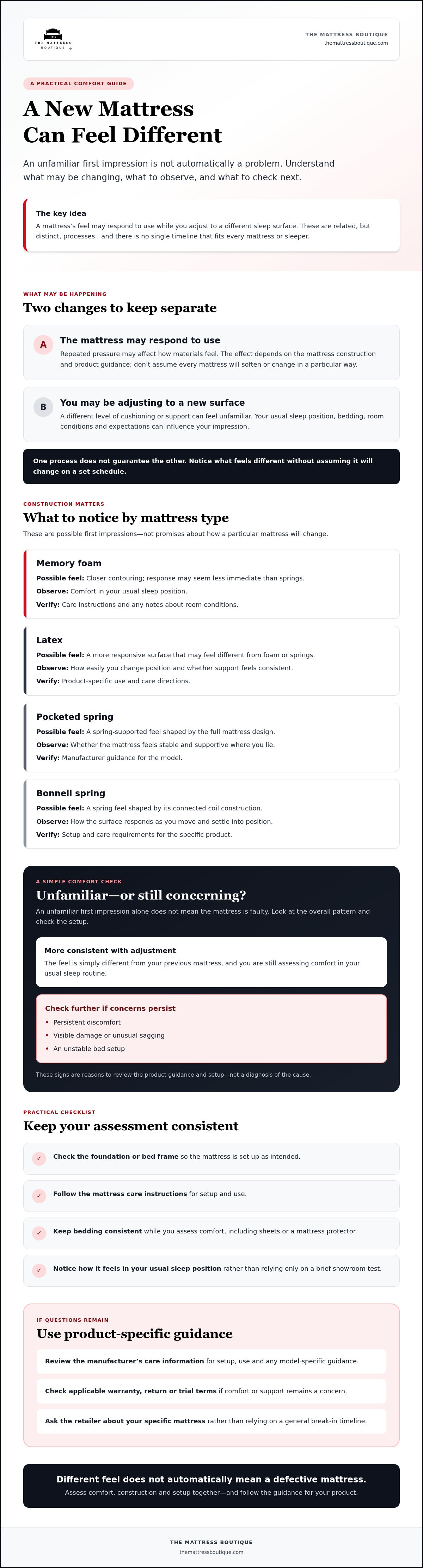
How to Adjust to a New Mattress and Check Your Setup
A consistent setup makes it easier to judge how a mattress feels. Before deciding that the new mattress break-in period is the issue, check the base, follow the care instructions and keep your bedding consistent. These steps won’t guarantee a faster adjustment, but they can help you spot setup factors that affect comfort.
- Check the mattress position. Confirm it’s placed as directed and sits evenly on the base.
- Review the bed frame or foundation. Check the manufacturer’s requirements for a suitable support surface. A frame that’s unstable, damaged or not intended for the mattress may affect how it sits and feels.
- Follow the product instructions. Use the care and setup information supplied with your mattress. Avoid improvised tests, jumping, or applying excessive pressure, as these actions could damage it or conflict with its instructions.
- Keep bedding consistent. Use the same sheets and mattress protector while assessing comfort, unless the care guide says otherwise.
- Observe rather than guess. Pay attention to how the mattress feels in your usual sleep position and note any changes.
How can you check whether the bed base is affecting comfort?
Compare your bed frame or foundation with the mattress manufacturer’s requirements. Check that it feels stable, supports the mattress evenly and shows no obvious damage. Don’t assume a base is suitable just because it fits the mattress dimensions. If you’re unsure, consult the product guidance or ask the seller or manufacturer whether your setup is appropriate.
What should you record while assessing the mattress?
Keep a short log of your sleep position, bedding, comfort observations and any setup changes. Note, for example, whether discomfort is present in one position or whether the mattress feels different after changing the protector. Change one variable at a time to make a clearer comparison. This record can also help you explain the issue when asking for product-specific advice.
There’s no routine that guarantees the mattress will become comfortable sooner. The aim is to make a fair assessment without introducing extra variables or putting unnecessary strain on the product. If you’re also choosing a mattress, The Mattress Boutique’s range includes memory foam, latex, pocketed spring and Bonnell spring options. Explore mattress options to compare available constructions.
When to Ask for Help About a New Mattress Break-In Period
Recheck the setup if the mattress seems uneven or unstable, or if you’re unsure whether its base meets the product requirements. Review the manufacturer’s care instructions if its feel or condition concerns you. If questions remain, contact the seller or manufacturer for advice about the specific mattress rather than relying on a general expectation for the new mattress break-in period.
Also check any warranty, return or trial terms that may apply to your purchase. Policies vary, so confirm the details in your purchase documents or with the seller. Don’t assume a trial or return option is available, or that a particular amount of use is required before you can ask about a concern.
What information should you have ready before contacting the seller?
A clear description helps you ask focused questions. Gather the brand and model details from your purchase documents, then note when the mattress was set up and what you’ve observed. Include information about the bed frame or foundation, bedding, your usual sleep position and any visible changes. Ask which manufacturer instructions and after-sales terms apply to that exact product.
For instance, distinguish between “it feels firmer than expected” and “one area appears to sag.” Specific observations help the seller understand whether your question concerns comfort, setup or the mattress’s condition. If you’ve changed the bedding or base, mention when; a change in feel alone isn’t proof of a defect.
How can mattress selection guidance help with future expectations?
Understanding construction and your comfort preferences before choosing can help you form a more realistic idea of a mattress’s first feel. Consider whether you prefer closer contouring or a more responsive surface, then ask how the specific model is designed to feel and what its manufacturer recommends for setup and care. A general material description can’t predict how every individual product will feel to you.
If you are exploring different mattress options, The Mattress Boutique provides various categories including memory foam, latex, pocketed spring and Bonnell spring options. Ask about the particular model you’re considering rather than assuming a specific break-in timeline or policy.
For your next mattress, compare construction and comfort preferences, and check the product guidance before deciding. You can explore The Mattress Boutique’s mattress range or contact the retailer with questions about a specific option.
Make Your Next Sleep Feel More Certain
The new mattress break-in period isn’t one fixed countdown. Mattress materials may respond to use while your body adjusts to a different sleep surface, and the experience varies by product and person. An unfamiliar feel alone doesn’t prove something is wrong, but persistent discomfort, visible damage or an unstable setup deserves a closer check.
Start with the basics: confirm the mattress and base are set up as instructed, keep bedding consistent while assessing comfort, and note what you observe. If concerns remain, consult the manufacturer’s guidance and check any warranty, return or trial terms that apply to your purchase.
Choosing a mattress is easier when you can compare construction and comfort preferences. The Mattress Boutique’s selection includes memory foam, latex, pocketed spring and Bonnell spring mattresses, along with brands such as King Koil, Slumberland, Dunlopillo, SofzSleep and MaxCoil.
Explore mattresses and find the right fit for your needs. With product details and setup guidance in hand, you can make a more confident choice for better-rested nights.
Frequently Asked Questions
How long is the break-in period for a new mattress?
There’s no fixed timeline that applies to every mattress. A commonly cited general range is 30 to 90 days, but that isn’t a guarantee or a substitute for the manufacturer’s guidance. The new mattress break-in period can involve both changes in material feel and your own adjustment to a different sleep surface. Check the care instructions for your model, and assess comfort and support rather than relying on a countdown alone.
Is it normal for a new mattress to feel too firm at first?
Yes, a new mattress can feel firmer than expected, especially if it differs from your previous sleep surface. That first impression alone doesn’t show that the mattress is faulty, and it doesn’t guarantee the feel will change. Check that the mattress is correctly set up on a suitable base, then observe how it feels in your usual sleep position. If the firmness remains uncomfortable or you notice another concern, review the product guidance.
Can you speed up a new mattress break-in period?
You can use the mattress consistently as directed and keep the setup and bedding steady while assessing comfort, but there’s no reliable routine that guarantees faster settling. Follow the manufacturer’s care instructions. Avoid jumping, walking on the mattress or applying excessive pressure unless the product guidance specifically allows it, as this could damage the mattress or conflict with its care requirements. Note any changes in feel instead of trying to force them.
What happens if my new mattress still feels uncomfortable?
Recheck the setup, including the mattress position, foundation and bedding, then compare these with the manufacturer’s instructions. If discomfort continues, or you see visible damage, unusual sagging or uneven support, contact the seller or manufacturer with details about the product and what you’ve observed. Persistent discomfort doesn’t by itself establish a defect or prove the mattress is unsuitable. If you have health concerns, speak with an appropriate healthcare professional.
Do memory foam mattresses take longer to break in than spring mattresses?
Not necessarily. Memory foam may contour differently and feel less immediately responsive than a spring mattress, while spring designs also vary in construction and surface feel. These differences can affect first impressions, but material alone can’t predict how quickly an individual product’s feel may change. Compare the specific mattress with its manufacturer’s guidance, and consider your own adjustment separately from any material response.
Can a bed frame affect how a new mattress feels?
Yes. An unstable, damaged or unsuitable frame or foundation may affect how the mattress sits and feels. Check that the base is even and stable, and confirm it meets the mattress manufacturer’s requirements. Don’t assume a frame is compatible simply because the mattress fits on it. If you’re uncertain, consult the product instructions or ask the seller or manufacturer about the correct support setup for that model.
Should I return a mattress if it feels uncomfortable at first?
Don’t decide based only on one unfamiliar first impression, but don’t ignore persistent discomfort or signs of damage either. Check the setup and product instructions, then review the purchase documents for any return or trial terms that apply. Policies differ, so confirm the conditions and time limits directly with the seller. If you’re unsure what to do next, ask the seller about the specific mattress before making a decision.