

What if your firm mattress doesn’t need replacing to feel more comfortable? If you’re waking with sore joints or pressure points, it’s understandable to regret an expensive purchase. Learning how to make a firm mattress softer can start with practical changes to the sleep surface, room conditions or bed frame.
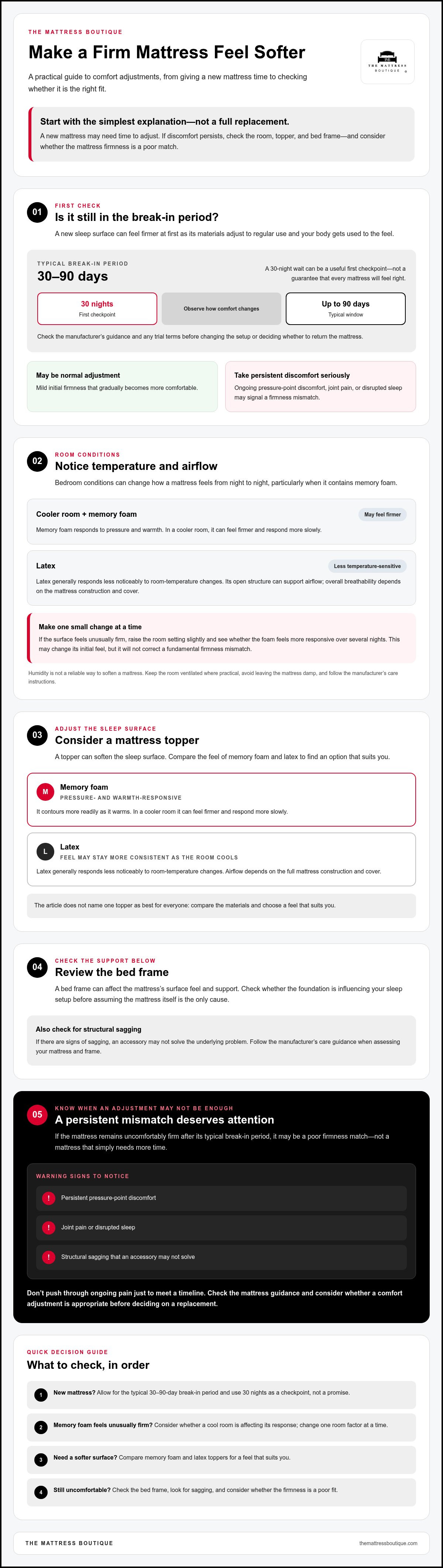
A new mattress may need time to adjust to regular use. A typical break-in period is 30 to 90 days, but discomfort that continues may point to a firmness mismatch rather than a mattress that simply needs more time. You don’t have to guess your way through the options.
This guide covers five ways to soften a firm mattress, including how to choose between memory foam and latex toppers, make sensible adjustments to your bedroom and check whether your bed frame provides suitable support. You’ll also learn how to distinguish a normal break-in from a poor fit, so you can find a more comfortable sleep setup without rushing into a full replacement.
Key Takeaways
- Before changing your sleep setup, consider whether your new mattress is still within its typical 30- to 90-day break-in period.
- Room temperature can affect how memory foam feels, so comfort may vary with bedroom conditions.
- A topper can soften the sleep surface. Compare memory foam and latex to find a feel that suits you.
- Check whether your bed frame is affecting the mattress’s surface feel and support.
- Look for signs of a firmness mismatch or structural sagging that suggest an accessory may not solve the problem.
Understanding the Break-In Period: Why Your New Mattress Feels Firm
A new mattress can feel firmer than expected, but that doesn’t automatically mean you chose the wrong one. During the break-in period, the sleep surface adjusts to regular use and your body gets used to its feel. Foam layers and quilted covers may feel less yielding when new, while springs flex under repeated body weight. The surface may gradually feel more familiar as these materials settle.
A typical break-in period is 30 to 90 days, depending on the mattress and its materials. A 30-night wait can be a useful first checkpoint, but it doesn’t guarantee that every mattress will feel right after a month. Check the manufacturer’s guidance and any trial terms before altering the setup or deciding whether to return it.
The Physics of New Springs and Foam
Pocketed springs compress independently in response to pressure. With regular use, the sleep surface may feel more familiar, but that doesn’t mean the springs need to be forced into a different tension. Foam can also respond differently as it is used. The exact construction and settling behaviour depend on the mattress, so don’t assume every model uses the exact same foam or follows the same break-in timeline.
The quilted cover adds another layer between you and the comfort materials. Its stitching and fabric can feel taut when new, contributing to a firmer first impression. For general background on mattress layers and toppers, see this mattress overview.
Safe Techniques to Soften a New Mattress
Regular use is usually the simplest way to let a mattress settle. If its care instructions allow it, you can apply gentle, even body-weight pressure across the surface. Avoid jumping, kneeling forcefully in one spot or placing heavy objects on the bed. These actions can concentrate pressure and risk damaging internal materials instead of helping them break in evenly.
- Use the mattress normally and give it time to respond to regular sleep.
- If the manufacturer permits it, press or walk carefully across different areas, spreading your weight rather than repeatedly loading one spot.
- Check the care instructions before rotating or flipping the mattress, since designs and recommendations vary.
Break-In or Firmness Mismatch?
Notice how you feel over time. Mild initial firmness that gradually becomes more comfortable may be part of the adjustment. Persistent pressure-point discomfort, joint pain or disrupted sleep are signs to take seriously, especially if they continue through the typical break-in period. If the mattress still feels uncomfortably firm after 30 to 90 days, it may be a poor firmness match rather than simply “not broken in.” Don’t push through ongoing pain just to meet a timeline. Check the mattress guidance and consider whether a comfort adjustment is appropriate before deciding on a replacement.
Environmental Adjustments: Temperature and Humidity Effects
Bedroom conditions can change how a mattress feels from night to night, particularly if it contains memory foam. A cooler room may make some memory foam feel firmer, while humidity can affect how comfortable the room feels. Humidity is not a reliable way to soften a mattress, so don’t treat it as a firmness adjustment. Focus on temperature and airflow, and follow the care guidance for your mattress.
Memory Foam and the Temperature Connection
Memory foam is viscoelastic: it responds to pressure and warmth, contouring more readily as it warms. In a cooler room, it can feel firmer and respond more slowly. For example, if the room is cool because of air-conditioning, the mattress may feel less yielding than it does in a warmer room.
Try a small adjustment rather than switching off the air-conditioning or overheating the room. If the surface feels unusually firm, raise the setting slightly and see whether the foam feels more responsive over several nights. This may change the initial feel, but it won’t correct a fundamental firmness mismatch.
Latex Performance in Warm, Humid Conditions
Latex generally responds less noticeably to room-temperature changes than memory foam, so its feel may remain more consistent as the bedroom cools. Its open structure can also support airflow, although the overall breathability of a mattress depends on its full construction and cover. Don’t assume every latex mattress, including any particular brand model, has identical materials or performance.
Humidity is a separate consideration. It won’t reliably make mattress foam softer, and excess moisture can affect bedroom materials over time. Keep the room ventilated where practical, use air-conditioning or a dehumidifier if needed for room comfort, and avoid leaving the mattress damp or exposing it to direct heat. Check the manufacturer’s care instructions before using any moisture-control method.
For a simple test, note the room setting and how the mattress feels for a few nights, changing one factor at a time. If the feel improves as the room warms, temperature sensitivity may be contributing. If pressure points persist, consider other ways to make a firm mattress softer, such as choosing a comfort layer suited to your sleep preferences.
Memory foam and latex offer different responses, so compare the materials before deciding which may suit your needs. You can explore memory foam and latex mattresses as part of that decision.
How to Make a Firm Mattress Softer with a Topper
A topper adds a comfort layer between you and the mattress, changing how the surface cushions your body without replacing the whole bed. By spreading pressure across a broader area, it may ease pressure points at the shoulders and hips, especially for side sleepers. It won’t fix a sagging or damaged mattress, but it can be a practical way to soften a firm surface when the underlying support is still sound.
Thickness affects how much the topper changes the feel. A 2-inch layer offers a more modest adjustment and leaves more of the mattress’s original feel intact. A 4-inch topper creates deeper cushioning, but can make the bed feel substantially different and may affect how easily you move or how well your body stays supported. Consider your sleeping position and the firmness you’re trying to correct rather than assuming thicker is always better.
Latex vs Memory Foam Toppers
Choose a material according to the feel you want, not a blanket claim that one type suits everyone. Latex is generally more responsive, so it compresses and rebounds readily. Memory foam contours more closely under pressure, which may appeal to side sleepers seeking extra cushioning at the shoulders and hips. The actual feel also depends on the topper’s construction and the mattress beneath it. Micro-coil toppers are a more specialised option for people who prefer a spring-like response, but check compatibility with your mattress before choosing one.
Choosing the Right Density
Density and firmness describe different qualities. Density relates to how much material is packed into the foam, while ILD, or Indentation Load Deflection, measures how much force compresses it. A lower ILD usually indicates a softer feel when comparing products tested on the same basis, but ratings can vary by manufacturer. Compare specifications carefully and don’t rely on a number alone. Lower-density foam may compress sooner with use, so consider the manufacturer’s construction details and care guidance.
Before buying, check the topper’s dimensions against your mattress. A King or Queen label alone may not ensure a precise fit across every brand or design. Look for secure straps or a fitted skirt if available, and confirm they suit your mattress depth. A topper that slips can bunch up and create uneven comfort.
For more help assessing firmness, support and materials, read The Complete Guide to Choosing a Mattress in Singapore (2026 Edition). A considered choice of topper material and thickness can make a firm sleep surface feel more accommodating while preserving the support you need.
Checking the Foundation: Is Your Bed Frame the Problem?
A mattress doesn’t work in isolation. The base beneath it affects how much the sleep surface can flex, so the same mattress may feel different on a rigid platform than on a frame with flexible slats. Before deciding how to make a firm mattress softer, check that the bed frame is level, stable and suitable for your mattress. A damaged or incompatible base can affect both comfort and support.
Divan bed frames typically provide a continuous, firm platform. Slatted frames may allow some flex, depending on the slats’ design, spacing and condition. Storage bed frames are often built around a solid platform to support the mattress while making use of the space beneath the bed. That rigid base can make the overall feel firmer, but not every storage bed and mattress combination will feel the same.
Solid Platforms vs Slatted Bases
A solid platform offers little give beneath the mattress, while flexible slats may add a small amount of movement. A slatted frame is not a guaranteed way to make a mattress feel softer. Slat construction and spacing matter, and a base that bends too much or doesn’t properly support the mattress may cause problems. Check the mattress maker’s base requirements before switching frames or changing the support underneath.
Warranty terms and care guidance vary by mattress. Before using a different base with a Slumberland mattress, for example, review its specific manufacturer instructions rather than assuming any frame is suitable. The same check is sensible for other mattress brands and designs.
The Role of Storage Bed Frames
Storage beds can be a practical choice when bedroom space matters. Their platform may provide consistent, firm support, but the storage mechanism itself isn’t a reason to expect extra cushioning. If you want both under-bed storage and a softer surface, first confirm that the base supports your mattress as specified. A topper can then adjust the feel without changing the frame.
A thin foam layer placed between the mattress and base may seem like an easy modification, but it can interfere with ventilation or conflict with the mattress maker’s instructions. Don’t add a buffer unless the manufacturer confirms it’s appropriate. For another option, compare comfort through a topper rather than altering the foundation.
For help weighing space-saving and support considerations, read the Ultimate Guide to Storage Bed Frames in Singapore (2026 Edition). You can also explore storage bed frame options and consider how the base will work with your mattress.
When to Replace: Identifying a Fundamental Firmness Mismatch
A mattress that feels too firm may benefit from an adjustment, but a topper can’t restore worn-out support. After allowing time for a new mattress to settle and checking that the bed frame is suitable, look for signs that the issue is structural or that the mattress simply doesn’t suit your body.
One key distinction is between a uniformly hard surface and the “hammock effect.” With a firmness mismatch, the mattress may feel consistently too rigid and press uncomfortably against your body. With structural failure, the centre or another area may sag while the edges remain higher, leaving your body unsupported. A visible, lasting indentation can indicate that internal materials have lost their shape or support.
Physical Warning Signs
Pay attention to how you feel during the night and after getting up. A very firm surface can create pressure for side sleepers because the shoulders and hips need enough cushioning to settle comfortably. Persistent numbness or pins and needles in your arms or legs shouldn’t be dismissed as a normal adjustment. If it continues, seek appropriate medical advice rather than assuming the mattress is the only cause.
Morning lower-back discomfort that eases after you move may be a reason to reassess your sleep setup, but it isn’t proof of mattress failure on its own. Also check whether the comfort layers show a lasting indentation or no longer recover their shape. If pain or poor sleep continues despite reasonable adjustments, consider whether the mattress is a fundamental mismatch or has lost support.
Choosing a Better Replacement
Start with your usual sleep position and the kind of support that feels comfortable. Side sleepers may prefer more cushioning around the shoulders and hips while still needing stable support through the rest of the body. A pocketed spring mattress with a softer comfort layer, such as a pillow-top design where available, may be worth comparing. Don’t choose by label alone. Materials and construction affect the overall feel.
When testing a mattress in person, lie in your usual sleeping position and give your body time to settle. There’s no universal “15-minute rule” that guarantees an accurate assessment. Notice pressure, alignment and ease of movement, and check the retailer’s trial and return terms before buying.
Compare mattress construction and firmness options, including models from King Koil, Dunlopillo and MaxCoil. Focus on how each feels for your body rather than relying on a brand name or firmness terms alone. The King Koil Mattress Singapore buying guide can also help you explore available options.
Find the Comfort That Works for You
Finding how to make a firm mattress softer starts with understanding what’s causing the discomfort. A new mattress may need time to settle, room temperature can affect memory foam’s response, and a topper can change the surface feel without replacing the bed. The foundation matters too: make sure your frame provides suitable, even support.
If discomfort continues or the mattress shows visible sagging, softening the surface may not solve the underlying problem. A replacement with a different feel or construction could be a better fit. Consider how you sleep, where you feel pressure and whether pocketed spring, latex or memory foam options suit your comfort needs. The Mattress Boutique offers mattresses from King Koil, Slumberland and Dunlopillo, along with bed frames and pillows.
Ready to compare mattress options? Explore King Koil and Slumberland mattresses at The Mattress Boutique.
Frequently Asked Questions
Can a mattress topper really fix a mattress that is too hard?
A topper can make a firm mattress feel more cushioned, but it won’t repair worn-out or inadequate support. It adds a comfort layer that may help reduce pressure at areas such as the shoulders and hips. Choose a material and thickness based on the feel you want and your sleeping position. If the mattress visibly sags or continues to cause discomfort, a topper may only mask the underlying problem.
How long does it take for a new King Koil mattress to soften up?
There isn’t a single break-in timeline that applies to every King Koil mattress model. In general, a new mattress may take 30 to 90 days to adjust with regular use, but construction and materials affect how it feels over time. Check the care and trial guidance for your specific model. If discomfort persists or your sleep is poor, don’t assume the mattress simply needs more time.
Will walking on my mattress damage the pocketed springs?
Walking on a mattress could put concentrated or uneven pressure on its materials, so don’t use it as a break-in method unless the manufacturer specifically says it’s safe. Pocketed springs are designed to respond to body pressure during normal use, not necessarily to someone walking across the surface. Follow the mattress care instructions, and avoid jumping, placing heavy weights on it or repeatedly pressing hard on one area.
Does the bed frame really affect how soft my mattress feels?
Yes. The frame supports the mattress and can change how much the sleep surface flexes. A solid platform usually provides a firmer, more uniform base, while some slatted frames allow more movement. The result depends on the frame’s design and condition as well as the mattress construction. Before switching bases or adding a layer between the mattress and frame, check the manufacturer’s support requirements.
Is a latex topper cooler than memory foam in warm weather?
Latex is generally less sensitive to room temperature than memory foam, and its construction may allow airflow. Memory foam responds to warmth and can contour more as it warms, which some sleepers find less comfortable in a warm room. Actual temperature and comfort depend on the topper’s design, cover and bedding. Compare the materials in the context of your room and sleep preferences rather than relying on a blanket cooling claim.
What is the best topper thickness for a side sleeper on a firm bed?
A 2- to 3-inch topper is a practical range to consider for adding cushioning, though the best thickness depends on your body, mattress and comfort preference. Side sleepers often want enough softness around the shoulders and hips to ease pressure while retaining stable support. A thicker layer can change the bed’s overall feel more noticeably, so check the topper’s specifications and choose one that suits the mattress beneath it.
Should I flip my mattress to make it softer?
Only flip your mattress if its manufacturer identifies it as double-sided and recommends flipping. Many mattresses are designed with a specific top and base, so turning one over can put the wrong layers under your body and affect comfort. Some models may instead be rotated, but care instructions vary. Check the label or manufacturer guidance before changing its orientation. Flipping isn’t a reliable way to soften a mattress.
When should I give up and just buy a new mattress?
Consider replacing it if discomfort continues after a reasonable adjustment period or if the mattress has visible, lasting sagging that affects support. A topper won’t restore a damaged support structure. Mattress lifespan varies, though a general guide for many mattresses is 7 to 10 years. Assess the mattress’s condition and comfort, not its age alone.